

Updated April 13, 2026 02:52PM
We’ve all been there, staring at the screen instead of responding to a difficult email, dreading the need to confront a challenging life decision, and feeling completely paralyzed. But this sensation isn’t always procrastination alone. Sometimes it can be a symptom of something larger and feel like being physically stuck.
Although many of us consider indecision a purely psychological hurdle, science suggests that there can be an underlying physical component when fear is involved. If the weight of a choice feels too overwhelming, we can sometimes slip into what’s known as “functional freeze,” a state in which the nervous system is on high alert. But instead of causing us to engage in the more commonly known “fight or flight” responses, it leaves us feeling numb, stuck, stalled, and emotionally checked out. In other words, frozen.
Understanding this mechanism can support shifting first the body and then the brain out of fear-based hesitation. Yoga helps us practice that.
The Science Behind Functional Freeze
When we face uncertainty, the amygdala (the brain’s center for emotional processing) can become hyper-responsive and signal a perceived threat, especially in those of us prone to anxiety. This alarm triggers varying degrees of response in different individuals, and can include a “freeze” state of immobility or indecision.
When this happens, the psoas major, a hip flexor muscle deep within the core that connects the spine to the legs, responds. As a primary motor component of our survival-based “startle response,” the psoas instinctively contracts in response to the nervous system’s signal in an effort to draw the body into a crouched or fetal position.
When this muscle remains in a state of continued contraction, known as structural guarding, this physical tension can create a feedback loop, signaling back to the brain that we remain under threat. What science describes as structural guarding during emotional distress, yoga tradition refers to as storing fear in the hips. Yoga essentially provides a manual for helping you understand some of the mechanics for transitioning out of the freeze response.
How to Get Out of Freeze Response
Unlocking functional freeze varies among individuals, but there are three science-backed ways that can help overcome it, each supported by yoga: regulating the breath, releasing the physical tension in the psoas, and engaging the mind through focus.
The transition from a state of immobility back to presence begins by slowing the breath, explains yoga teacher Carlota Brenes, Spa & Wellness assistant director at Waldorf Astoria in Costa Rica. Research suggests this works by stimulating the vagus nerve, which signals the nervous system to shift into a state of safety and regulation. “Conscious breathing can be a strong tool to move out of a freeze response,” says Brenes.
Practicing yoga emphasizes this slow, steady, rhythmic breathing pattern, both when holding poses and transitioning between them. Taking the body into various shapes, as we do in yoga, also stretches and releases the psoas. Yoga also engages the part of the brain responsible for complex decision-making (the prefrontal cortex) by enabling your mind to focus on physical sensations or finding your balance instead of on other stressors.
When it’s challenging to quiet ruminating thoughts, trying a standing balancing pose can help the brain focus. Think of your brain’s bandwidth as a cell phone that can only run so many apps at once. When you’re standing on one leg, your brain must prioritize your balance.
Yoga for Freeze Response + Indecision
The following yoga poses slow the breath, stretch the body, and focus the mind, each of which can help physiologically undercut the freeze response.
Beyond that, these poses can also help you practice satya, which translates from Sanskrit as truthfulness. According to yoga tradition, satya is the filter that clears the obstacles and allows us to see our way forward with clarity by asking you to live your truth. Indecision and freezing sometimes stem from a cloud of external “shoulds” and pressures that can obscure our internal compass. When you’re in a challenging pose, you cannot fake your stability. You have to find your center, acknowledge the wobbles without judgment, and remain present. Consider it practice for life off the mat.
Sometimes no amount of breathing, moving, and focusing can help release the feeling of being psychologically stuck. Consider seeking professional support is advised in these situations.
Some of the following shapes can be done as a quick mental reset anytime during a busy day. Others are more complex and require a little stretching in preparation. All the poses benefit from some grounding breathwork to quiet the distracting noise of the mind.
1. Low Lunge (Anjaneyasana)
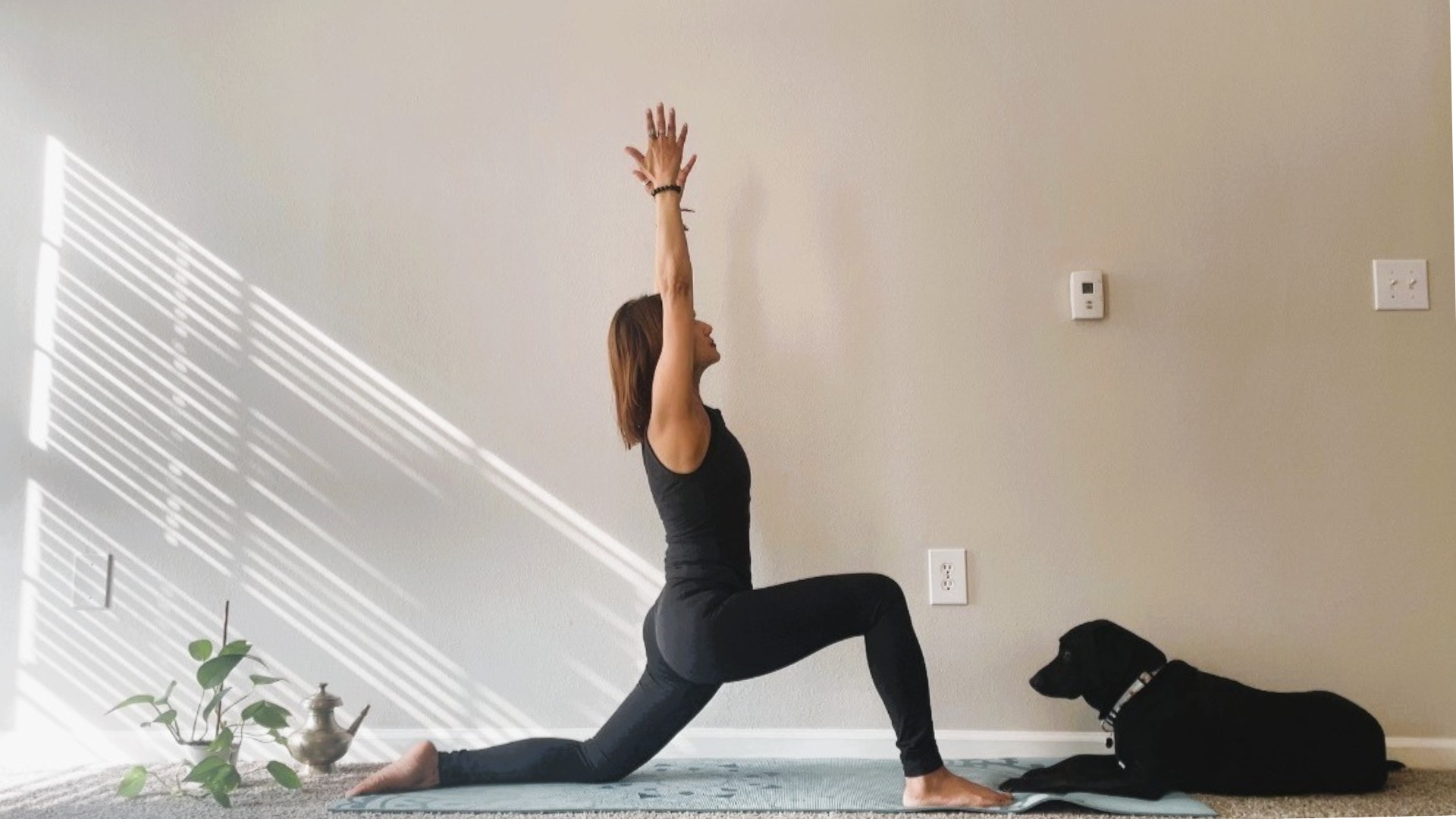
This pose targets and helps release tension held in the psoas, creating one signal to the nervous system that there’s no need to be on high alert.
How to: From Downward-Facing Dog, step your right foot forward between your hands. Drop your left knee to the mat and untuck your toes. Lift your chest and rest your hands on your front thigh or reach them toward the ceiling in Low Lunge. Stay here for 5-10 breaths. Then switch sides.
Focus on: The stretch along the front of the back leg. Imagine you are literally unclenching your psoas and creating the physical space needed for a different sensation to exist.
2. Warrior 3 (Virabhadrasana III)
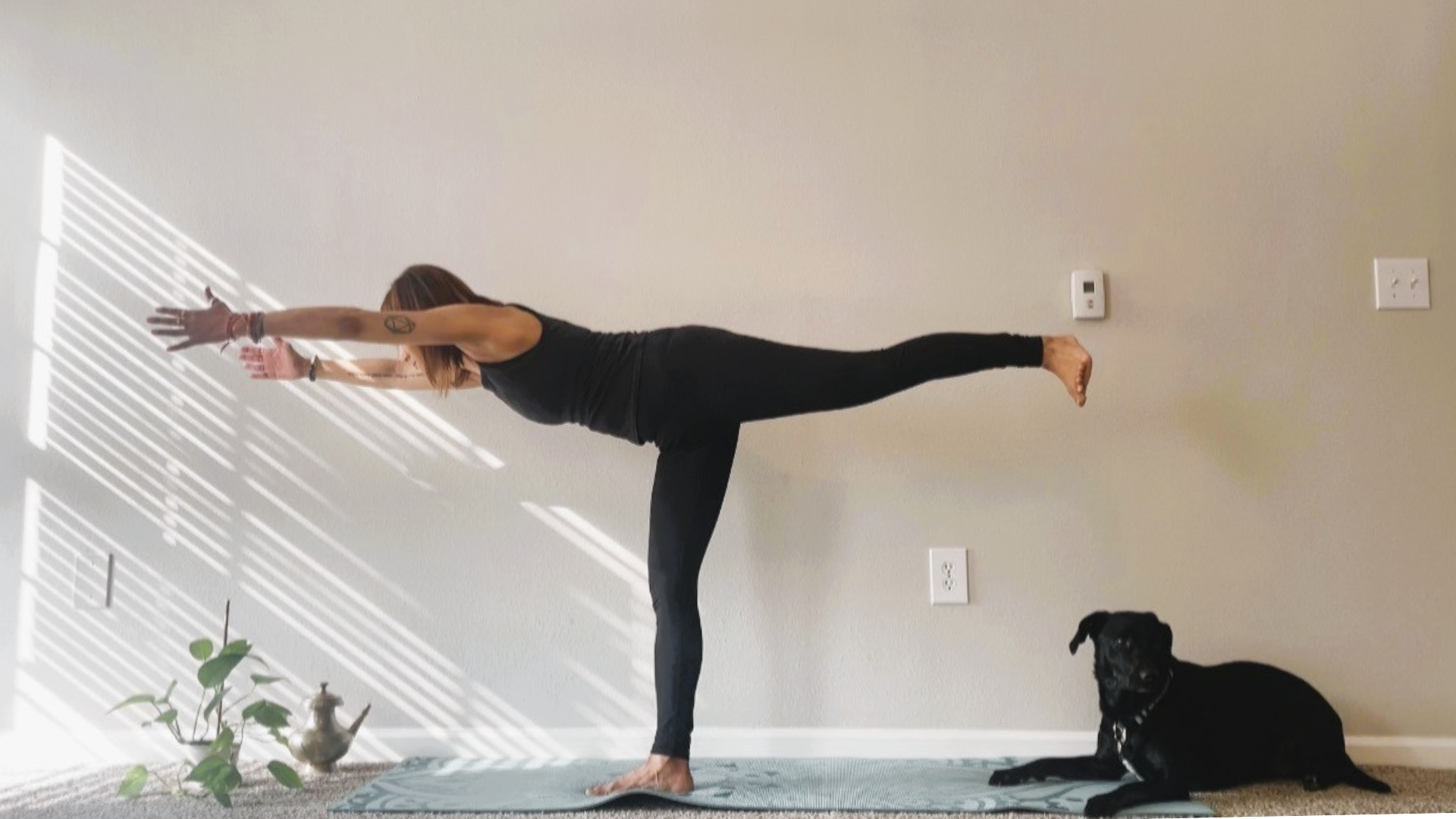
Indecision often feels like being pulled in too many directions at once. Warrior 3 is the ultimate pose to practice intense and unwavering focus.
How to: From standing, shift your weight into your right leg. Slowly lean your chest forward as you lift your left leg straight behind you. Bring your hands to your heart center, rest one or both hands on blocks, or reach them forward until your body is parallel to the mat in Warrior 3. Keep your gaze fixed on one point on the ground. Stay here for 5-10 breaths. Then switch sides.
Focus on: The sensation of a single, straight line from your fingertips to your back heel and the focus required to take charge of your balance.
3. Plank Pose (Phalakasana)
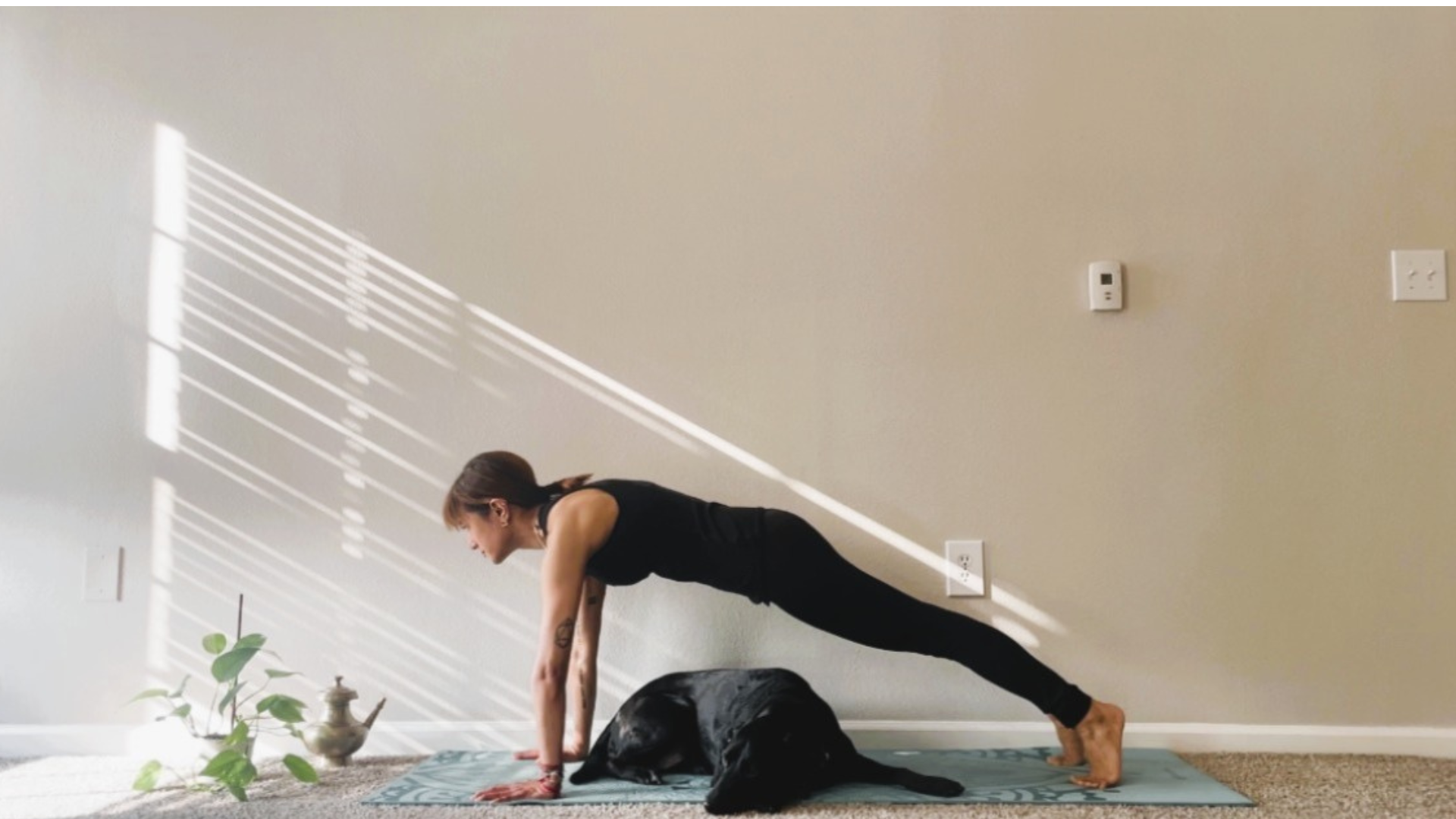
Plank Pose builds isometric strength, which is the kind of unwavering steadiness you need to stay grounded when the world around you feels chaotic.
How to: Start on your hands and knees, then step both feet back to form a straight line from your head to your heels in Plank Pose. Press firmly into your palms, draw your navel toward your spine, keep your neck long and push through your heels. Ensure your hips aren’t sagging toward the mat or hiking upward. Breathe here for 10-60 seconds.
Focus on: The connectedness of your core muscles and how they support everything else. Feel into the strength of your ability to support yourself without collapsing.
4. Tree Pose (Vrksasana)
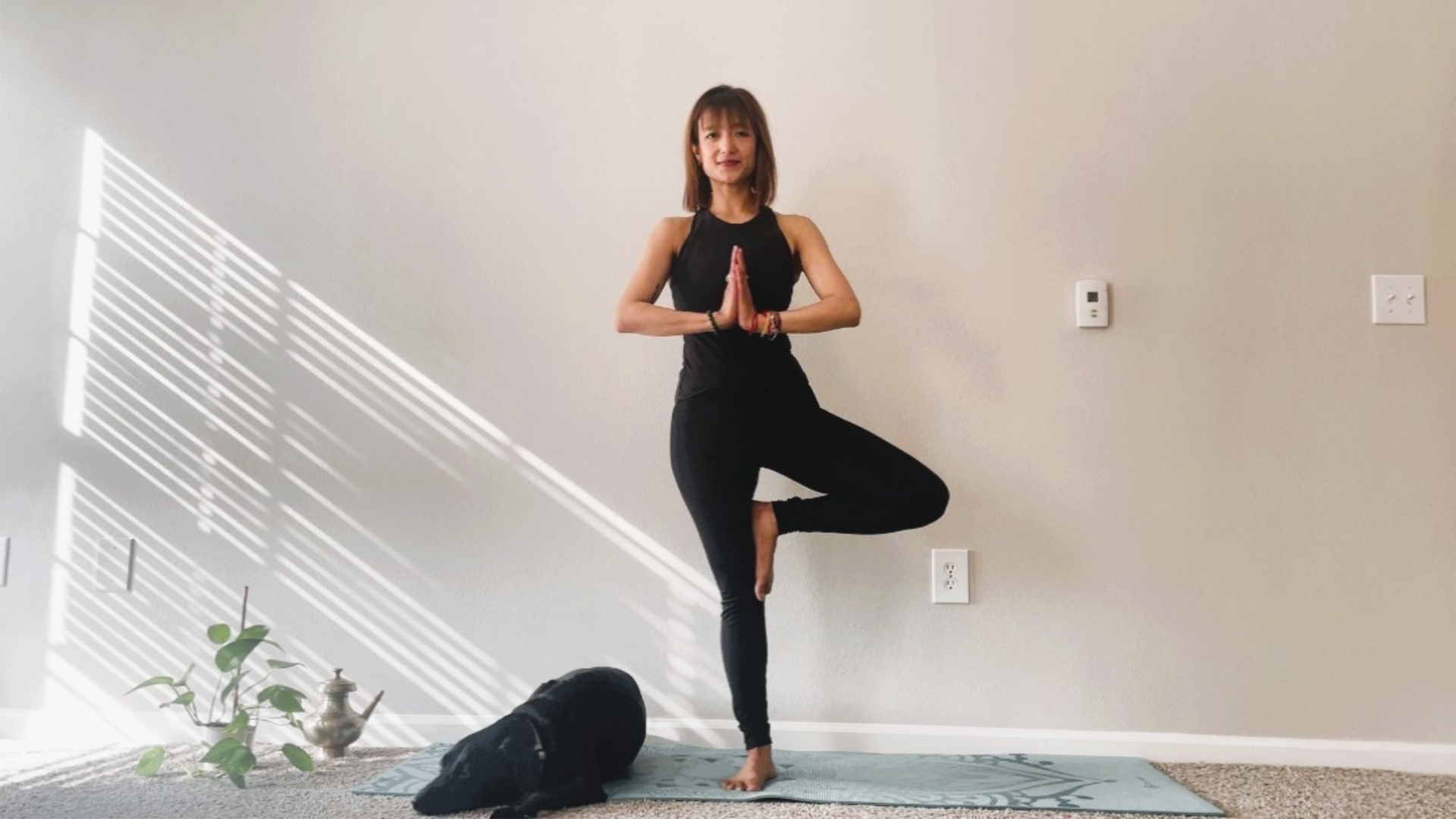
Moving past indecision isn’t about remaining perfectly steady as you do so. It’s about focusing on your center, again and again, amid the wobble.
How to: Stand tall and shift your weight into your left leg. Place the sole of your right foot on your left inner calf, thigh, or ankle. Bring your hands to your heart or reach them overhead in Tree Pose. Find a steady drishti (gaze point) in front of you. Stay here for 5-10 breaths. Then switch sides.
Focus on: The micro-adjustments in your standing foot as you wobble. Rather than try to hold yourself rigid, allow for some shifting to take place. And if you do fall out of the pose, simply return to a sense of quiet presence and try again.
5. Eagle Pose (Garudasana)
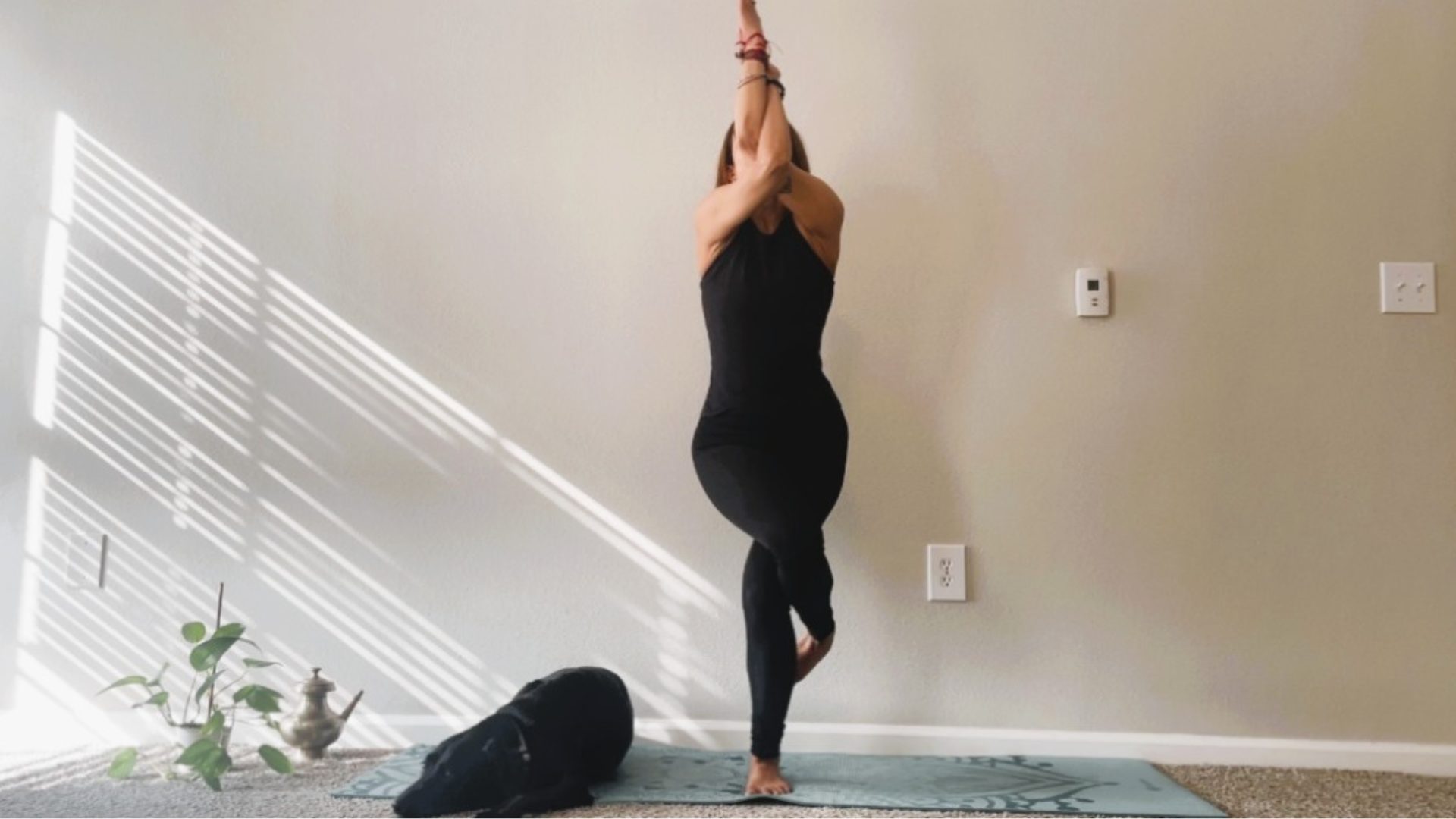
Practicing Eagle Pose and then releasing the bind mimics the tangled sensation of feeling stuck followed by an eventual release. With the powerful unwinding, you’ve physically traced the cycle of functional freeze and its undoing.
How to: Stand with your knees slightly bent. Cross your right thigh over your left, hooking your right foot behind your left calf or bringing your right toes to the mat like a kickstand. Cross your left arm over your right at the elbows and wrists. Try to bring your palms or fingers to touch in Eagle Pose. Lift your elbows slightly and lean your forearms a little away from you. Squeeze your inner thighs and forearms together as you sink your hips back slightly more. Stay here for 5-10 breaths, then unwrap with an exhale. Then switch sides.
Focus on: Squeezing everything toward the midline of your body. As you unwind, feel the rush of circulation returning and notice if you experience a sense of openness.
Next time you feel the fear-grip of a tough situation, step onto your mat. By slowing your breath and releasing muscle tension, you’re physiologically supporting a calmer state of mind. You’re training your brain to find your focus and your truth. Perhaps it will help you take your next step off the mat with confidence.
RELATED: How Yoga Can Shift You Out of Anxiety, Anger, or Lethargy