

Key Takeaways
- Huntington’s disease is a genetic condition that is inherited in an autosomal dominant pattern.
- The genetic change that causes Huntington’s disease is a CAG repeat of the huntingtin (HTT) gene, which is located on chromosome 4.
- The symptoms of Huntington’s disease develop from degeneration of brain regions that control movement and thinking.
Huntington’s disease is a genetic neurodegenerative condition that causes symptoms associated with nerve damage in the brain. The gene that causes this disease is most often inherited from a parent, but it can also arise from a spontaneous mutation in a person.
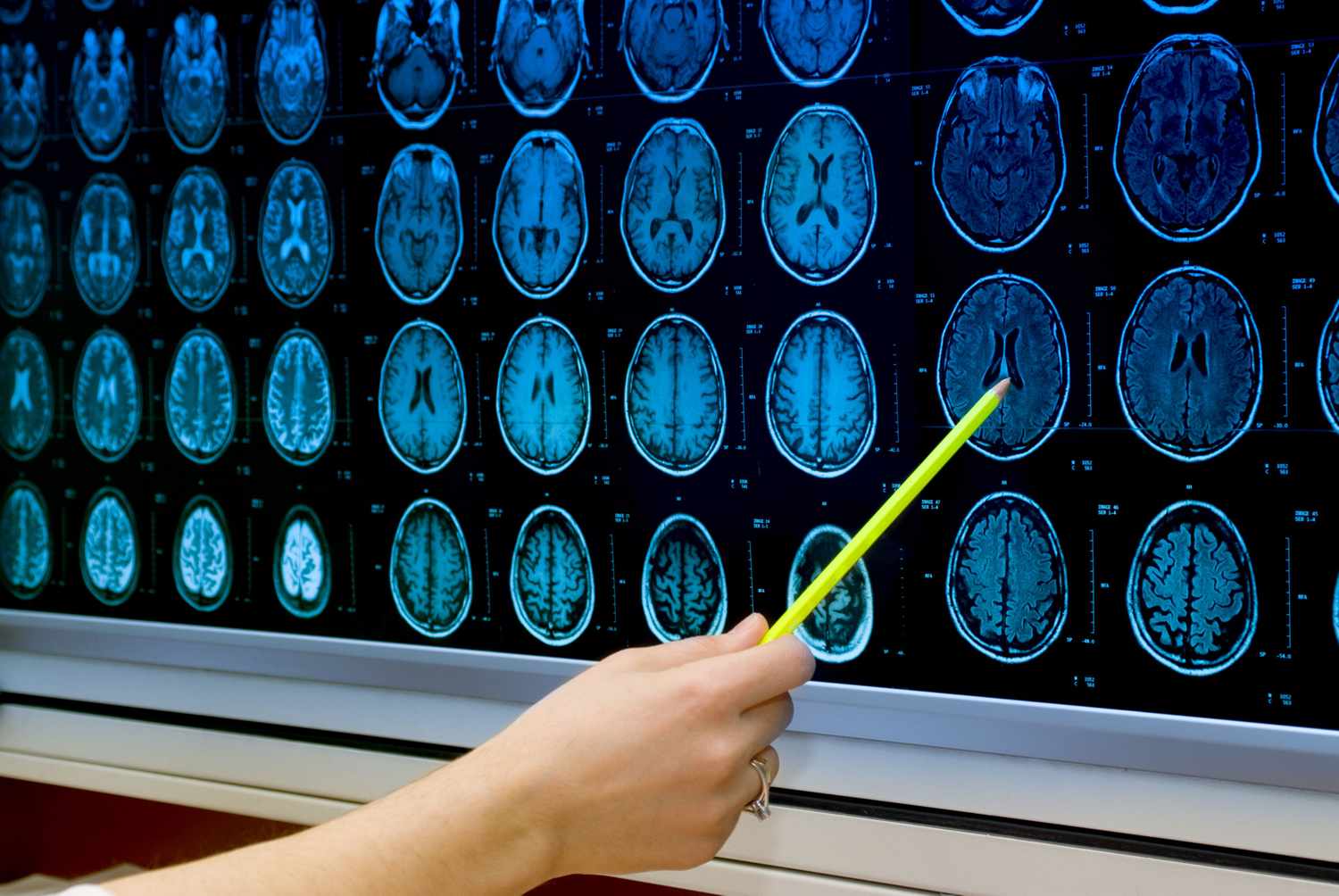
dem10 / Getty Images
Inheritance Pattern
Huntington’s disease is a neurodegenerative condition caused by an altered gene that can be inherited. In a small percentage of cases, the altered gene first appears in the person themselves, while in most cases it is inherited from a parent.
It is inherited in an autosomal dominant pattern, which means that a person will develop the disease if they inherit one copy of the gene that causes the disease from one parent. The gene is not on the X or Y chromosome, so incidence doesn’t vary by sex.
This disease usually starts during middle adulthood, but some people may develop symptoms earlier, during adolescence or even childhood. Because of the typical age when Huntington’s disease usually starts to cause symptoms, many people do not know that they have the gene before having children.
Understanding Huntington’s disease inheritance:
- If one of your parents has the gene for Huntington’s disease, you have a 50% chance of inheriting it.
- If you have the gene, you will develop the disease, and each of your offspring has a 50% chance of inheriting the gene from you.
- If you do not have the gene, you will not develop Huntington’s disease, and you will not pass it on to your own offspring.
Genetic Changes
Huntington’s disease is caused by a mutation—also referred to as a change, defect, or alteration—of the huntingtin (HTT) gene, which is located on chromosome 4. You have two copies of chromosome 4—one from each genetic parent. If one copy of your chromosome 4 has the mutation (either inherited or a mutation that developed first in you), you will develop Huntington’s disease.
The HTT gene codes for huntingtin protein, an important protein that’s involved in nerve cell:
- Development
- Health
- Survival
The specific change that causes Huntington’s disease is a CAG repeat in the HTT gene, which means that the nucleotides called cytosine, adenine, and guanine are repeated in that order too many times in the gene.
When there’s any deviation from a typical DNA gene nucleotide pattern, the proteins they code for are altered—and that can lead to disease.
In Huntington’s disease, the genetic changes in the HTT gene lead to inadequate amounts of huntingtin protein, as well as unstable huntingtin protein, which causes nerve degeneration in the brain.
A genetic test can detect changes in the gene and confirm a Huntington’s disease diagnosis.
Early Onset
There can be a variation in the number of CAG repeats in Huntington’s disease, and more CAG repeats can occur with each generation. With more CAG repeats, the symptoms can start at a younger age.
Brain Changes
The nerve damage caused by Huntington’s disease causes death of nerve cells in the brain, which starts in areas that control movement, and continues to affect more areas of the brain with time.
The striatum, basal ganglia, and globus pallidus are located deep in the brain. They communicate with each other to control voluntary (purposeful, deliberate) movements, coordination, balance, and muscle tone. Huntington’s disease causes atrophy (shrinking) of these structures, which often causes enlargement of the ventricles (fluid-filled spaces deep in the brain).
The cerebral cortex controls thinking, planning, and awareness. Atrophy of the cerebral cortex in Huntington’s disease causes additional effects, including dementia and altered thinking.
Nerve Damage
The huntingtin protein is essential for nerve and brain development and survival. People who have Huntington’s disease lack adequate amounts of this protein and also produce unstable huntingtin protein.
How nerve damage happens in Huntington’s disease:
- Without adequate huntingtin protein, nerves in the brain degenerate
- The unstable huntingtin protein can become damaged, leading to toxicity of nerve cells in the brain
:max_bytes(150000):strip_icc()/Heidi-Moawad-MD-1000-2792fc644ba54e05a6e82c8a25ae988f.jpg)