

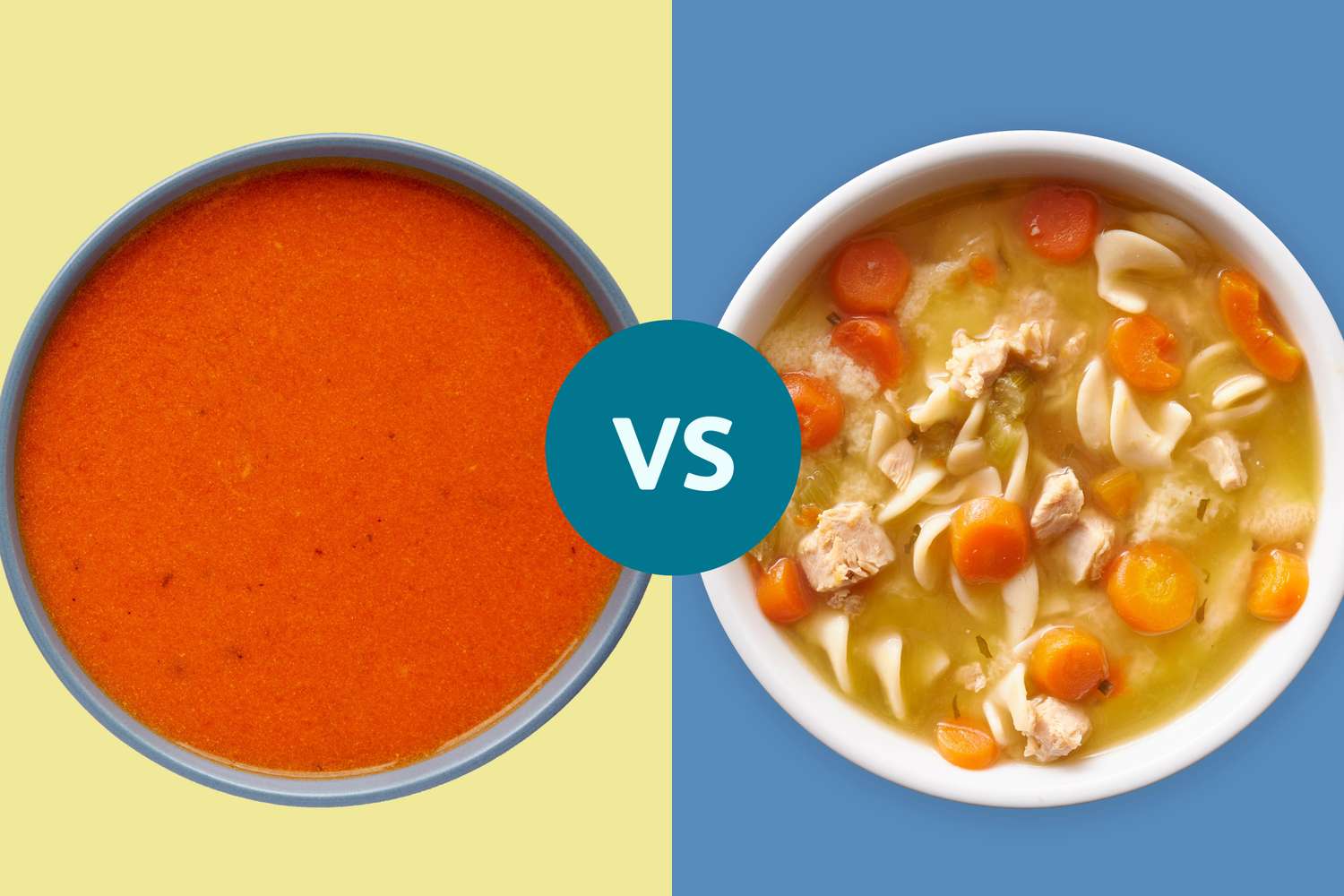
Key Takeaways
- Chicken soup has been shown to reduce the duration of upper respiratory illnesses by one to two days, and it has nutrients that tomato soup doesn’t.
- Tomato soup has significantly more vitamin C, however, which may also help reduce the duration of colds.
- Either type of soup can help keep you hydrated as you heal.
When you’re feeling under the weather and craving a warm bowl of soup, which kind can better help get you back on your feet? Some evidence shows that chicken soup may help fight a cold, while tomato soup also contains a healthy dose of immune-boosting vitamin C. Both soups can be good options depending on your symptoms.
A Note on Nutrition
In general, homemade soups are more nutrient-dense than processed, commercial soups, since the production process can take away some nutrients. Canned soups are also often higher in sodium than their homemade counterparts.
When possible, opt for homemade soup to amp up the nutrition and health benefits.
Both Offer Important Hydration
Whether you pick tomato soup or chicken soup, either option contains plenty of water to help you hydrate, which is especially important when you’re not feeling well. Tomato soup is about 88% water, while chicken soup is about 85% water.
Getting plenty of fluids is essential when you’re sick, and consuming a bowl of soup is a great way to boost your intake.
In addition, the steam from soup can help thin mucus, clear congestion, and soothe a sore throat. While a bowl of soup won’t cure you, it might help you feel better.
Chicken Noodle May Help You Feel Better More Quickly
There’s some scientific backing to the age-old wisdom that chicken soup will help you fight a cold, flu, or other upper respiratory illness.
For example, a systematic review reports that chicken soup may reduce the severity of symptoms and reduce the duration of your cold by one to two days. Authors noted that chicken soup can fight inflammation due to its protein content and the vegetables and herbs that are included in most recipes.
Chicken noodle soup’s ingredients often contain phytochemicals, plant-based compounds that fight inflammation and support immune health. Carrots, onions, shallots, and garlic all have polyphenols, a type of phytochemical. Polyphenols are also found in whole grains, so if your chicken noodle soup is made with whole-grain noodles, you may get an additional dose.
Tomato Soup Has More Vitamin C
Research shows that regularly getting adequate vitamin C may help reduce the duration and severity of the common cold, as well.
Tomato soup is a decent source of vitamin C, a powerful anti-inflammatory. Each one-cup serving of canned tomato soup contains 15.6 milligrams of vitamin C. That means tomato soup can offer a substantial portion (up to 20%) of the recommended daily intake of 75-90 milligrams of vitamin C for most adults.
By comparison, canned chicken noodle soup doesn’t have any vitamin C.
Tomato Soup Supports Heart Health
Tomato soup is potentially good for your heart. That can be important when you’re dealing with a respiratory illness, which may increase the risk of heart-related complications such as stroke, irregular heart rhythm, and other cardiac events, especially if you have an existing heart condition.
All that vitamin C in tomato soup may help protect the heart in multiple ways, including by preventing cellular damage.
In addition, multiple studies have shown that consuming tomatoes—including as tomato soup—may help lower blood pressure. To get the most heart-healthy benefit, reach for a tomato soup that is low in sodium.
Chicken Noodle Soup Is Easier on the Stomach
If you’re having tummy troubles with your illness, reach for chicken noodle soup instead of tomato soup. Chicken noodle soup often contains soft, well-cooked vegetables, chicken broth, lean meat, and noodles made with white flour—all part of a bland (or BRAT) diet to help settle stomach discomfort.
Tomato soup, on the other hand, is acidic and may contribute to stomach discomfort or acid reflux. That might exacerbate illness symptoms like an upset stomach or sore throat.
Nutritional Comparison
Here’s how a one-cup serving of canned tomato soup compares to an equal serving of canned chicken noodle soup.
| Tomato Soup | Chicken Noodle Soup | |
|---|---|---|
| Calories | 79 | 119 |
| Protein | 1.8 g | 5.9 g |
| Fat | 0.5 g | 3.8 g |
| Carbs | 18.5 g | 15 g |
| Fiber | 1.2 g | 2.2 g |
| Vitamin C | 15.6 mg | 0 mg |
Which Soup Should You Choose?
While both tomato soup and chicken noodle soup have health benefits, chicken noodle soup is the standout when it comes to supporting you during illness, and it’s been used as a treatment across cultures for hundreds of years.
The broth, vegetables, protein, and water content in chicken noodle soup all team up to give you a dose of hydration and nutrition that can help you fight your illness. The steam can lead to temporary relief from symptoms. For many, it’s also an emotionally comforting choice.
That said, tomato soup is no slouch. The vitamin C content can help support your immune system and heart health. If you prefer tomato soup to chicken noodle soup, you’ll still get the benefits of steam, hydration, and nutrition.
:max_bytes(150000):strip_icc()/BurchHeadshotOutdoor-215a575f7ef34c52a908676f88bd9acb.jpg)