

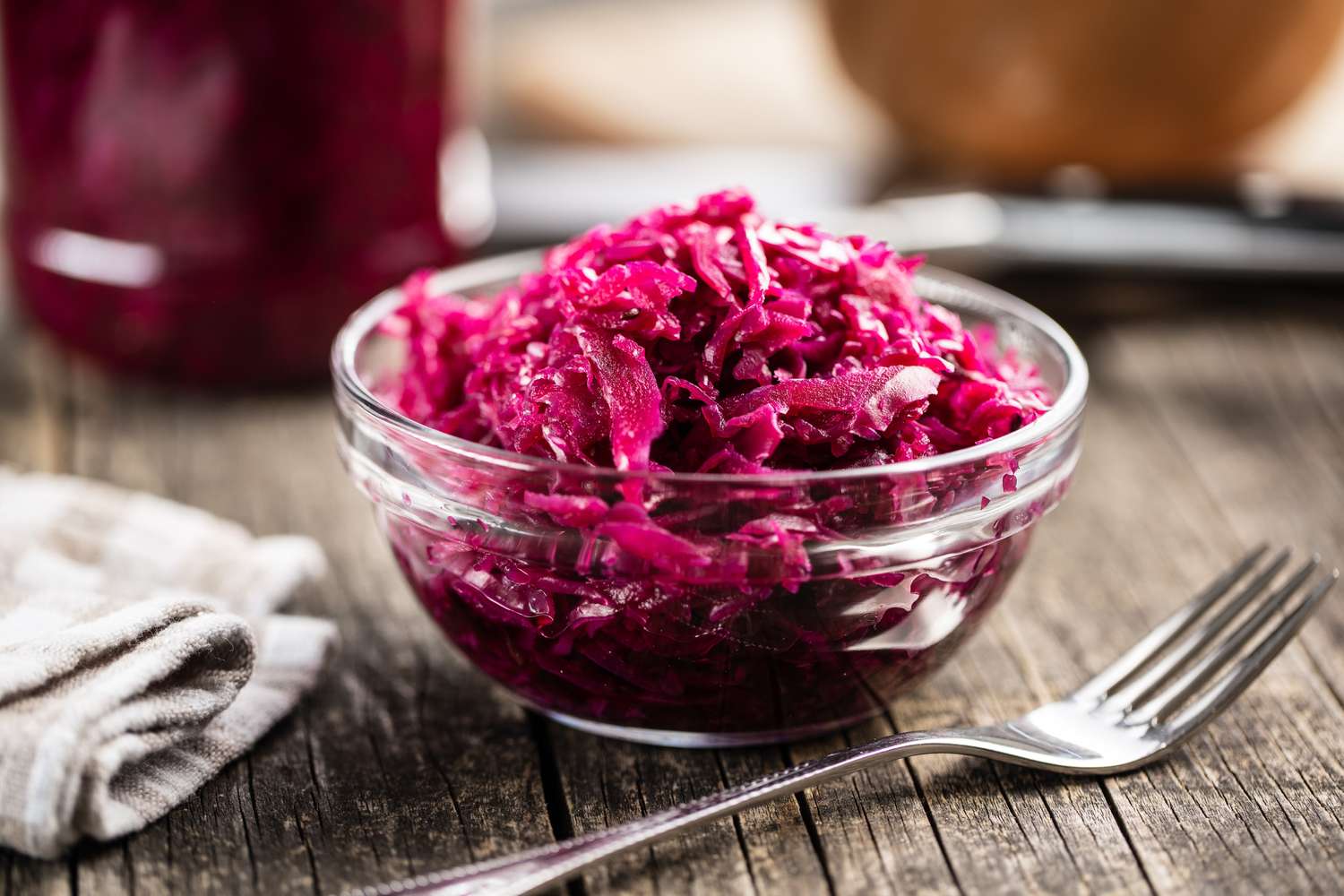
Fermented foods like yogurt, sauerkraut, and kombucha are packed with good bacteria that support gut health and digestion. Research suggests that eating more fermented foods can help balance your gut microbiome, the community of microorganisms in your digestive system.
1. Apple Cider Vinegar
jayk7 / Getty Images
Apple cider vinegar is an acetic acid made from fermenting apple juice. It’s often touted for multiple health benefits, including supporting gut health. Because of its natural probiotics from the fermentation process, consuming apple cider vinegar may improve the bacterial environment in the gut and boost the immune system.
Check the label to see whether the apple cider vinegar is pasteurized, meaning that the bacteria contributing to gut health benefits are removed for safety.
2. Kimchi
Elena Katkova / Getty Images
This spicy Asian dish is made from fermented cabbage. It contains more varieties of probiotics (healthy bacteria) than sauerkraut. Kimchi is rich in fiber, vitamins, minerals, antioxidants, and the bacterial species Lactobacilli.
Regularly eating this fermented food can:
3. Kefir
Viktoriya Telminova / Getty Images
Kefir, a fermented dairy beverage, contains probiotics that help improve the diversity of gut bacteria. Its prebiotics also feed and modulate the good bacteria in your gut microbiome. In one study, research has shown that people who drank kefir regularly for eight weeks reported improvements in gastrointestinal (GI) symptoms.
Kefir is lower in lactose than other dairy products, making it an option for people sensitive to lactose.
4. Kombucha
ruizluquepaz / Getty Images
Kombucha is a carbonated and fermented beverage produced from tea, yeast, bacteria, sugar, and sometimes fruit for added flavor. Due to the way yeast transforms the sugar during the fermentation process, this drink also contains a very small amount of alcohol.
Research suggests that kombucha’s probiotic and antioxidant properties may help reduce gut dysbiosis (an imbalance in the gut microbiome). However, the exact probiotic benefits may vary by brand, as each beverage batch could contain different levels of beneficial bacteria.
5. Miso
Ika Rahma / Getty Images
Miso is a smooth paste made from fermented soybeans using a two-step fermentation process with mold, bacteria, and yeast.
The probiotics found in miso can help with digestion and overall gut health, and may also benefit immune system function, regulate blood sugar, and reduce allergy risk.
6. Sauerkraut
ollo / Getty Images
Sauerkraut is cabbage fermented in lactic acid bacteria, which acts as a probiotic. People who consume sauerkraut daily may experience an improved gut microbiome because it keeps most of its beneficial bacteria throughout the fermentation process.
Pasteurized sauerkraut doesn’t contain the same live cultures that help support digestion as the fresh variety usually found in the refrigerated section at the grocery store. Some types of sauerkraut, may worsen irritable bowel syndrome (IBS) symptoms, so it may not be well-tolerated in people with this condition.
7. Tempeh
Ika Rahma / Getty Images
Tempeh, made from fermented soybeans, is fermented using fungi and good bacteria like Lactobacillus strains. It’s also high in fiber, which helps support digestion.
Many types of tempeh are pasteurized and cooked before consumption, so their active probiotics (and potential digestive health benefits) may not be as strong as those of other fermented foods.
8. Yogurt
Johner Images / Getty Images
Yogurt is made by heating milk, adding healthy bacterial strains, and allowing the mixture to ferment for several hours. Most types of yogurt contain bacterial strains that can help balance the gut and improve digestion.
Studies also suggest that the probiotics found in yogurt may help reduce IBS symptoms, like bloating, diarrhea, or constipation.
9. Pickles
MirageC / Getty Images
Pickles can be made through fermentation or a standard pickling process. When fermented, pickles are produced with natural lactic acid that supports good gut bacteria, improving digestion and nutrient absorption of other foods you eat.
Fermented pickles containing the Lactobacillus bacteria promoted better digestion and a stronger immune system, and contained vitamins, minerals, and antioxidants that may support chronic disease prevention.
A Word For Verywell
Fermented foods provide metabolites such as short-chain fatty acids, polyphenolic compounds, and bioactive peptides, which may further support gut health by regulating inflammation and supporting the intestinal barrier.
:max_bytes(150000):strip_icc()/DrSohaibImtiazPortrait-0e6c2d829c2b4ccba6718549159f2dd2.jpg)
:max_bytes(150000):strip_icc()/IMG_5047-9727550a95404c49a7515e66930004ef.JPG)