

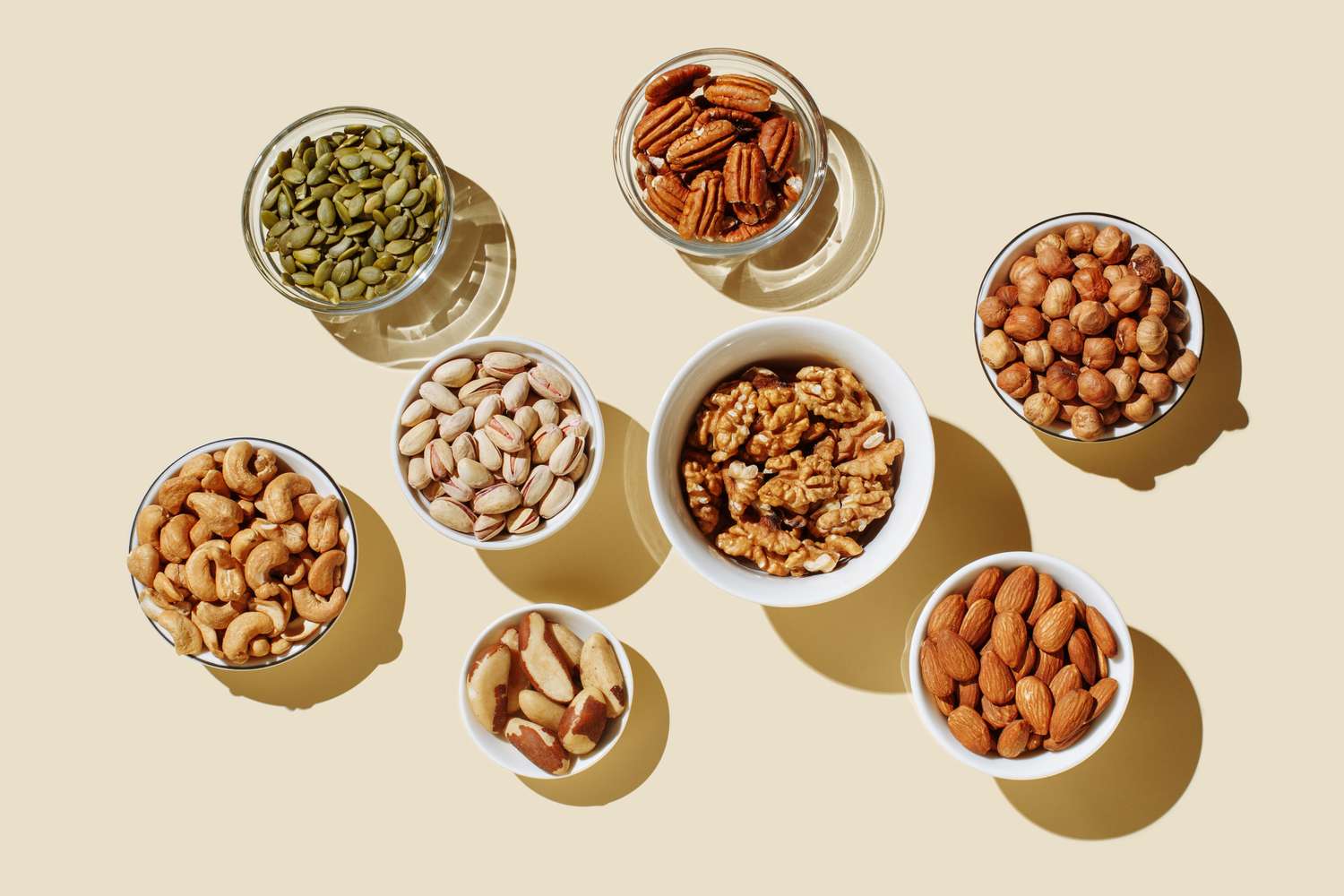
Nuts are a crunchy, satisfying snack packed with fiber, protein, and healthy fats. Eating them regularly, especially almonds, pistachios, and walnuts, may support heart health and weight management.
1. Almonds
limpido / Getty Images
A 1-ounce serving of almonds contains:
- Calories: 164
- Protein: 6 grams (g)
- Fiber: 3.5 g
- Fat: 14 grams
- Magnesium: 76.5 milligrams (mg)
- Potassium: 208 mg
Almonds are a versatile snack that can be enjoyed raw or roasted. They can be made into almond flour, milk, or butter. Almonds are also rich in protein and fiber.
Eating almonds regularly may reduce your risk of heart disease. A study found that people who ate almonds daily experienced lower levels of low-density lipoprotein (LDL) cholesterol and inflammatory markers. Study participants also experienced lower levels of hemoglobin A1c.
2. Walnuts
Arx0nt / Getty Images
A 1-ounce serving of walnuts contains:
- Calories: 185
- Protein: 4 g
- Fiber: 2 g
- Fat: 18.5 g
- Magnesium: 44.8 mg
- Copper: 0.5 mg
Walnuts are large, crunchy nuts rich in monounsaturated fats. They are also a good source of omega-3 fatty acids and may lower cholesterol and blood pressure levels.
Eating walnuts regularly may improve brain health and lower the risk of dementia. However, more research is needed to determine whether walnuts protect against dementia.
3. Brazil Nuts
mikroman6 / Getty Images
A 1-ounce serving of Brazil nuts contains:
- Calories: 187
- Protein: 4 g
- Fiber: 2 g
- Fat: 19 g
- Magnesium: 107 mg
- Selenium: 544 mg
Brazil nuts are large and rich in vitamins and minerals, including selenium, magnesium, and vitamin E. They are a good source of selenium, a nutrient the body needs for thyroid hormone production. However, limiting your intake of Brazil nuts is important to avoid consuming too much selenium.
4. Pistachios
Diana Taliun / Getty Images
A 1-ounce serving of pistachios contains:
- Calories: 159
- Protein: 6 g
- Fiber: 3 g
- Fat: 13 g
- Potassium: 289 mg
- Vitamin B6: 0.5 mg
Pistachios are vibrant, green nuts with a satisfying crunch. They are rich in vitamin B6 and antioxidants. They may also have anti-inflammatory effects in the body. Eating pistachios every day may support a healthy weight and blood pressure.
5. Cashews
Elena_Danileiko / Getty Images
A 1-ounce serving of cashews contains:
- Calories: 157
- Protein: 5 g
- Fiber: 1 g
- Fat: 12 g
- Potassium: 187 mg
- Copper: 0.629 mg
Cashews are a popular snack thanks to their smooth, crunchy texture. Eating cashews regularly may reduce your heart disease risk because of their blood pressure-lowering effects. Cashews are rich in copper, a mineral necessary for nervous system function.
6. Macadamia Nuts
Dmytro Chernykov / Getty Images
A 1-ounce serving of macadamia nuts contains:
- Calories: 204
- Protein: 2.2 g
- Fiber: 2.4 g
- Fat: 21.5 g
- Magnesium: 26.9 mg
- Potassium: 104 mg
Macadamia nuts are popular for their creamy, buttery texture. They are a tasty snack that may lower cholesterol and triglyceride levels in the blood.
7. Hazelnuts
ligora / Getty Images
A 1-ounce serving of hazelnuts contains:
- Calories: 178
- Protein: 4 g
- Fiber: 3 g
- Fat: 17 g
- Magnesium: 42 mg
- Vitamin E: 4.25 mg
Hazelnuts are sweet and can be eaten raw, roasted, or ground into hazelnut butter. They are rich in vitamins and minerals, including magnesium and vitamin E.
Hazelnuts may have anti-inflammatory effects and reduce the risk of heart disease. Research shows that eating hazelnuts may lower blood pressure and cholesterol levels.
8. Pecans
Na Zarr / Getty Images
A 1-ounce serving of pecans contains:
- Calories: 201
- Protein: 3 g
- Fiber: 3 g
- Fat: 21 g
- Calcium: 20 mg
- Zinc: 1.4 mg
Pecans are known for their tasty flavor in pies and cakes. They also provide a filling snack. Pecans are a good source of zinc and may reduce the risk of heart disease. Eating pecans regularly may improve the ratio of high-density lipoprotein (HDL) to low-density lipoprotein (LDL) cholesterol.
9. Peanuts
Olha Danylenko / Getty Images
A 1-ounce serving of peanuts contains:
- Calories: 162
- Protein: 7 g
- Fiber: 2.5 g
- Fat: 13.5 g
- Calcium: 26 mg
- Folate: 69.7 micrograms (mcg)
While they fall into the legume family, peanuts are very similar to other tree nuts and provide many of the same benefits. Peanuts are rich in folate, a B vitamin critical for fetal development during pregnancy.
Can You Eat Too Many Nuts?
Nuts have several health benefits, but enjoying them in moderation is important. Many nuts are rich in fat, and eating a large amount daily may cause you to consume more fat than is healthy.
Roasted or salted nuts are often high in sodium. Opt for nuts that are unsalted or low in sodium. Nuts can also be high in a chemical called oxalate, which may raise the risk of kidney stones.
Ask your healthcare provider if eating nuts every day is healthy for you.
:max_bytes(150000):strip_icc()/carriemadormo3-0d20d62434bb4344bdea385664529e28.jpg)