

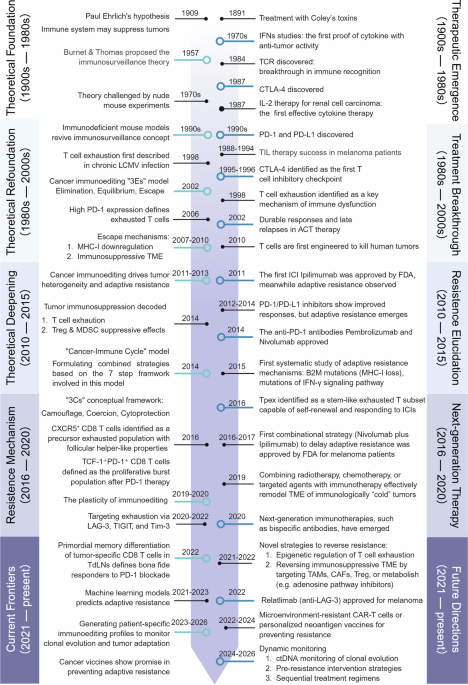
Oiseth SJ, Aziz MS. Cancer immunotherapy: a brief review of the history, possibilities, and challenges ahead. J Cancer Metastasis Treat. 2017;3:250–61.
Leach DR, Krummel MF, Allison JP. Enhancement of antitumor immunity by CTLA-4 blockade. Science. 1996;271:1734–36. https://doi.org/10.1126/science.271.5256.1734.
Topalian SL, Hodi FS, Brahmer JR, Gettinger SN, Smith DC, McDermott DF, et al. Safety, activity, and immune correlates of anti-PD-1 antibody in cancer. N Engl J Med. 2012;366:2443–54. https://doi.org/10.1056/NEJMoa1200690.
Ishida Y, Agata Y, Shibahara K, Honjo T. Induced expression of PD-1, a novel member of the immunoglobulin gene superfamily, upon programmed cell death. EMBO J. 1992;11:3887–95. https://doi.org/10.1002/j.1460-2075.1992.tb05481.x.
Kuwana Y, Asakura Y, Utsunomiya N, Nakanishi M, Arata Y, Itoh S, et al. Expression of chimeric receptor composed of immunoglobulin-derived V regions and T-cell receptor-derived C regions. Biochem Biophys Res Commun. 1987;149:960–8. https://doi.org/10.1016/0006-291x(87)90502-x.
Gross G, Waks T, Eshhar Z. Expression of immunoglobulin-T-cell receptor chimeric molecules as functional receptors with antibody-type specificity. Proc Natl Acad Sci USA. 1989;86:10024–8. https://doi.org/10.1073/pnas.86.24.10024.
Maude SL, Laetsch TW, Buechner J, Rives S, Boyer M, Bittencourt H, et al. Tisagenlecleucel in children and young adults with B-cell lymphoblastic leukemia. N Engl J Med. 2018;378:439–48. https://doi.org/10.1056/NEJMoa1709866.
Freeman GJ, Long AJ, Iwai Y, Bourque K, Chernova T, Nishimura H, et al. Engagement of the PD-1 immunoinhibitory receptor by a novel B7 family member leads to negative regulation of lymphocyte activation. J Exp Med. 2000;192:1027–34. https://doi.org/10.1084/jem.192.7.1027.
Burnet FM. Immunological surveillance in neoplasia. Transplant Rev. 1971;7:3–25. https://doi.org/10.1111/j.1600-065x.1971.tb00461.x.
Dunn GP, Bruce AT, Ikeda H, Old LJ, Schreiber RD. Cancer immunoediting: from immunosurveillance to tumor escape. Nat Immunol. 2002;3:991–8. https://doi.org/10.1038/ni1102-991.
Dunn GP, Old LJ, Schreiber RD. The three Es of cancer immunoediting. Annu Rev Immunol. 2004;22:329–60. https://doi.org/10.1146/annurev.immunol.22.012703.104803.
Dong H, Strome SE, Salomao DR, Tamura H, Hirano F, Flies DB, et al. Tumor-associated B7-H1 promotes T-apoptosis: a potential mechanism of immune evasion. Nat Med. 2002;8:793–800. https://doi.org/10.1038/nm730.
Yu H, Li J, Peng S, Liu Q, Chen D, He Z, et al. Tumor microenvironment: Nurturing cancer cells for immunoevasion and druggable vulnerabilities for cancer immunotherapy. Cancer Lett. 2024;611:217385. https://doi.org/10.1016/j.canlet.2024.217385.
Grant G, Ferrer CM. The role of the immune tumor microenvironment in shaping metastatic dissemination, dormancy, and outgrowth. Trends Cell Biol. 2025. https://doi.org/10.1016/j.tcb.2025.05.006 (2025).
Ilham S, Willis C, Kim K, Chung KC, Wood BM, Tan MS, et al. Cancer incidence in immunocompromised patients: a single-center cohort study. BMC Cancer. 2023;23:33. https://doi.org/10.1186/s12885-022-10497-4.
Galassi C, Chan TA, Vitale I, Galluzzi L. The hallmarks of cancer immune evasion. Cancer Cell. 2024;42:1825–63. https://doi.org/10.1016/j.ccell.2024.09.010.
Shi LZ, Fu T, Guan B, Chen J, Blando JM, Allison JP, et al. Interdependent IL-7 and IFN-γ signaling in T-cell controls tumor eradication by combined α-CTLA-4+α-PD-1 therapy. Nat Commun. 2016;7:12335. https://doi.org/10.1038/ncomms12335.
Brunet JF, Denizot F, Luciani MF, Roux-Dosseto M, Suzan M, Mattei MG, et al. A new member of the immunoglobulin superfamily -CTLA-4. Nature. 1987;328:267–70. https://doi.org/10.1038/328267a0.
Krummel MF, Allison JP. CD28 and CTLA-4 have opposing effects on the response of T cells to stimulation. J Exp Med. 1995;182:459–65. https://doi.org/10.1084/jem.182.2.459.
Hodi FS, O’Day SJ, McDermott DF, Weber RW, Sosman JA, Haanen JB, et al. Improved survival with ipilimumab in patients with metastatic melanoma. N Engl J Med. 2010;363:711–23. https://doi.org/10.1056/NEJMoa1003466.
Robert C, Thomas L, Bondarenko I, O’Day S, Weber J, Garbe C, et al. Ipilimumab plus dacarbazine for previously untreated metastatic melanoma. N Engl J Med. 2011;364:2517–26. https://doi.org/10.1056/NEJMoa1104621.
Schadendorf D, Hodi FS, Robert C, Weber JS, Margolin K, Hamid O, et al. Pooled analysis of long-term survival data from phase II and phase III trials of ipilimumab in unresectable or metastatic melanoma. J Clin Oncol. 2015;33:1889–94. https://doi.org/10.1200/jco.2014.56.2736.
Delyon J, Maio M, Lebbé C. The ipilimumab lesson in melanoma: achieving long-term survival. Semin Oncol. 2015;42:387–401. https://doi.org/10.1053/j.seminoncol.2015.02.005.
Keir ME, Butte MJ, Freeman GJ, Sharpe AH. PD-1 and its ligands in tolerance and immunity. Annu Rev Immunol. 2008;26:677–704. https://doi.org/10.1146/annurev.immunol.26.021607.090331.
Sun C, Mezzadra R, Schumacher TN. Regulation and function of the PD-L1 checkpoint. Immunity. 2018;48:434–52. https://doi.org/10.1016/j.immuni.2018.03.014.
Kythreotou A, Siddique A, Mauri FA, Bower M, Pinato DJ. PD-L1. J Clin Pathol. 2018;71:189–94. 10.1136/jclinpath-2017-204853%J.
Iwai Y, Ishida M, Tanaka Y, Okazaki T, Honjo T, Minato N. Involvement of PD-L1 on tumor cells in the escape from host immune system and tumor immunotherapy by PD-L1 blockade. Proc Natl Acad Sci USA. 2002;99:12293–7. https://doi.org/10.1073/pnas.192461099.
Garcia-Diaz A, Shin DS, Moreno BH, Saco J, Escuin-Ordinas H, Rodriguez GA, et al. Interferon receptor signaling pathways regulating PD-L1 and PD-L2 expression. Cell Rep. 2017;19:1189–201. https://doi.org/10.1016/j.celrep.2017.04.031.
Trautmann L, Janbazian L, Chomont N, Said EA, Gimmig S, Bessette B, et al. Upregulation of PD-1 expression on HIV-specific CD8+ T cells leads to reversible immune dysfunction. Nat Med. 2006;12:1198–202. https://doi.org/10.1038/nm1482.
Sun Q, Dong C. Regulators of CD8+ T-cell exhaustion. Nat Rev Immunol. 2025. https://doi.org/10.1038/s41577-025-01221-x.
Wherry EJ. T-cell exhaustion. Nat Immunol. 2011;12:492–9. https://doi.org/10.1038/ni.2035.
Tumeh PC, Harview CL, Yearley JH, Shintaku IP, Taylor EJ, Robert L, et al. PD-1 blockade induces responses by inhibiting adaptive immune resistance. Nature. 2014;515:568–71. https://doi.org/10.1038/nature13954.
Chow A, Perica K, Klebanoff CA, Wolchok JD. Clinical implications of T-cell exhaustion for cancer immunotherapy. Nat Rev Clin Oncol. 2022;19:775–90. https://doi.org/10.1038/s41571-022-00689-z.
Zou W, Wolchok JD, Chen L. PD-L1 (B7-H1) and PD-1 pathway blockade for cancer therapy: Mechanisms, response biomarkers, and combinations. Sci Transl Med. 2016;8:328rv324. https://doi.org/10.1126/scitranslmed.aad7118.
Postow MA, Sidlow R, Hellmann MD. Immune-related adverse events associated with immune checkpoint blockade. N Engl J Med. 2018;378:158–68. https://doi.org/10.1056/NEJMra1703481.
Larkin J, Lao CD, Urba WJ, McDermott DF, Horak C, Jiang J, et al. Efficacy and safety of nivolumab in patients with BRAF V600 mutant and BRAF wild-type advanced melanoma: a pooled analysis of 4 clinical trials. JAMA Oncol. 2015;1:433–40. https://doi.org/10.1001/jamaoncol.2015.1184.
Subbiah V, Gouda MA, Ryll B, Burris HA 3rd, Kurzrock R. The evolving landscape of tissue-agnostic therapies in precision oncology. CA: Cancer J Clin. 2024;74:433–52. https://doi.org/10.3322/caac.21844.
Robert C, Long GV, Brady B, Dutriaux C, Maio M, Mortier L, et al. Nivolumab in previously untreated melanoma without BRAF mutation. N Engl J Med. 2015;372:320–30. https://doi.org/10.1056/NEJMoa1412082.
Noringriis, IM et al. Long-term clinical outcome of patients with metastatic melanoma and initial stable disease during anti-PD-1 checkpoint inhibitor immunotherapy with pembrolizumab. Br J Cancer. 2025. https://doi.org/10.1038/s41416-025-03048-8.
Gubin MM, Zhang X, Schuster H, Caron E, Ward JP, Noguchi T, et al. Checkpoint blockade cancer immunotherapy targets tumor-specific mutant antigens. Nature. 2014;515:577–81. https://doi.org/10.1038/nature13988.
Schachter J, Ribas A, Long GV, Arance A, Grob JJ, Mortier L, et al. Pembrolizumab versus ipilimumab for advanced melanoma: final overall survival results of a multicenter, randomized, open-label phase 3 study (KEYNOTE-006). Lancet. 2017;390:1853–62. https://doi.org/10.1016/s0140-6736(17)31601-x.
Wolchok JD. et al. Final, 10-year outcomes with nivolumab plus ipilimumab in advanced melanoma. N Engl J Med. 2024. https://doi.org/10.1056/NEJMoa2407417.
van Not OJ, van den Eertwegh A, Jalving H, Bloem M, Haanen JB, van Rijn RS, et al. Long-term survival in patients with advanced melanoma. JAMA Netw Open. 2024;7:e2426641. https://doi.org/10.1001/jamanetworkopen.2024.26641.
Schmid P, Cortes J, Dent R, Pusztai L, McArthur H, Kümmel S, et al. Event-free survival with pembrolizumab in early triple-negative breast cancer. N Engl J Med. 2022;386:556–67. https://doi.org/10.1056/NEJMoa2112651.
van der Heijden MS, Sonpavde G, Powles T, Necchi A, Burotto M, Schenker M, et al. Nivolumab plus gemcitabine-cisplatin in advanced urothelial carcinoma. N Engl J Med. 2023;389:1778–89. https://doi.org/10.1056/NEJMoa2309863.
Lorusso D, Xiang Y, Hasegawa K, Scambia G, Leiva M, Ramos-Elias P, et al. Pembrolizumab or placebo with chemoradiotherapy followed by pembrolizumab or placebo for newly diagnosed, high-risk, locally advanced cervical cancer (ENGOT-cx11/GOG-3047/KEYNOTE-A18): a randomized, double-blind, phase 3 clinical trial. Lancet. 2024;403:1341–50. https://doi.org/10.1016/s0140-6736(24)00317-9.
Chen AP, Sharon E, O’Sullivan-Coyne G, Moore N, Foster JC, Hu JS, et al. Atezolizumab for advanced alveolar soft part sarcoma. N Engl J Med. 2023;389:911–21. https://doi.org/10.1056/NEJMoa2303383.
Bonvalot S, Rutkowski PL, Thariat J, Carrère S, Ducassou A, Sunyach MP, et al. NBTXR3, a first-in-class radioenhancer hafnium oxide nanoparticle, plus radiotherapy versus radiotherapy alone in patients with locally advanced soft-tissue sarcoma (Act.In.Sarc): a multicenter, phase 2-3, randomized, controlled trial. Lancet Oncol. 2019;20:1148–59. https://doi.org/10.1016/s1470-2045(19)30326-2.
de Castro G JR Jr, Kudaba I, Wu YL, Lopes G, Kowalski DM, Turna HZ, et al. Five-year outcomes with pembrolizumab versus chemotherapy as first-line therapy in patients with non-small cell lung cancer and programmed death ligand-1 tumor proportion score ≥ 1% in the KEYNOTE-042 study. J Clin Oncol. 2023;41:1986–91. https://doi.org/10.1200/jco.21.02885.
Awad MM, Govindan R, Balogh KN, Spigel DR, Garon EB, Bushway ME, et al. Personalized neoantigen vaccine NEO-PV-01 with chemotherapy and anti-PD-1 as first-line treatment for nonsquamous non-small cell lung cancer. Cancer Cell. 2022;40:1010–1026.e1011. https://doi.org/10.1016/j.ccell.2022.08.003.
Garon EB, Hellmann MD, Rizvi NA, Carcereny E, Leighl NB, Ahn MJ, et al. Five-year overall survival for patients with advanced non‒small-cell lung cancer treated with pembrolizumab: results from the phase I KEYNOTE-001 study. J Clin Oncol. 2019;37:2518–27. https://doi.org/10.1200/jco.19.00934.
Grimm MO, Schostak M, Grün CB, Loidl W, Pichler M, Zimmermann U, et al. Nivolumab + ipilimumab as immunotherapeutic boost in metastatic urothelial carcinoma: a nonrandomized clinical trial. JAMA Oncol. 2024;10:755–64. https://doi.org/10.1001/jamaoncol.2024.0938.
Rosner S, Reuss JE, Forde PM. PD-1 blockade in early-stage lung cancer. Annu Rev Med. 2019;70:425–35. https://doi.org/10.1146/annurev-med-050217-025205.
Song Y, Gao Q, Zhang H, Fan L, Zhou J, Zou D, et al. Treatment of relapsed or refractory classical Hodgkin lymphoma with the anti-PD-1, tislelizumab: results of a phase 2, single-arm, multicenter study. Leukemia. 2020;34:533–42. https://doi.org/10.1038/s41375-019-0545-2.
Schmid P et al. Overall survival with pembrolizumab in early-stage triple-negative breast cancer. N Engl J Med. 2024. https://doi.org/10.1056/NEJMoa2409932.
Yau C, Osdoit M, van der Noordaa M, Shad S, Wei J, de Croze D, et al. Residual cancer burden after neoadjuvant chemotherapy and long-term survival outcomes in breast cancer: a multicenter pooled analysis of 5161 patients. Lancet Oncol. 2022;23:149–60. https://doi.org/10.1016/s1470-2045(21)00589-1.
Stein JE, Soni A, Danilova L, Cottrell TR, Gajewski TF, Hodi FS, et al. Major pathologic response on biopsy (MPRbx) in patients with advanced melanoma treated with anti-PD-1: evidence for an early, on-therapy biomarker of response. Ann Oncol. 2019;30:589–96. https://doi.org/10.1093/annonc/mdz019.
Choueiri TK, Tomczak P, Park SH, Venugopal B, Ferguson T, Symeonides SN, et al. Overall survival with adjuvant pembrolizumab in renal-cell carcinoma. N Engl J Med. 2024;390:1359–71. https://doi.org/10.1056/NEJMoa2312695.
Jiang T, Shi J, Dong Z, Hou L, Zhao C, Li X, et al. Genomic landscape and its correlations with tumor mutational burden, PD-L1 expression, and immune cells infiltration in Chinese lung squamous cell carcinoma. J Hematol Oncol. 2019;12:75. https://doi.org/10.1186/s13045-019-0762-1.
Ghorani E, Rosenthal R, McGranahan N, Reading JL, Lynch M, Peggs KS, et al. Differential binding affinity of mutated peptides for MHC class I is a predictor of survival in advanced lung cancer and melanoma. Ann Oncol. 2018;29:271–9. https://doi.org/10.1093/annonc/mdx687.
Sadelain M. Chimeric antigen receptors: driving immunology toward synthetic biology. Curr Opin Immunol. 2016;41:68–76. https://doi.org/10.1016/j.coi.2016.06.004.
Yang JC, Rosenberg SA. Adoptive T-cell therapy for cancer. Adv Immunol. 2016;130:279–94. https://doi.org/10.1016/bs.ai.2015.12.006.
Sadelain M, Brentjens R, Rivière I. The basic principles of chimeric antigen receptor design. Cancer Discov. 2013;3:388–98. https://doi.org/10.1158/2159-8290.Cd-12-0548.
Rosenberg SA, Yang JC, Sherry RM, Kammula US, Hughes MS, Phan GQ, et al. Durable complete responses in heavily pretreated patients with metastatic melanoma using T-cell transfer immunotherapy. Clin Cancer Res. 2011;17:4550–7. https://doi.org/10.1158/1078-0432.Ccr-11-0116.
Echchannaoui H, Petschenka J, Ferreira EA, Hauptrock B, Lotz-Jenne C, Voss RH, et al. A potent tumor-reactive p53-specific single-chain TCR without on- or off-target autoimmunity in vivo. Mol Ther. 2019;27:261–71. https://doi.org/10.1016/j.ymthe.2018.11.006.
Wei J, Guo Y, Wang Y, Wu Z, Bo J, Zhang B, et al. Clinical development of CAR T-cell therapy in China: 2020 update. Cell Mol Immunol. 2021;18:792–804. https://doi.org/10.1038/s41423-020-00555-x.
Maude SL, Frey N, Shaw PA, Aplenc R, Barrett DM, Bunin NJ, et al. Chimeric antigen receptor T cells for sustained remissions in leukemia. N Engl J Med. 2014;371:1507–17. https://doi.org/10.1056/NEJMoa1407222.
Guo Y, Feng K, Tong C, Jia H, Liu Y, Wang Y, et al. Efficiency and side effects of anti-CD38 CAR T cells in an adult patient with relapsed B-ALL after failure of bispecific CD19/CD22 CAR T-cell treatment. Cell Mol Immunol. 2020;17:430–2. https://doi.org/10.1038/s41423-019-0355-5.
Dai H, Wu Z, Jia H, Tong C, Guo Y, Ti D, et al. Bispecific CAR-T cells targeting both CD19 and CD22 for therapy of adults with relapsed or refractory B-cell acute lymphoblastic leukemia. J Hematol Oncol. 2020;13:30. https://doi.org/10.1186/s13045-020-00856-8.
Fesnak AD, June CH, Levine BL. Engineered T cells: the promise and challenges of cancer immunotherapy. Nat Rev Cancer. 2016;16:566–581. https://doi.org/10.1038/nrc.2016.97.
Peng L, Sferruzza G, Yang L, Zhou L, Chen S. CAR-T and CAR-NK as cellular cancer immunotherapy for solid tumors. Cell Mol Immunol. 2024;21:1089–108. https://doi.org/10.1038/s41423-024-01207-0.
Contreras A, Sen S, Tatar AJ, Mahvi DA, Meyers JV, Srinand P, et al. Enhanced local and systemic anti-melanoma CD8+ T-cell responses after memory T-cell-based adoptive immunotherapy in mice. Cancer Immunol Immunother. 2016;65:601–11. https://doi.org/10.1007/s00262-016-1823-8.
Maalej KM, Merhi M, Inchakalody VP, Mestiri S, Alam M, Maccalli C, et al. CAR-cell therapy in the era of solid tumor treatment: current challenges and emerging therapeutic advances. Mol Cancer. 2023;22:20. https://doi.org/10.1186/s12943-023-01723-z.
Short L, Holt RA, Cullis PR, Evgin L. Direct in vivo CAR T-cell engineering. Trends Pharmacol Sci. 2024;45:406–18. https://doi.org/10.1016/j.tips.2024.03.004.
Bot A, Scharenberg A, Friedman K, Guey L, Hofmeister R, Andorko JI, et al. In vivo chimeric antigen receptor (CAR)-T-cell therapy. Nat Rev Drug Discov. 2026;25:116–37. https://doi.org/10.1038/s41573-025-01291-5.
Xu J, Wang BY, Yu SH, Chen SJ, Yang SS, Liu R, et al. Long-term remission and survival in patients with relapsed or refractory multiple myeloma after treatment with LCAR-B38M CAR T cells: 5-year follow-up of the LEGEND-2 trial. J Hematol Oncol. 2024;17:23. https://doi.org/10.1186/s13045-024-01530-z.
Verdys P, Johansen AZ, Gupta A, Presti M, Dionisio E, Madsen DH, et al. Acquired resistance to immunotherapy in solid tumors. Trends Mol Med. 2025;31:1008–20. https://doi.org/10.1016/j.molmed.2025.03.010.
Sharma P, Hu-Lieskovan S, Wargo JA, Ribas A. Primary, adaptive, and acquired resistance to cancer immunotherapy. Cell. 2017;168:707–23. https://doi.org/10.1016/j.cell.2017.01.017.
Schoenfeld AJ, Hellmann MD. Acquired resistance to immune checkpoint inhibitors. Cancer Cell. 2020;37:443–55. https://doi.org/10.1016/j.ccell.2020.03.017.
Marei HE, Hasan A, Pozzoli G, Cenciarelli C. Cancer immunotherapy with immune checkpoint inhibitors (ICIs): potential, mechanisms of resistance, and strategies for reinvigorating T-cell responsiveness when resistance is acquired. Cancer Cell Int. 2023;23:64. https://doi.org/10.1186/s12935-023-02902-0.
Cali Daylan AE, Halmos B. Long-term benefit of immunotherapy in metastatic non-small cell lung cancer: the tale of the tail. Transl Lung Cancer Res. 2023;12:1636–42. https://doi.org/10.21037/tlcr-23-245.
Hamid O, Robert C, Daud A, Hodi FS, Hwu WJ, Kefford R, et al. Five-year survival outcomes for patients with advanced melanoma treated with pembrolizumab in KEYNOTE-001. Ann Oncol. 2019;30:582–88. https://doi.org/10.1093/annonc/mdz011.
Memon D, Schoenfeld AJ, Ye D, Fromm G, Rizvi H, Zhang X, et al. Clinical and molecular features of acquired resistance to immunotherapy in non-small cell lung cancer. Cancer Cell. 2024;42:209–224.e209. https://doi.org/10.1016/j.ccell.2023.12.013.
Attia P, Phan GQ, Maker AV, Robinson MR, Quezado MM, Yang JC, et al. Autoimmunity correlates with tumor regression in patients with metastatic melanoma treated with anti-cytotoxic T-lymphocyte antigen-4. J Clin Oncol. 2005;23:6043–53. https://doi.org/10.1200/jco.2005.06.205.
Maker AV, Yang JC, Sherry RM, Topalian SL, Kammula US, Royal RE, et al. Intrapatient dose escalation of anti-CTLA-4 antibody in patients with metastatic melanoma. J Immunother. 2006;29:455–63. https://doi.org/10.1097/01.cji.0000208259.73167.58.
Pal SK, Albiges L, Tomczak P, Suárez C, Voss MH, de Velasco G, et al. Atezolizumab plus cabozantinib versus cabozantinib monotherapy for patients with renal cell carcinoma after progression with previous immune checkpoint inhibitor treatment (CONTACT-03): a multicenter, randomized, open-label, phase 3 trial. Lancet. 2023;402:185–95. https://doi.org/10.1016/s0140-6736(23)00922-4.
Wakelee H, Liberman M, Kato T, Tsuboi M, Lee SH, Gao S, et al. Perioperative pembrolizumab for early-stage non-small cell lung cancer. N Engl J Med. 2023;389:491–503. https://doi.org/10.1056/NEJMoa2302983.
Traboulsi W, Gaur P, Kundu S, Ramlaoui Z, Priestley-Milianta C, Iyengar A, et al. PARP inhibition generates enhanced CD8(+) central memory T cells by transcriptional and metabolic reprogramming. Nat Immunol. 2026;27:189–99. https://doi.org/10.1038/s41590-025-02383-5.
Alexander PB, Wang XF. Resistance to receptor tyrosine kinase inhibition in cancer: molecular mechanisms and therapeutic strategies. Front Med. 2015;9:134–8. https://doi.org/10.1007/s11684-015-0396-9.
Oba T, Long MD, Keler T, Marsh HC, Minderman H, Abrams SI, et al. Overcoming primary and acquired resistance to anti-PD-L1 therapy by induction and activation of tumor-residing cDC1s. Nat Commun. 2020;11:5415. https://doi.org/10.1038/s41467-020-19192-z.
Liu Z, Yang Z, Wu J, Zhang W, Sun Y, Zhang C, et al. A single-cell atlas reveals immune heterogeneity in anti-PD-1-treated non-small cell lung cancer. Cell. 2025;188:3081–96. https://doi.org/10.1016/j.cell.2025.03.018.
Kim TK, Vandsemb EN, Herbst RS, Chen L. Adaptive immune resistance at the tumor site: mechanisms and therapeutic opportunities. Nat Rev Drug Discov. 2022;21:529–40. https://doi.org/10.1038/s41573-022-00493-5.
Kim TK, Herbst RS, Chen L. Defining and understanding adaptive resistance in cancer immunotherapy. Trends Immunol. 2018;39:624–31. https://doi.org/10.1016/j.it.2018.05.001.
Chen DS, Mellman I. Oncology meets immunology: the cancer-immunity cycle. Immunity. 2013;39:1–10. https://doi.org/10.1016/j.immuni.2013.07.012.
Mellman I, Chen DS, Powles T, Turley SJ. The cancer-immunity cycle: Indication, genotype, and immunotype. Immunity. 2023;56:2188–205. https://doi.org/10.1016/j.immuni.2023.09.011.
McLane LM, Abdel-Hakeem MS, Wherry EJ. CD8 T-cell exhaustion during chronic viral infection and cancer. Annu Rev Immunol. 2019;37:457–95. https://doi.org/10.1146/annurev-immunol-041015-055318.
Li C, Li W, Xiao J, Jiao S, Teng F, Xue S, et al. ADAP and SKAP55 deficiency suppresses PD-1 expression in CD8+ cytotoxic T lymphocytes for enhanced anti-tumor immunotherapy. EMBO Mol Med. 2015;7:754–69. https://doi.org/10.15252/emmm.201404578.
Lauss M, Phung B, Borch TH, Harbst K, Kaminska K, Ebbesson A, et al. Molecular patterns of resistance to immune checkpoint blockade in melanoma. Nat Commun. 2024;15:3075. https://doi.org/10.1038/s41467-024-47425-y.
Shin DS, Zaretsky JM, Escuin-Ordinas H, Garcia-Diaz A, Hu-Lieskovan S, Kalbasi A, et al. Primary resistance to PD-1 blockade mediated by JAK1/2 mutations. Cancer Discov. 2017;7:188–201. https://doi.org/10.1158/2159-8290.Cd-16-1223.
Rizvi NA, Hellmann MD, Snyder A, Kvistborg P, Makarov V, Havel JJ, et al. Cancer immunology. Mutational landscape determines sensitivity to PD-1 blockade in non-small cell lung cancer. Science. 2015;348:124–8. https://doi.org/10.1126/science.aaa1348.
Alban TJ, Riaz N, Parthasarathy P, Makarov V, Kendall S, Yoo SK,et al. Neoantigen immunogenicity landscapes and evolution of tumor ecosystems during immunotherapy with nivolumab. Nat Med. 2024;30:3209–22. https://doi.org/10.1038/s41591-024-03240-y.
Schumacher TN, Schreiber RD. Neoantigens in cancer immunotherapy. Science. 2015;348:69–74. https://doi.org/10.1126/science.aaa4971.
Cristescu R, Mogg R, Ayers M, Albright A, Murphy E, Yearley J, et al. Pantumor genomic biomarkers for PD-1 checkpoint blockade-based immunotherapy. Science. 2018;362:eaar3593. https://doi.org/10.1126/science.aar3593.
Yi M, Jiao D, Xu H, Liu Q, Zhao W, Han X, et al. Biomarkers for predicting efficacy of PD-1/PD-L1 inhibitors. Mol Cancer. 2018;17:129. https://doi.org/10.1186/s12943-018-0864-3.
Böttcher JP, Bonavita E, Chakravarty P, Blees H, Cabeza-Cabrerizo M, Sammicheli S, et al. NK cells stimulate recruitment of cDC1 into the tumor microenvironment promoting cancer immune control. Cell. 2018;172:1022–1037.e1014. https://doi.org/10.1016/j.cell.2018.01.004.
Spranger S, Bao R, Gajewski TF. Melanoma-intrinsic β-catenin signaling prevents antitumor immunity. Nature. 2015;523:231–5. https://doi.org/10.1038/nature14404.
Alcaraz-Serna A, Bustos-Morán E, Fernández-Delgado I, Calzada-Fraile D, Torralba D, Marina-Zárate E,et al. Immune synapse instructs epigenomic and transcriptomic functional reprogramming in dendritic cells. Sci Adv. 2021; 7:eabb9965. https://doi.org/10.1126/sciadv.abb9965.
Scarlett UK, Rutkowski MR, Rauwerdink AM, Fields J, Escovar-Fadul X, Baird J, et al. Ovarian cancer progression is controlled by phenotypic changes in dendritic cells. J Exp Med. 2012;209:495–506. https://doi.org/10.1084/jem.20111413.
Caronni N, Simoncello F, Stafetta F, Guarnaccia C, Ruiz-Moreno JS, Opitz B, et al. Downregulation of membrane trafficking proteins and lactate conditioning determine loss of dendritic cell function in lung cancer. Cancer Res. 2018;78:1685–99. https://doi.org/10.1158/0008-5472.Can-17-1307.
Quail DF, Joyce JA. The microenvironmental landscape of brain tumors. Cancer Cell. 2017;31:326–41. https://doi.org/10.1016/j.ccell.2017.02.009.
Yi M, Niu M, Wu Y, Ge H, Jiao D, Zhu S, et al. Combination of oral STING agonist MSA-2 and anti-TGF-β/PD-L1 bispecific antibody YM101: a novel immune cocktail therapy for noninflamed tumors. J Hematol Oncol. 2022;15:142. https://doi.org/10.1186/s13045-022-01363-8.
Lv M, Chen M, Zhang R, Zhang W, Wang C, Zhang Y, et al. Manganese is critical for antitumor immune responses via cGAS-STING and improves the efficacy of clinical immunotherapy. Cell Res. 2020;30:966–79. https://doi.org/10.1038/s41422-020-00395-4.
Ruf B, Bruhns M, Babaei S, Kedei N, Ma L, Revsine M, et al. Tumor-associated macrophages trigger MAIT cell dysfunction at the HCC invasive margin. Cell. 2023;186:3686–3705.e3632. https://doi.org/10.1016/j.cell.2023.07.026.
Fang W, Zhou T, Shi H, Yao M, Zhang D, Qian H, et al. Progranulin induces immune escape in breast cancer by upregulatinging PD-L1 expression on tumor-associated macrophages (TAMs) and promoting CD8(+) T-cell exclusion. J Exp Clin Cancer Res. 2021;40:4. https://doi.org/10.1186/s13046-020-01786-6.
Huang CX, Lao XM, Wang XY, Ren YZ, Lu YT, Shi W, et al. Pericancerous cross-presentation to cytotoxic T lymphocytes impairs immunotherapeutic efficacy in hepatocellular carcinoma. Cancer Cell. 2024;42:2082–2097.e2010. https://doi.org/10.1016/j.ccell.2024.10.012.
Taguchi K, Onoe T, Yoshida T, Yamashita Y, Tanaka Y, Ohdan H. Tumor endothelial cell-mediated antigen-specific T-cell suppression via the PD-1/PD-L1 pathway. Mol Cancer Res. 2020;18:1427–40. https://doi.org/10.1158/1541-7786.Mcr-19-0897.
Yang P, Meng M, Zhou Q. Oncogenic cancer/testis antigens are a hallmark of cancer and a sensible target for cancer immunotherapy. Biochim Biophys Acta Rev Cancer. 2021;1876:188558. https://doi.org/10.1016/j.bbcan.2021.188558.
Brightman SE, Becker A, Thota RR, Naradikian MS, Chihab L, Zavala KS, et al. Neoantigen-specific stem cell memory-like CD4(+) T cells mediate CD8(+) T-cell-dependent immunotherapy of MHC class II-negative solid tumors. Nat Immunol. 2023;24:1345–57. https://doi.org/10.1038/s41590-023-01543-9.
Galon J, Costes A, Sanchez-Cabo F, Kirilovsky A, Mlecnik B, Lagorce-Pagès C, et al. Type, density, and location of immune cells within human colorectal tumors predict clinical outcome. Science. 2006;313:1960–4. https://doi.org/10.1126/science.1129139.
Bachireddy P, Azizi E, Burdziak C, Nguyen VN, Ennis CS, Maurer K, et al. Mapping the evolution of T cell states during response and resistance to adoptive cellular therapy. Cell Rep. 2021;37:109992. https://doi.org/10.1016/j.celrep.2021.109992.
Uslu U, June CH. Beyond the blood: expanding CAR T-cell therapy to solid tumors. Nat Biotechnol. 2025;43:506–15. https://doi.org/10.1038/s41587-024-02446-2.
Escobar G, Berger TR, Maus MV. CAR-T cells in solid tumors: challenges and breakthroughs. Cell Rep Med. 2025; 102353. https://doi.org/10.1016/j.xcrm.2025.102353.
Han J, Dong Y, Zhu X, Reuben A, Zhang J, Xu J, et al. Assessment of human leukocyte antigen-based neoantigen presentation to determine pancancer response to immunotherapy. Nat Commun. 2024;15:1199. https://doi.org/10.1038/s41467-024-45361-5.
Jhunjhunwala S, Hammer C, Delamarre L. Antigen presentation in cancer: insights into tumor immunogenicity and immune evasion. Nat Rev Cancer. 2021;21:298–312. https://doi.org/10.1038/s41568-021-00339-z.
Kong S, Zhang J, Wang L, Li W, Guo H, Weng Q, et al. Mechanisms of low MHC I expression and strategies for targeting MHC I with small molecules in cancer immunotherapy. Cancer Lett. 2024;611:217432. https://doi.org/10.1016/j.canlet.2024.217432.
Datta J, Dai X, Bianchi A, De Castro Silva I, Mehra S, Garrido VT, et al. Combined MEK and STAT3 inhibition uncovers stromal plasticity by enriching for cancer-associated fibroblasts with mesenchymal stem cell-like features to overcome immunotherapy resistance in pancreatic cancer. Gastroenterology. 2022;163:1593–612. https://doi.org/10.1053/j.gastro.2022.07.076.
Tichet M, Wullschleger S, Chryplewicz A, Fournier N, Marcone R, Kauzlaric A, et al. Bispecific PD1-IL2v and anti-PD-L1 break tumor immunity resistance by enhancing stem-like tumor-reactive CD8(+) T cells and reprogramming macrophages. Immunity. 2023;56:162–179.e166. https://doi.org/10.1016/j.immuni.2022.12.006.
Qin G, Liu S, Liu J, Hu H, Yang L, Zhao Q, et al. Overcoming resistance to immunotherapy by targeting GPR84 in myeloid-derived suppressor cells. Signal Transduct Target Ther. 2023;8:164. https://doi.org/10.1038/s41392-023-01388-6.
Phadke MS, Li J, Chen Z, Rodriguez PC, Mandula JK, Karapetyan L, et al. Differential requirements for CD4+ T cells in the efficacy of the anti-PD-1+LAG-3 and anti-PD-1+CTLA-4 combinations in melanoma flank and brain metastasis models. J Immunother Cancer. 2023;11:e007239. https://doi.org/10.1136/jitc-2023-007239.
Ho PC, Bihuniak JD, Macintyre AN, Staron M, Liu X, Amezquita R, et al. Phosphoenolpyruvate is a metabolic checkpoint of anti-tumor T-cell responses. Cell. 2015;162:1217–28. https://doi.org/10.1016/j.cell.2015.08.012.
Josefowicz SZ, Lu LF, Rudensky AY. Regulatory T cells: mechanisms of differentiation and function. Annu Rev Immunol. 2012;30:531–64. https://doi.org/10.1146/annurev.immunol.25.022106.141623.
Gabrilovich DI, Ostrand-Rosenberg S, Bronte V. Coordinated regulation of myeloid cells by tumors. Nat Rev Immunol. 2012;12:253–68. https://doi.org/10.1038/nri3175.
Bronte V, Brandau S, Chen SH, Colombo MP, Frey AB, Greten TF, et al. Recommendations for myeloid-derived suppressor cell nomenclature and characterization standards. Nat Commun. 2016;7:12150. https://doi.org/10.1038/ncomms12150.
Yi M, Li T, Niu M, Zhang H, Wu Y, Wu K, et al. Targeting cytokine and chemokine signaling pathways for cancer therapy. Signal Transduct Target Ther. 2024;9:176. https://doi.org/10.1038/s41392-024-01868-3.
Emmerich J, Mumm JB, Chan IH, LaFace D, Truong H, McClanahan T, et al. IL-10 directly activates and expands tumor-resident CD8(+) T cells without de novo infiltration from secondary lymphoid organs. Cancer Res. 2012;72:3570–81. https://doi.org/10.1158/0008-5472.Can-12-0721.
Ohno Y, Kitamura H, Takahashi N, Ohtake J, Kaneumi S, Sumida K, et al. IL-6 downregulates HLA class II expression and IL-12 production of human dendritic cells to impair activation of antigen-specific CD4(+) T cells. Cancer Immunol Immunother. 2016;65:193–204. https://doi.org/10.1007/s00262-015-1791-4.
Mollaoglu G, Tepper A, Falcomatà C, Potak HT, Pia L, Amabile A, et al. Ovarian cancer-derived IL-4 promotes immunotherapy resistance. Cell. 2024;187:7492–510. https://doi.org/10.1016/j.cell.2024.10.006.
Mariathasan S, Turley SJ, Nickles D, Castiglioni A, Yuen K, Wang Y, et al. TGFβ attenuates tumor response to PD-L1 blockade by contributing to exclusion of T cells. Nature. 2018;554:544–48. https://doi.org/10.1038/nature25501.
Lamichhane P, Karyampudi L, Shreeder B, Krempski J, Bahr D, Daum J, et al. IL10 Release upon PD-1 blockade sustains immunosuppression in ovarian cancer. Cancer Res. 2017;77:6667–78. https://doi.org/10.1158/0008-5472.Can-17-0740.
Shen J, Liao B, Gong L, Li S, Zhao J, Yang H, et al. CD39 and CD73: biological functions, diseases and therapy. Mol Biomed. 2025;6:97. https://doi.org/10.1186/s43556-025-00345-9.
Jasperson LK, Bucher C, Panoskaltsis-Mortari A, Mellor AL, Munn DH, Blazar BR. Inducing the tryptophan catabolic pathway, indoleamine 2,3-dioxygenase (IDO), for suppression of graft-versus-host disease (GVHD) lethality. Blood. 2009;114:5062–70. https://doi.org/10.1182/blood-2009-06-227587.
Girithar H-N, Staats Pires A, Ahn SB, Guillemin GJ, Gluch L, Heng B. Involvement of the kynurenine pathway in breast cancer: updates on clinical research and trials. Br J Cancer. 2023;129:185–203. https://doi.org/10.1038/s41416-023-02245-7.
Della Corte CM, Ciaramella V, Ramkumar K, Vicidomini G, Fiorelli A, Nardone V, et al. Triple blockade of Ido-1, PD-L1 and MEK as a potential therapeutic strategy in NSCLC. J Transl Med. 2022;20:541. https://doi.org/10.1186/s12967-022-03730-y.
Prokhnevska N, Cardenas MA, Valanparambil RM, Sobierajska E, Barwick BG, Jansen C, et al. CD8(+) T cell activation in cancer comprises an initial activation phase in lymph nodes followed by effector differentiation within the tumor. Immunity. 2023;56:107–124.e105. https://doi.org/10.1016/j.immuni.2022.12.002.
Simoni Y, Becht E, Fehlings M, Loh CY, Koo SL, Teng K, et al. Bystander CD8(+) T cells are abundant and phenotypically distinct in human tumor infiltrates. Nature. 2018;557:575–9. https://doi.org/10.1038/s41586-018-0130-2.
Meier SL, Satpathy AT, Wells DK. Bystander T cells in cancer immunology and therapy. Nat Cancer. 2022;3:143–55. https://doi.org/10.1038/s43018-022-00335-8.
Li S, Zhuang S, Heit A, Koo SL, Tan AC, Chow IT, et al. Bystander CD4(+) T cells infiltrate human tumors and are phenotypically distinct. Oncoimmunology. 2022;11:2012961. https://doi.org/10.1080/2162402x.2021.2012961.
Lowery FJ, Krishna S, Yossef R, Parikh NB, Chatani PD, Zacharakis N, et al. Molecular signatures of antitumor neoantigen-reactive T cells from metastatic human cancers. Science. 2022;375:877–84. https://doi.org/10.1126/science.abl5447.
Hanada KI, Zhao C, Gil-Hoyos R, Gartner JJ, Chow-Parmer C, Lowery FJ, et al. A phenotypic signature that identifies neoantigen-reactive T cells in fresh human lung cancers. Cancer Cell. 2022;40:479–493.e476. https://doi.org/10.1016/j.ccell.2022.03.012.
Chen X, Zhao J, Yue S, Li Z, Duan X, Lin Y, et al. An oncolytic virus delivering tumor-irrelevant bystander T-cell epitopes induces anti-tumor immunity and potentiates cancer immunotherapy. Nat Cancer. 2024;5:1063–81. https://doi.org/10.1038/s43018-024-00760-x.
Wang X, Wang J, Wang Q, Ding G, Huang Y, Feng Y. Precision cytokine modulation to overcome tumor microenvironment-driven resistance to immune checkpoint blockade. Biochim Biophys Acta Rev Cancer. 2026;1881:189536. https://doi.org/10.1016/j.bbcan.2026.189536.
Alcaide, P Mechanisms regulating T-cell-endothelial cell interactions. Cold Spring Harbor Perspect Med. 2022;12. https://doi.org/10.1101/cshperspect.a041170.
Guelfi S, Hodivala-Dilke K, Bergers G. Targeting the tumor vasculature: from vessel destruction to promotion. Nat Rev Cancer. 2024;24:655–75. https://doi.org/10.1038/s41568-024-00736-0.
Arpinati L, Carradori G, Scherz-Shouval R. CAF-induced physical constraints controlling T-cell state and localization in solid tumors. Nat Rev Cancer. 2024;24:676–93. https://doi.org/10.1038/s41568-024-00740-4.
Honda CK, Kurozumi S, Fujii T, Pourquier D, Khellaf L, Boissiere F, et al. Cancer-associated fibroblast spatial heterogeneity and EMILIN1 expression in the tumor microenvironment modulate TGF-β activity and CD8(+) T-cell infiltration in breast cancer. Theranostics. 2024;14:1873–85. https://doi.org/10.7150/thno.90627.
Ene-Obong A, Clear AJ, Watt J, Wang J, Fatah R, Riches JC, et al. Activated pancreatic stellate cells sequester CD8+ T cells to reduce their infiltration of the juxtatumoral compartment of pancreatic ductal adenocarcinoma. Gastroenterology. 2013;145:1121–32. https://doi.org/10.1053/j.gastro.2013.07.025.
Li K, Shi H, Zhang B, Ou X, Ma Q, Chen Y, et al. Myeloid-derived suppressor cells as immunosuppressive regulators and therapeutic targets in cancer. Signal Transduct Target Ther. 2021;6:362. https://doi.org/10.1038/s41392-021-00670-9.
Mohamed E, Al-Khami AA, Rodriguez PC. The cellular metabolic landscape in the tumor milieu regulates the activity of myeloid infiltrates. Cell Mol Immunol. 2018;15:421–7. https://doi.org/10.1038/s41423-018-0001-7.
Wang J, Zhao X, Wan YY. Intricacies of TGF-β signaling in Treg and Th17 cell biology. Cell Mol Immunol. 2023;20:1002–22. https://doi.org/10.1038/s41423-023-01036-7.
Jerby-Arnon L, Shah P, Cuoco MS, Rodman C, Su MJ, Melms JC, et al. A cancer cell program promotes T-cell exclusion and resistance to checkpoint blockade. Cell. 2018;175:984–997.e924. https://doi.org/10.1016/j.cell.2018.09.006.
Mortezaee K, Majidpoor J. CD8(+) T cells in SARS-CoV-2 induced disease and cancer-clinical perspectives. Front Immunol. 2022;13:864298. https://doi.org/10.3389/fimmu.2022.864298.
Sun R, Limkin EJ, Vakalopoulou M, Dercle L, Champiat S, Han SR, et al. A radiomics approach to assess tumor-infiltrating CD8 cells and response to anti-PD-1 or anti-PD-L1 immunotherapy: an imaging biomarker, retrospective multicohort study. Lancet Oncol. 2018;19:1180–91. https://doi.org/10.1016/s1470-2045(18)30413-3.
Moldoveanu D, Ramsay L, Lajoie M, Anderson-Trocme L, Lingrand M, Berry D, et al. Spatially mapping the immune landscape of melanoma using imaging mass cytometry. Sci Immunol. 2022;7:5072. https://doi.org/10.1126/sciimmunol.abi5072.
Schillebeeckx I, Earls J, Flanagan KC, Hiken J, Bode A, Armstrong JR, et al. T-cell subtype profiling measures exhaustion and predicts anti-PD-1 response. Sci Rep. 2022;12:1342. https://doi.org/10.1038/s41598-022-05474-7.
Liu Y, Debo B, Li M, Shi Z, Sheng W, Shi Y. LSD1 inhibition sustains T-cell invigoration with a durable response to PD-1 blockade. Nat Commun. 2021;12:6831. https://doi.org/10.1038/s41467-021-27179-7.
Yost KE, Satpathy AT, Wells DK, Qi Y, Wang C, Kageyama R, et al. Clonal replacement of tumor-specific T cells following PD-1 blockade. Nat Med. 2019;25:1251–9. https://doi.org/10.1038/s41591-019-0522-3.
Huang Q, Wu X, Wang Z, Chen X, Wang L, Lu Y, et al. The primordial differentiation of tumor-specific memory CD8(+) T cells as bona fide responders to PD-1/PD-L1 blockade in draining lymph nodes. Cell. 2022;185:4049–4066.e4025. https://doi.org/10.1016/j.cell.2022.09.020.
Dangaj D, Bruand M, Grimm AJ, Ronet C, Barras D, Duttagupta PA, et al. Cooperation between constitutive and inducible chemokines enables T-cell engraftment and immune attack in solid tumors. Cancer Cell. 2019;35:885–900.e810. https://doi.org/10.1016/j.ccell.2019.05.004.
House IG, Savas P, Lai J, Chen A, Oliver AJ, Teo ZL, et al. Macrophage-derived CXCL9 and CXCL10 are required for antitumor immune responses following immune checkpoint blockade. Clin Cancer Res. 2020;26:487–504. https://doi.org/10.1158/1078-0432.Ccr-19-1868.
Tokunaga R, Zhang W, Naseem M, Puccini A, Berger MD, Soni S, et al. CXCL9, CXCL10, CXCL11/CXCR3 axis for immune activation—a target for novel cancer therapy. Cancer Treat Rev. 2018;63:40–7. https://doi.org/10.1016/j.ctrv.2017.11.007.
Fridman WH, Pagès F, Sautès-Fridman C, Galon J. The immune contexture in human tumors: impact on clinical outcome. Nat Rev Cancer. 2012;12:298–306. https://doi.org/10.1038/nrc3245.
Corredor G, Wang X, Zhou Y, Lu C, Fu P, Syrigos K, et al. Spatial architecture and arrangement of tumor-infiltrating lymphocytes for predicting likelihood of recurrence in early-stage non-small cell lung cancer. Clin Cancer Res. 2019;25:1526–34. https://doi.org/10.1158/1078-0432.Ccr-18-2013.
Gataa I, Mezquita L, Rossoni C, Auclin E, Kossai M, Aboubakar F, et al. Tumor-infiltrating lymphocyte density is associated with favorable outcome in patients with advanced non-small cell lung cancer treated with immunotherapy. Eur J Cancer. 2021;145:221–9. https://doi.org/10.1016/j.ejca.2020.10.017.
Zheng L, Qin S, Si W, Wang A, Xing B, Gao R, et al. Pancancer single-cell landscape of tumor-infiltrating T cells. Science. 2021;374:6474. https://doi.org/10.1126/science.abe6474.
Lopez de Rodas M, Nagineni V, Ravi A, Datar IJ, Mino-Kenudson M, Corredor G, et al. Role of tumor infiltrating lymphocytes and spatial immune heterogeneity in sensitivity to PD-1 axis blockers in non-small cell lung cancer. J Immunother Cancer. 2022;10:e004440. https://doi.org/10.1136/jitc-2021-004440.
Lopez de Rodas M, Villalba-Esparza M, Sanmamed MF, Chen L, Rimm DL, Schalper KA. Biological and clinical significance of tumor-infiltrating lymphocytes in the era of immunotherapy: a multidimensional approach. Nat Rev Clin Oncol. 2025;22:163–81. https://doi.org/10.1038/s41571-024-00984-x.
Bindea G, Mlecnik B, Tosolini M, Kirilovsky A, Waldner M, Obenauf AC, et al. Spatiotemporal dynamics of intratumoral immune cells reveal the immune landscape in human cancer. Immunity. 2013;39:782–95. https://doi.org/10.1016/j.immuni.2013.10.003.
Brummel K, Eerkens AL, de Bruyn M, Nijman HW. Tumor-infiltrating lymphocytes: from prognosis to treatment selection. Br J Cancer. 2023;128:451–8. https://doi.org/10.1038/s41416-022-02119-4.
Madonna G, Ballesteros-Merino C, Feng Z, Bifulco C, Capone M, Giannarelli D, et al. PD-L1 expression with immune-infiltrate evaluation and outcome prediction in melanoma patients treated with ipilimumab. Oncoimmunology. 2018;7:e1405206. https://doi.org/10.1080/2162402x.2017.1405206.
Gide TN, Silva IP, Quek C, Ahmed T, Menzies AM, Carlino MS, et al. Close proximity of immune and tumor cells underlies response to anti-PD-1 based therapies in metastatic melanoma patients. Oncoimmunology. 2020;9:1659093. https://doi.org/10.1080/2162402x.2019.1659093.
Tsakiroglou AM, Fergie M, Oguejiofor K, Linton K, Thomson D, Stern PL, et al. Spatial proximity between T and PD-L1 expressing cells as a prognostic biomarker for oropharyngeal squamous cell carcinoma. Br J Cancer. 2020;122:539–44. https://doi.org/10.1038/s41416-019-0634-z.
Lyu A, Fan Z, Clark M, Lea A, Luong D, Setayesh A, et al. Evolution of myeloid-mediated immunotherapy resistance in prostate cancer. Nature, 2025;637:1207–17. https://doi.org/10.1038/s41586-024-08290-3.
Prima V, Kaliberova LN, Kaliberov S, Curiel DT, Kusmartsev S. COX2/mPGES1/PGE2 pathway regulates PD-L1 expression in tumor-associated macrophages and myeloid-derived suppressor cells. Proc Natl Acad Sci USA. 2017;114:1117–22. https://doi.org/10.1073/pnas.1612920114.
Mo RJ, Han ZD, Liang YK, Ye JH, Wu SL, Lin SX, et al. Expression of PD-L1 in tumor-associated nerves correlates with reduced CD8(+) tumor-associated lymphocytes and poor prognosis in prostate cancer. Int J Cancer. 2019;144:3099–110. https://doi.org/10.1002/ijc.32061.
Pi C, Jing P, Li B, Feng Y, Xu L, Xie K, et al. Reversing PD-1 resistance in B16F10 cells and recovering tumor immunity using a COX2 inhibitor. Cancers 2022;14:4134. https://doi.org/10.3390/cancers14174134.
Li Q, Goggin KE, Seo S, Warawa JM, Egilmez NK. Anti-PD-1 antibody-activated Th17 cells subvert reinvigoration of antitumor cytotoxic T-lymphocytes via myeloid cell-derived COX-2/PGE(2). Cancer Immunol Immunother. 2023;72:1047–58. https://doi.org/10.1007/s00262-022-03285-3.
Huang H, Zhu X, Yu Y, Li Z, Yang Y, Xia L, et al. EGFR mutations induce the suppression of CD8(+) T-cell and anti-PD-1 resistance via ERK1/2-p90RSK-TGF-β axis in non-small cell lung cancer. J Transl Med. 2024;22:653. https://doi.org/10.1186/s12967-024-05456-5.
Petty AJ, Li A, Wang X, Dai R, Heyman B, Hsu D, et al. Hedgehog signaling promotes tumor-associated macrophage polarization to suppress intratumoral CD8+ T-cell recruitment. J Clin Investig. 2019;129:5151–62. https://doi.org/10.1172/jci128644.
Yang W, Feng Y, Zhou J, Cheung OK, Cao J, Wang J, et al. A selective HDAC8 inhibitor potentiates antitumor immunity and efficacy of immune checkpoint blockade in hepatocellular carcinoma. Sci Transl Med. 2021;13:eaaz6804. https://doi.org/10.1126/scitranslmed.aaz6804.
Abril-Rodriguez G, Torrejon DY, Liu W, Zaretsky JM, Nowicki TS, Tsoi J, et al. PAK4 inhibition improves PD-1 blockade immunotherapy. Nat Cancer. 2020;1:46–58. https://doi.org/10.1038/s43018-019-0003-0.
Su S, You S, Wang Y, Tamukong P, Quist MJ, Grasso CS, et al. PAK4 inhibition improves PD1 blockade immunotherapy in prostate cancer by increasing immune infiltration. Cancer Lett. 2023;555:216034. https://doi.org/10.1016/j.canlet.2022.216034.
Ho WS, Wang H, Maggio D, Kovach JS, Zhang Q, Song Q, et al. Pharmacologic inhibition of protein phosphatase-2A achieves durable immune-mediated antitumor activity when combined with PD-1 blockade. Nat Commun. 2018;9:2126. https://doi.org/10.1038/s41467-018-04425-z.
Heckler M, Ali LR, Clancy-Thompson E, Qiang L, Ventre KS, Lenehan P, et al. Inhibition of CDK4/6 promotes CD8 T-cell memory formation. Cancer Discov. 2021;11:2564–81. https://doi.org/10.1158/2159-8290.Cd-20-1540.
Torphy RJ, Sun Y, Lin R, Caffrey-Carr A, Fujiwara Y, Ho F, et al. GPR182 limits antitumor immunity via chemokine scavenging in mouse melanoma models. Nat Commun. 2022;13:97. https://doi.org/10.1038/s41467-021-27658-x.
Wisdom AJ, Mowery YM, Hong CS, Himes JE, Nabet BY, Qin X, et al. Single-cell analysis reveals distinct immune landscapes in transplant and primary sarcomas that determine response or resistance to immunotherapy. Nat Commun. 2020;11:6410. https://doi.org/10.1038/s41467-020-19917-0.
DeVito NC, Sturdivant M, Thievanthiran B, Xiao C, Plebanek MP, Salama A, et al. Pharmacological Wnt ligand inhibition overcomes key tumor-mediated resistance pathways to anti-PD-1 immunotherapy. Cell Rep. 2021;35:109071. https://doi.org/10.1016/j.celrep.2021.109071.
Ganesh S, Shui X, Craig KP, Park J, Wang W, Brown BD, et al. RNAi-mediated β-catenin inhibition promotes T-cell infiltration and antitumor activity in combination with immune checkpoint blockade. Mol Ther. 2018;26:2567–79. https://doi.org/10.1016/j.ymthe.2018.09.005.
Peng W, Chen JQ, Liu C, Malu S, Creasy C, Tetzlaff MT, et al. Loss of PTEN Promotes Resistance to T-Cell-Mediated Immunotherapy. Cancer Discov. 2016;6:202–16. https://doi.org/10.1158/2159-8290.Cd-15-0283.
George S, Miao D, Demetri GD, Adeegbe D, Rodig SJ, Shukla S, et al. Loss of PTEN is associated with resistance to anti-PD-1 checkpoint blockade therapy in metastatic uterine leiomyosarcoma. Immunity. 2017;46:197–204. https://doi.org/10.1016/j.immuni.2017.02.001.
Lin Z, Huang L, Li SL, Gu J, Cui X, Zhou Y. PTEN loss correlates with T-cell exclusion across human cancers. BMC Cancer. 2021;21:429. https://doi.org/10.1186/s12885-021-08114-x.
Wallin JJ, Bendell JC, Funke R, Sznol M, Korski K, Jones S, et al. Atezolizumab in combination with bevacizumab enhances antigen-specific T-cell migration in metastatic renal cell carcinoma. Nat Commun. 2016;7:12624. https://doi.org/10.1038/ncomms12624.
Du Four S, Maenhout SK, De Pierre K, Renmans D, Niclou SP, Thielemans K, et al. Axitinib increases the infiltration of immune cells and reduces the suppressive capacity of monocytic MDSCs in an intracranial mouse melanoma model. Oncoimmunology. 2015;4:e998107. https://doi.org/10.1080/2162402X.2014.998107.
Park H-R, Shiva A, Cummings P, Kim S, Kim S, Lee E, et al. Angiopoietin-2–dependent spatial vascular destabilization promotes T-cell exclusion and limits immunotherapy in melanoma. Cancer Res. 2023;83:1968–83. https://doi.org/10.1158/0008-5472.CAN-22-2838.
Lee E, O’Keefe S, Leong A, Park HR, Varadarajan J, Chowdhury S, et al. Angiopoietin-2 blockade suppresses growth of liver metastases from pancreatic neuroendocrine tumors by promoting T-cell recruitment. J Clin Investig. 2023;133:e167994. https://doi.org/10.1172/jci167994.
Peng D, Kryczek I, Nagarsheth N, Zhao L, Wei S, Wang W, et al. Epigenetic silencing of TH1-type chemokines shapes tumor immunity and immunotherapy. Nature. 2015;527:249–53. https://doi.org/10.1038/nature15520.
Hong M, Puaux AL, Huang C, Loumagne L, Tow C, Mackay C, et al. Chemotherapy induces intratumoral expression of chemokines in cutaneous melanoma, favoring T-cell infiltration and tumor control. Cancer Res. 2011;71:6997–7009. https://doi.org/10.1158/0008-5472.Can-11-1466.
Evgin L, Huff AL, Wongthida P, Thompson J, Kottke T, Tonne J, et al. Oncolytic virus-derived type I interferon restricts CAR T-cell therapy. Nat Commun. 2020;11:3187. https://doi.org/10.1038/s41467-020-17011-z.
Kraske JA, Allers MM, Smirnov A, Lenoir B, Ahmed A, Suarez-Carmona M, et al. Photon and particle radiotherapy induce redundant modular chemotaxis of human lymphocytes. JCI Insight 2025;10:e190149. https://doi.org/10.1172/jci.insight.190149.
Mauldin IS, Wages NA, Stowman AM, Wang E, Smolkin ME, Olson WC, et al. Intratumoral interferon-gamma increases chemokine production but fails to increase T-cell infiltration of human melanoma metastases. Cancer Immunol Immunother. 2016;65:1189–99. https://doi.org/10.1007/s00262-016-1881-y.
Das S, Valton J, Duchateau P, Poirot L. Stromal depletion by TALEN-edited universal hypoimmunogenic FAP-CAR T cells enables infiltration and anti-tumor cytotoxicity of tumor antigen-targeted CAR-T immunotherapy. Front Immunol. 2023;14:1172681. https://doi.org/10.3389/fimmu.2023.1172681.
Van Cutsem E, Tempero MA, Sigal D, Oh DY, Fazio N, Macarulla T, et al. Randomized phase III trial of pegvorhyaluronidase alfa with Nab-paclitaxel plus gemcitabine for patients with hyaluronan-high metastatic pancreatic adenocarcinoma. J Clin Oncol. 2020;38:3185–94. https://doi.org/10.1200/jco.20.00590.
Wang S, Du X, Zhao S, Nie Y. Strategies and challenges in promoting chimeric antigen receptor T cells trafficking and infiltration of solid tumors. Chin Med J. 2025;138:2411–20. https://doi.org/10.1097/cm9.0000000000003803.
Seder RA, Ahmed R. Similarities and differences in CD4+ and CD8+ effector and memory T-cell generation. Nat Immunol. 2003;4:835–42. https://doi.org/10.1038/ni969.
Wherry EJ, Ha SJ, Kaech SM, Haining WN, Sarkar S, Kalia V, et al. Molecular signature of CD8+ T-cell exhaustion during chronic viral infection. Immunity. 2007;27:670–84. https://doi.org/10.1016/j.immuni.2007.09.006.
Blank CU, Haining WN, Held W, Hogan PG, Kallies A, Lugli E, et al. Defining ‘T-cell exhaustion. Nat Rev Immunol. 2019;19:665–74. https://doi.org/10.1038/s41577-019-0221-9.
Duhen T, Duhen R, Montler R, Moses J, Moudgil T, de Miranda NF, et al. Coexpression of CD39 and CD103 identifies tumor-reactive CD8 T cells in human solid tumors. Nat Commun. 2018;9:2724. https://doi.org/10.1038/s41467-018-05072-0.
Gros A, Robbins PF, Yao X, Li YF, Turcotte S, Tran E, et al. PD-1 identifies the patient-specific CD8⁺ tumor-reactive repertoire infiltrating human tumors. J Clin Investig. 2014;124:2246–59. https://doi.org/10.1172/jci73639.
Gros A, Tran E, Parkhurst MR, Anna P, Ilyas S, Prickett TD, et al. Selection of circulating PD-1+ lymphocytes from cancer patients enriches for tumor-reactive and mutation-specific lymphocytes. J Immunother Cancer. 2015;3:O2. https://doi.org/10.1186/2051-1426-3-S2-O2.
Alanio C, Wherry EJ. Subsetting the subsets: Heterogeneity and developmental relationships of T cells in human tumors. Sci Immunol. 2021;6. https://doi.org/10.1126/sciimmunol.abj3067.
Miller BC, Sen DR, Al Abosy R, Bi K, Virkud YV, LaFleur MW, et al. Subsets of exhausted CD8(+) T cells differentially mediate tumor control and respond to checkpoint blockade. Nat Immunol. 2019;20:326–36. https://doi.org/10.1038/s41590-019-0312-6.
Beltra JC, Manne S, Abdel-Hakeem MS, Kurachi M, Giles JR, Chen Z, et al. Developmental relationships of four exhausted CD8(+) T-cell subsets reveals underlying transcriptional and epigenetic landscape control mechanisms. Immunity. 2020;52:825–841.e828. https://doi.org/10.1016/j.immuni.2020.04.014.
He R, Hou S, Liu C, Zhang A, Bai Q, Han M, et al. Follicular CXCR5- expressing CD8(+) T cells curtail chronic viral infection. Nature. 2016;537:412–28. https://doi.org/10.1038/nature19317.
Im SJ, Hashimoto M, Gerner MY, Lee J, Kissick HT, Burger MC, et al. Defining CD8+ T cells that provide the proliferative burst after PD-1 therapy. Nature. 2016;537:417–21. https://doi.org/10.1038/nature19330.
Hudson WH, Gensheimer J, Hashimoto M, Wieland A, Valanparambil RM, Li P, et al. Proliferating transitory T cells with an effector-like transcriptional signature emerge from PD-1(+) stem-like CD8(+) T cells during chronic infection. Immunity. 2019;51:1043–1058.e1044. https://doi.org/10.1016/j.immuni.2019.11.002.
Fang X, Wu G, Hua J, Zhao P, Shan M, Wang N, et al. TCF-1(+) PD-1(+) CD8(+)T cells are associated with the response to PD-1 blockade in non-small cell lung cancer patients. J Cancer Res Clin Oncol. 2022;148:2653–60. https://doi.org/10.1007/s00432-021-03845-7.
Wang D, Fang J, Wen S, Li Q, Wang J, Yang L, et al. A comprehensive profile of TCF1+ progenitor and TCF1− terminally exhausted PD-1+CD8+ T cells in head and neck squamous cell carcinoma: implications for prognosis and immunotherapy. Int J Oral Sci. 2022;14:8. https://doi.org/10.1038/s41368-022-00160-w.
Eberhardt CS, Kissick HT, Patel MR, Cardenas MA, Prokhnevska N, Obeng RC, et al. Functional HPV-specific PD-1(+) stem-like CD8 T cells in head and neck cancer. Nature. 2021;597:279–84. https://doi.org/10.1038/s41586-021-03862-z.
Gill AL, Wang PH, Lee J, Hudson WH, Ando S, Araki K, et al. PD-1 blockade increases the self-renewal of stem-like CD8 T cells to compensate for their accelerated differentiation into effectors. Sci Immunol. 2023;8:0539. https://doi.org/10.1126/sciimmunol.adg0539.
Escobar G, Tooley K, Oliveras JP, Huang L, Cheng H, Bookstaver ML, et al. Tumor immunogenicity dictates reliance on TCF1 in CD8(+) T cells for response to immunotherapy. Cancer Cell. 2023;41:1662–1679.e1667. https://doi.org/10.1016/j.ccell.2023.08.001.
Romine KA, MacPherson K, Cho HJ, Kosaka Y, Flynn PA, Byrd KH, et al. BET inhibitors rescue anti-PD1 resistance by enhancing TCF7 accessibility in leukemia-derived terminally exhausted CD8(+) T cells. Leukemia. 2023;37:580–92. https://doi.org/10.1038/s41375-023-01808-0.
Dammeijer F, van Gulijk M, Mulder EE, Lukkes M, Klaase L, van den Bosch T, et al. The PD-1/PD-L1-checkpoint restrains T cell immunity in tumor-draining lymph nodes. Cancer Cell. 2020;38:685–700.e688. https://doi.org/10.1016/j.ccell.2020.09.001.
Tracy SI, Venkatesh H, Hekim C, Heltemes-Harris LM, Knutson TP, Bachanova V, et al. Combining nilotinib and PD-L1 blockade reverses CD4+ T-cell dysfunction and prevents relapse in acute B-cell leukemia. Blood. 2022;140:335–48. https://doi.org/10.1182/blood.2021015341.
Malandro N, Budhu S, Kuhn NF, Liu C, Murphy JT, Cortez C, et al. Clonal abundance of tumor-specific CD4(+) T cells potentiates efficacy and alters susceptibility to exhaustion. Immunity. 2016;44:179–93. https://doi.org/10.1016/j.immuni.2015.12.018.
Hashimoto M, Araki K, Cardenas MA, Li P, Jadhav RR, Kissick HT, et al. PD-1 combination therapy with IL-2 modifies CD8(+) T-cell exhaustion program. Nature. 2022;610:173–81. https://doi.org/10.1038/s41586-022-05257-0.
Wang G, Yoon D, Nandi A, Patel K, Azar T, Kim J, et al. Antigen-specific profiling identifies T-bet(+) melanoma-specific CD8(+) T cells associated with response to neoadjuvant PD-1 blockade. Cancer Cell. 2026;44:221–234.e225. https://doi.org/10.1016/j.ccell.2025.12.004.
Odorizzi PM, Pauken KE, Paley MA, Sharpe A, Wherry EJ. Genetic absence of PD-1 promotes accumulation of terminally differentiated exhausted CD8+ T cells. J Exp Med. 2015;212:1125–37. https://doi.org/10.1084/jem.20142237.
Weiss SA, Huang AY, Fung ME, Martinez D, Chen A, LaSalle TJ, et al. Epigenetic tuning of PD-1 expression improves exhausted T-cell function and viral control. Nat Immunol. 2024;25:1871–83. https://doi.org/10.1038/s41590-024-01961-3.
Cillo AR, Cardello C, Shan F, Karapetyan L, Kunning S, Sander C, et al. Blockade of LAG-3 and PD-1 leads to coexpression of cytotoxic and exhaustion gene modules in CD8(+) T cells to promote antitumor immunity. Cell. 2024;187:4373–4388.e4315. https://doi.org/10.1016/j.cell.2024.06.036.
Zhao W, Jia L, Zhang M, Huang X, Qian P, Tang Q, et al. The killing effect of novel bispecific Trop2/PD-L1 CAR-T-cell targeted gastric cancer. Am J Cancer Res. 2019;9:1846–56.
Jiang W, Li T, Guo J, Wang J, Jia L, Shi X, et al. Bispecific c-Met/PD-L1 CAR-T cells have enhanced therapeutic effects on hepatocellular carcinoma. Front Oncol. 2021;11:546586. https://doi.org/10.3389/fonc.2021.546586.
Utzschneider DT, Gabriel SS, Chisanga D, Gloury R, Gubser PM, Vasanthakumar A, et al. Early precursor T cells establish and propagate T-cell exhaustion in chronic infection. Nat Immunol. 2020;21:1256–66. https://doi.org/10.1038/s41590-020-0760-z.
McManus DT, Valanparambil RM, Medina CB, Scharer CD, McGuire DJ, Sobierajska E, et al. An early precursor CD8(+) T-cell that adapts to acute or chronic viral infection. Nature. 2025;640:772–81. https://doi.org/10.1038/s41586-024-08562-y.
Chu T, Wu M, Hoellbacher B, de Almeida GP, Wurmser C, Berner J, et al. Precursors of exhausted T cells are preemptively formed in acute infection. Nature. 2025;640:782–92. https://doi.org/10.1038/s41586-024-08451-4.
Codarri Deak L, Nicolini V, Hashimoto M, Karagianni M, Schwalie PC, Lauener L, et al. PD-1-cis IL-2R agonism yields better effectors from stem-like CD8(+) T cells. Nature. 2022;610:161–72. https://doi.org/10.1038/s41586-022-05192-0.
George VK, Wong HC, Felices M, Rubinstein MP, Shrestha N, Valderrama N, et al. TGF-βRII/IL-15 immunotherapeutic complex targets exhausted CD8(+) T-cell subsets in lymph nodes and tumors. J Immunother Cancer. 2025;13:e013533. https://doi.org/10.1136/jitc-2025-013533.
He J, Shangguan X, Zhou W, Cao Y, Zheng Q, Tu J, et al. Glucose limitation activates AMPK-coupled SENP1-Sirt3 signaling in mitochondria for T-cell memory development. Nat Commun. 2021;12:4371. https://doi.org/10.1038/s41467-021-24619-2.
Araki K, Turner AP, Shaffer VO, Gangappa S, Keller SA, Bachmann MF, et al. mTOR regulates memory CD8 T-cell differentiation. Nature. 2009;460:108–12. https://doi.org/10.1038/nature08155.
Ghoneim HE, Fan Y, Moustaki A, Abdelsamed HA, Dash P, Dogra P, et al. De novo epigenetic programs inhibit PD-1 blockade-mediated T-cell rejuvenation. Cell. 2017;170:142–157.e119. https://doi.org/10.1016/j.cell.2017.06.007.
Shin H, Wherry EJ. CD8 T-cell dysfunction during chronic viral infection. Curr Opin Immunol. 2007;19:408–15. https://doi.org/10.1016/j.coi.2007.06.004.
Ribas A, Shin DS, Zaretsky J, Frederiksen J, Cornish A, Avramis E, et al. PD-1 blockade expands intratumoral memory T cells. Cancer Immunol Res. 2016;4:194–203. https://doi.org/10.1158/2326-6066.Cir-15-0210.
Gide TN, Quek C, Menzies AM, Tasker AT, Shang P, Holst J, et al. Distinct immune cell populations define response to anti-PD-1 monotherapy and anti-PD-1/anti-CTLA-4 combined therapy. Cancer Cell. 2019;35:238–255.e236. https://doi.org/10.1016/j.ccell.2019.01.003.
Huang RY, Francois A, McGray AR, Miliotto A, Odunsi K. Compensatory upregulation of PD-1, LAG-3, and CTLA-4 limits the efficacy of single-agent checkpoint blockade in metastatic ovarian cancer. Oncoimmunology. 2017;6:e1249561. https://doi.org/10.1080/2162402x.2016.1249561.
Koyama S, Akbay EA, Li YY, Herter-Sprie GS, Buczkowski KA, Richards WG, et al. Adaptive resistance to therapeutic PD-1 blockade is associated with upregulation of alternative immune checkpoints. Nat Commun. 2016;7:10501. https://doi.org/10.1038/ncomms10501.
Kinter AL, Godbout EJ, McNally JP, Sereti I, Roby GA, O’Shea MA, et al. The common gamma-chain cytokines IL-2, IL-7, IL-15, and IL-21 induce the expression of programmed death-1 and its ligands. J Immunol. 2008;181:6738–46. https://doi.org/10.4049/jimmunol.181.10.6738.
Liu F, Liu Y, Chen Z. Tim-3 expression and its role in hepatocellular carcinoma. J Hematol Oncol. 2018;11:126. https://doi.org/10.1186/s13045-018-0667-4.
Landoni E, Woodcock MG, Barragan G, Casirati G, Cinella V, Stucchi S, et al. IL-12 reprograms CAR-expressing natural killer T cells to long-lived Th1-polarized cells with potent antitumor activity. Nat Commun. 2024;15:89. https://doi.org/10.1038/s41467-023-44310-y.
Zhu C, Sakuishi K, Xiao S, Sun Z, Zaghouani S, Gu G, et al. An IL-27/NFIL3 signaling axis drives Tim-3 and IL-10 expression and T-cell dysfunction. Nat Commun. 2015;6:6072. https://doi.org/10.1038/ncomms7072.
Chihara N, Madi A, Kondo T, Zhang H, Acharya N, Singer M, et al. Induction and transcriptional regulation of the coinhibitory gene module in T cells. Nature. 2018;558:454–9. https://doi.org/10.1038/s41586-018-0206-z.
Tsukamoto H, Fujieda K, Hirayama M, Ikeda T, Yuno A, Matsumura K, et al. Soluble IL6R expressed by myeloid cells reduces tumor-specific Th1 differentiation and drives tumor progression. Cancer Res. 2017;77:2279–91. https://doi.org/10.1158/0008-5472.Can-16-2446.
Chen S, Crabill GA, Pritchard TS, McMiller TL, Wei P, Pardoll DM, et al. Mechanisms regulating PD-L1 expression on tumor and immune cells. J Immunother Cancer. 2019;7:305. https://doi.org/10.1186/s40425-019-0770-2.
Chaurio RA, Anadon CM, Lee Costich T, Payne KK, Biswas S, Harro CM, et al. TGF-β-mediated silencing of genomic organizer SATB1 promotes Tfh cell differentiation and formation of intratumoral tertiary lymphoid structures. Immunity. 2022;55:115–128.e119. https://doi.org/10.1016/j.immuni.2021.12.007.
Bagati A, Kumar S, Jiang P, Pyrdol J, Zou AE, Godicelj A, et al. Integrin αvβ6-TGFβ-SOX4 pathway drives immune evasion in triple-negative breast cancer. Cancer Cell. 2021;39:54–67.e59. https://doi.org/10.1016/j.ccell.2020.12.001.
Andrews LP, Butler SC, Cui J, Cillo AR, Cardello C, Liu C, et al. LAG-3 and PD-1 synergize on CD8(+) T cells to drive T-cell exhaustion and hinder autocrine IFN-γ-dependent anti-tumor immunity. Cell. 2024;187:4355–4372.e4322. https://doi.org/10.1016/j.cell.2024.07.016.
Noman MZ, Desantis G, Janji B, Hasmim M, Karray S, Dessen P, et al. PD-L1 is a novel direct target of HIF-1α, and its blockade under hypoxia enhanced MDSC-mediated T-cell activation. J Exp Med. 2014;211:781–90. https://doi.org/10.1084/jem.20131916.
Dai E, Zhu Z, Wahed S, Qu Z, Storkus WJ, Guo ZS. Epigenetic modulation of antitumor immunity for improved cancer immunotherapy. Mol Cancer. 2021;20:171. https://doi.org/10.1186/s12943-021-01464-x.
Lin X, Kang K, Chen P, Zeng Z, Li G, Xiong W, et al. Regulatory mechanisms of PD-1/PD-L1 in cancers. Mol Cancer. 2024;23:108. https://doi.org/10.1186/s12943-024-02023-w.
Yamaguchi H, Hsu JM, Yang WH, Hung MC. Mechanisms regulating PD-L1 expression in cancers and associated opportunities for novel small-molecule therapeutics. Nat Rev Clin Oncol. 2022;19:287–305. https://doi.org/10.1038/s41571-022-00601-9.
Curdy N, Lanvin O, Laurent C, Fournié JJ, Franchini DM. Regulatory mechanisms of inhibitory immune checkpoint receptors expression. Trends Cell Biol. 2019;29:777–90. https://doi.org/10.1016/j.tcb.2019.07.002.
Checkpoint blockade regulates T-cell fate by supporting costimulation. Nat Cancer. 2024;5, 1796–7,. https://doi.org/10.1038/s43018-024-00871-5.
Villarino AV, Kanno Y, O’Shea JJ. Mechanisms and consequences of Jak-STAT signaling in the immune system. Nat Immunol. 2017;18:374–384. https://doi.org/10.1038/ni.3691.
Villarino AV, Gadina M, O’Shea JJ, Kanno Y. SnapShot: Jak-STAT signaling II. Cell. 2020;181:1696–1696.e1691. https://doi.org/10.1016/j.cell.2020.04.052.
Reu FJ, Bae SI, Cherkassky L, Leaman DW, Lindner D, Beaulieu N, et al. Overcoming resistance to interferon-induced apoptosis of renal carcinoma and melanoma cells by DNA demethylation. J Clin Oncol. 2006;24:3771–9. https://doi.org/10.1200/jco.2005.03.4074.
Zhou H, Wang W, Xu H, Liang Y, Ding J, Lv M, et al. Metabolic reprograming mediated by tumor cell-intrinsic type I IFN signaling is required for CD47-SIRPα blockade efficacy. Nat Commun. 2024;15:5759. https://doi.org/10.1038/s41467-024-50136-z.
Parlato S, Santini SM, Lapenta C, Di Pucchio T, Logozzi M, Spada M, et al. Expression of CCR-7, MIP-3beta, and Th-1 chemokines in type I IFN-induced monocyte-derived dendritic cells: importance for the rapid acquisition of potent migratory and functional activities. Blood. 2001;98:3022–9. https://doi.org/10.1182/blood.v98.10.3022.
Santini SM, Lapenta C, Logozzi M, Parlato S, Spada M, Di Pucchio T, et al. Type I interferon as a powerful adjuvant for monocyte-derived dendritic cell development and activity in vitro and in Hu-PBL-SCID mice. J Exp Med. 2000;191:1777–88. https://doi.org/10.1084/jem.191.10.1777.
Duong E, Fessenden TB, Lutz E, Dinter T, Yim L, Blatt S, et al. Type I interferon activates MHC class I-dressed CD11b(+) conventional dendritic cells to promote protective anti-tumor CD8(+) T cell immunity. Immunity. 2022;55:308–323.e309. https://doi.org/10.1016/j.immuni.2021.10.020.
Wang H, Xia L, Yao CC, Dong H, Yang Y, Li C, et al. NLRP4 negatively regulates type I interferon response and influences the outcome in anti-programmed cell death protein (PD)-1/PD-ligand 1 therapy. Cancer Sci. 2022;113:838–51. https://doi.org/10.1111/cas.15243.
Liang Y, Tang H, Guo J, Qiu X, Yang Z, Ren Z, et al. Targeting IFNα to tumor by anti-PD-L1 creates feedforward antitumor responses to overcome checkpoint blockade resistance. Nat Commun. 2018;9:4586. https://doi.org/10.1038/s41467-018-06890-y.
Zhu Y, Chen M, Xu D, Li TE, Zhang Z, Li JH, et al. The combination of PD-1 blockade with interferon-α has a synergistic effect on hepatocellular carcinoma. Cell Mol Immunol. 2022;19:726–37. https://doi.org/10.1038/s41423-022-00848-3.
Davar D, Wang H, Chauvin JM, Pagliano O, Fourcade JJ, Ka M, et al. Phase Ib/II study of pembrolizumab and pegylated-interferon Alfa-2b in advanced melanoma. J Clin Oncol. 2018;36:Jco1800632. https://doi.org/10.1200/jco.18.00632.
Atkins MB, Hodi FS, Thompson JA, McDermott DF, Hwu WJ, Lawrence DP, et al. Pembrolizumab plus pegylated interferon alfa-2b or ipilimumab for advanced melanoma or renal cell carcinoma: dose-finding results from the Phase Ib KEYNOTE-029 study. Clin Cancer Res. 2018;24:1805–15. https://doi.org/10.1158/1078-0432.Ccr-17-3436.
Cao X, Liang Y, Hu Z, Li H, Yang J, Hsu EJ, et al. Next generation of tumor-activating type I IFN enhances anti-tumor immune responses to overcome therapy resistance. Nat Commun. 2021;12:5866. https://doi.org/10.1038/s41467-021-26112-2.
Zitvogel L, Galluzzi L, Kepp O, Smyth MJ, Kroemer G. Type I interferons in anticancer immunity. Nat Rev Immunol. 2015;15:405–14. https://doi.org/10.1038/nri3845.
Zhao M, Flynt FL, Hong M, Chen H, Gilbert CA, Briley NT, et al. MHC class II transactivator (CIITA) expression is upregulated in multiple myeloma cells by IFN-gamma. Mol Immunol. 2007;44:2923–32. https://doi.org/10.1016/j.molimm.2007.01.009.
Peng W, Liu C, Xu C, Lou Y, Chen J, Yang Y, et al. PD-1 blockade enhances T-cell migration to tumors by elevating IFN-γ inducible chemokines. Cancer Res. 2012;72:5209–18. https://doi.org/10.1158/0008-5472.Can-12-1187.
Cornforth AN, Fowler AW, Carbonell DJ, Dillman RO. Resistance to the proapoptotic effects of interferon-gamma on melanoma cells used in patient-specific dendritic cell immunotherapy is associated with improved overall survival. Cancer Immunol Immunother. 2011;60:123–31. https://doi.org/10.1007/s00262-010-0925-y.
Matsushita H, Hosoi A, Ueha S, Abe J, Fujieda N, Tomura M, et al. Cytotoxic T lymphocytes block tumor growth both by lytic activity and IFNγ-dependent cell-cycle arrest. Cancer Immunol Res. 2015;3:26–36. https://doi.org/10.1158/2326-6066.Cir-14-0098.
Zhang Y, Ma S, Li T, Tian Y, Zhou H, Wang H, et al. ILC1-derived IFN-γ regulates macrophage activation in colon cancer. Biol Direct. 2023;18:56. https://doi.org/10.1186/s13062-023-00401-w.
Ayers M, Lunceford J, Nebozhyn M, Murphy E, Loboda A, Kaufman DR, et al. IFN-γ-related mRNA profile predicts clinical response to PD-1 blockade. J Clin Investig. 2017;127:2930–40. https://doi.org/10.1172/jci91190.
Qiu J, Xu B, Ye D, Ren D, Wang S, Benci JL, et al. Cancer cells resistant to immune checkpoint blockade acquire interferon-associated epigenetic memory to sustain T-cell dysfunction. Nat Cancer. 2023;4:43–61. https://doi.org/10.1038/s43018-022-00490-y.
Holzgruber J, Martins C, Kulcsar Z, Duplaine A, Rasbach E, Migayron L, et al. Type I interferon signaling induces melanoma cell-intrinsic PD-1 and its inhibition antagonizes immune checkpoint blockade. Nat Commun. 2024;15:7165. https://doi.org/10.1038/s41467-024-51496-2.
Liang L, Yang Y, Deng K, Wu Y, Li Y, Bai L, et al. Type I Interferon Activates PD-1 expression through activation of the STAT1-IRF2 pathway in myeloid cells. Cells. 2024;13:1163. https://doi.org/10.3390/cells13131163.
Taleb K, Auffray C, Villefroy P, Pereira A, Hosmalin A, Gaudry M, et al. Chronic type I IFN Is sufficient to promote immunosuppression through accumulation of myeloid-derived suppressor cells. J Immunol. 2017;198:1156–63. https://doi.org/10.4049/jimmunol.1502638.
Pang L, Yeung O, Ng K, Liu H, Zhu J, Liu J, et al. Postoperative plasmacytoid dendritic cells secrete IFNα to promote recruitment of myeloid-derived suppressor cells and drive hepatocellular carcinoma recurrence. Cancer Res. 2022;82:4206–18. https://doi.org/10.1158/0008-5472.Can-22-1199.
Field CS, Baixauli F, Kyle RL, Puleston DJ, Cameron AM, Sanin DE, et al. Mitochondrial integrity regulated by lipid metabolism is a cell-intrinsic checkpoint for Treg suppressive function. Cell Metab. 2020;31:422–437.e425. https://doi.org/10.1016/j.cmet.2019.11.021.
Lukhele S, Rabbo DA, Guo M, Shen J, Elsaesser HJ, Quevedo R, et al. The transcription factor IRF2 drives interferon-mediated CD8(+) T cell exhaustion to restrict anti-tumor immunity. Immunity. 2022;55:2369–2385.e2310. https://doi.org/10.1016/j.immuni.2022.10.020.
Li A, Wang Y, Yu Z, Tan Z, He L, Fu S, et al. STK11/LKB1-deficient phenotype rather than mutation diminishes immunotherapy efficacy and represents STING/Type I Interferon/CD8(+) T-cell dysfunction in NSCLC. J Thorac Oncol. 2023;18:1714–30. https://doi.org/10.1016/j.jtho.2023.07.020.
Hu B, Yu M, Ma X, Sun J, Liu C, Wang C, et al. IFNα potentiates anti-PD-1 efficacy by remodeling glucose metabolism in the hepatocellular carcinoma microenvironment. Cancer Discov. 2022;12:1718–41. https://doi.org/10.1158/2159-8290.Cd-21-1022.
Zhang M, Huang L, Ding G, Huang H, Cao G, Sun X, et al. Interferon gamma inhibits CXCL8-CXCR2 axis-mediated tumor-associated macrophages tumor trafficking and enhances anti-PD1 efficacy in pancreatic cancer. J Immunother Cancer. 2020;8:e000308. https://doi.org/10.1136/jitc-2019-000308.
Li Q, Tan F, Wang Y, Liu X, Kong X, Meng J, et al. The gamble between oncolytic virus therapy and IFN. Front Immunol. 2022;13:971674. https://doi.org/10.3389/fimmu.2022.971674.
Fan T, Zhang M, Yang J, Zhu Z, Cao W, Dong C. Therapeutic cancer vaccines: advancements, challenges and prospects. Signal Transduct Target Ther. 2023;8:450. https://doi.org/10.1038/s41392-023-01674-3.
Wilson EB, Yamada DH, Elsaesser H, Herskovitz J, Deng J, Cheng G, et al. Blockade of chronic type I interferon signaling to control persistent LCMV infection. Science. 2013;340:202–7. https://doi.org/10.1126/science.1235208.
Teijaro JR, Ng C, Lee AM, Sullivan BM, Sheehan KC, Welch M, et al. Persistent LCMV infection is controlled by blockade of type I interferon signaling. Science. 2013;340:207–11. https://doi.org/10.1126/science.1235214.
Ju ST, Matsui K, Ozdemirli M. Molecular and cellular mechanisms regulating T and B-a apoptosis through Fas/FasL interaction. Int Rev Immunol. 1999;18:485–513. https://doi.org/10.3109/08830189909088495.
Ni X, Zhang C, Talpur R, Duvic M. Resistance to activation-induced cell death and bystander cytotoxicity via the Fas/Fas ligand pathway are implicated in the pathogenesis of cutaneous T-cell lymphomas. J Investig Dermatol. 2005;124:741–50. https://doi.org/10.1111/j.0022-202X.2005.23657.x.
Marrack P, Kappler J. Control of T-cell viability. Annu Rev Immunol. 2004;22:765–87. https://doi.org/10.1146/annurev.immunol.22.012703.104554.
Jiang L, Kon N, Li T, Wang SJ, Su T, Hibshoosh H, et al. Ferroptosis as a p53-mediated activity during tumor suppression. Nature. 2015;520:57–62. https://doi.org/10.1038/nature14344.
Ping Y, Shan J, Qin H, Li F, Qu J, Guo R, et al. PD-1 signaling limits expression of phospholipid phosphatase 1 and promotes intratumoral CD8(+) T-cell ferroptosis. Immunity. 2024;57:2122–2139.e2129. https://doi.org/10.1016/j.immuni.2024.08.003.
Ma X, Xiao L, Liu L, Ye L, Su P, Bi E, et al. CD36-mediated ferroptosis dampens intratumoral CD8(+) T cell effector function and impairs their antitumor ability. Cell Metab. 2021;33:1001–1012.e1005. https://doi.org/10.1016/j.cmet.2021.02.015.
Zhou Z, He H, Wang K, Shi X, Wang Y, Su Y, et al. Granzyme A from cytotoxic lymphocytes cleaves GSDMB to trigger pyroptosis in target cells. Science. 2020;368:eaaz7548. https://doi.org/10.1126/science.aaz7548.
Meier P, Legrand AJ, Adam D, Silke J. Immunogenic cell death in cancer: targeting necroptosis to induce antitumour immunity. Nat Rev Cancer. 2024;24:299–315. https://doi.org/10.1038/s41568-024-00674-x.
Catanzaro E, Beltrán-Visiedo M, Galluzzi L, Krysko DV. Immunogenicity of cell death and cancer immunotherapy with immune checkpoint inhibitors. Cell Mol Immunol. 2025;22:24–39. https://doi.org/10.1038/s41423-024-01245-8.
Carbone DP, Reck M, Paz-Ares L, Creelan B, Horn L, Steins M, et al. First-line nivolumab in stage IV or recurrent non-small cell lung cancer. N Engl J Med. 2017;376:2415–26. https://doi.org/10.1056/NEJMoa1613493.
Lin W, Xu Y, Chen X, Liu J, Weng Y, Zhuang Q, et al. Radiation-induced small extracellular vesicles as “carriages” promote tumor antigen release and trigger antitumor immunity. Theranostics. 2020;10:4871–84. https://doi.org/10.7150/thno.43539.
Twyman-Saint Victor C, Rech AJ, Maity A, Rengan R, Pauken KE, Stelekati E, et al. Radiation and dual checkpoint blockade activate nonredundant immune mechanisms in cancer. Nature. 2015;520:373–7. https://doi.org/10.1038/nature14292.
Rizvi NA, Hellmann MD, Brahmer JR, Juergens RA, Borghaei H, Gettinger S, et al. Nivolumab in combination with platinum-based doublet chemotherapy for first-line treatment of advanced non-small cell lung cancer. J Clin Oncol. 2016;34:2969–79. https://doi.org/10.1200/jco.2016.66.9861.
Horn L, Mansfield AS, Szczęsna A, Havel L, Krzakowski M, Hochmair MJ, et al. First-line atezolizumab plus chemotherapy in extensive-stage small-cell lung cancer. N Engl J Med. 2018;379:2220–9. https://doi.org/10.1056/NEJMoa1809064.
Paz-Ares L, Dvorkin M, Chen Y, Reinmuth N, Hotta K, Trukhin D, et al. Durvalumab plus platinum-etoposide versus platinum-etoposide in first-line treatment of extensive-stage small-cell lung cancer (CASPIAN): a randomized, controlled, open-label, phase 3 trial. Lancet. 2019;394:1929–39. https://doi.org/10.1016/s0140-6736(19)32222-6.
Liu SV, Reck M, Mansfield AS, Mok T, Scherpereel A, Reinmuth N, et al. Updated overall survival and PD-L1 subgroup analysis of patients with extensive-stage small-cell lung cancer treated with atezolizumab, carboplatin, and etoposide (IMpower133). J Clin Oncol. 2021;39:619–30. https://doi.org/10.1200/jco.20.01055.
Paz-Ares L, Chen Y, Reinmuth N, Hotta K, Trukhin D, Statsenko G, et al. Durvalumab, with or without tremelimumab, plus platinum-etoposide in first-line treatment of extensive-stage small-cell lung cancer: 3-year overall survival update from CASPIAN. ESMO Open. 2022;7:100408. https://doi.org/10.1016/j.esmoop.2022.100408.
Emens LA, Adams S, Barrios CH, Diéras V, Iwata H, Loi S, et al. First-line atezolizumab plus nab-paclitaxel for unresectable, locally advanced, or metastatic triple-negative breast cancer: IMpassion130 final overall survival analysis. Ann Oncol. 2021;32:983–93. https://doi.org/10.1016/j.annonc.2021.05.355.
Gion M, Blancas I, Cortez-Castedo P, Cortés-Salgado A, Marmé F, Blanch S, et al. Atezolizumab plus paclitaxel and bevacizumab as first-line treatment of advanced triple-negative breast cancer: the ATRACTIB phase 2 trial. Nat Med. 2025;31:2746–54. https://doi.org/10.1038/s41591-025-03734-3.
Sun JM, Shen L, Shah MA, Enzinger P, Adenis A, Doi T, et al. Pembrolizumab plus chemotherapy versus chemotherapy alone for first-line treatment of advanced esophageal cancer (KEYNOTE-590): a randomized, placebo-controlled, phase 3 study. Lancet. 2021;398:759–71. https://doi.org/10.1016/s0140-6736(21)01234-4.
Riesco-Martinez MC, Capdevila J, Alonso V, Jimenez-Fonseca P, Teule A, Grande E, et al. Nivolumab plus platinum-doublet chemotherapy in treatment-naïve patients with advanced grade 3 Neuroendocrine Neoplasms of gastroenteropancreatic or unknown origin: the multicenter phase 2 NICE-NEC trial (GETNE-T1913). Nat Commun. 2024;15:6753. https://doi.org/10.1038/s41467-024-50969-8.
Cheng Y, Han L, Wu L, Chen J, Sun H, Wen G, et al. Effect of first-line serplulimab vs placebo added to chemotherapy on survival in patients with extensive-stage small cell lung cancer: the ASTRUM-005 randomized clinical trial. JAMA. 2022;328:1223–32. https://doi.org/10.1001/jama.2022.16464.
Blackburn SD, Shin H, Freeman GJ, Wherry EJ. Selective expansion of a subset of exhausted CD8 T cells by alphaPD-L1 blockade. Proc Natl Acad Sci USA. 2008;105:15016–21. https://doi.org/10.1073/pnas.0801497105.
Zammarchi F, Havenith K, Bertelli F, Vijayakrishnan B, Chivers S, van Berkel PH. CD25-targeted antibody‒drug conjugate depletes regulatory T cells and eliminates established syngeneic tumors via antitumor immunity. J Immunother Cancer. 2020;8:e000860. https://doi.org/10.1136/jitc-2020-000860.
Klein C, Waldhauer I, Nicolini VG, Freimoser-Grundschober A, Nayak T, Vugts DJ, et al. Cergutuzumab amunaleukin (CEA-IL2v), a CEA-targeted IL-2 variant-based immunocytokine for combination cancer immunotherapy: Overcoming limitations of aldesleukin and conventional IL-2-based immunocytokines. Oncoimmunology. 2017;6:e1277306. https://doi.org/10.1080/2162402x.2016.1277306.
Silva DA, Yu S, Ulge UY, Spangler JB, Jude KM, Labão-Almeida C, et al. De novo design of potent and selective mimics of IL-2 and IL-15. Nature. 2019;565:186–91. https://doi.org/10.1038/s41586-018-0830-7.
Bentebibel SE, Hurwitz ME, Bernatchez C, Haymaker C, Hudgens CW, Kluger HM, et al. A first-in-human study and biomarker analysis of NKTR-214, a novel IL2Rβγ-biased cytokine, in patients with advanced or metastatic solid tumors. Cancer Discov. 2019;9:711–21. https://doi.org/10.1158/2159-8290.Cd-18-1495.
Wu W, Chia T, Lu J, Li X, Guan J, Li Y, et al. IL-2Rα-biased agonist enhances antitumor immunity by invigorating tumor-infiltrating CD25(+)CD8(+) T cells. Nat Cancer. 2023;4:1309–25. https://doi.org/10.1038/s43018-023-00612-0.
Hellmann MD, Rizvi NA, Goldman JW, Gettinger SN, Borghaei H, Brahmer JR, et al. Nivolumab plus ipilimumab as first-line treatment for advanced non-small cell lung cancer (CheckMate 012): results of an open-label, phase 1, multicohort study. Lancet Oncol. 2017;18:31–41. https://doi.org/10.1016/s1470-2045(16)30624-6.
Andrews LP, Marciscano AE, Drake CG, Vignali DA. LAG3 (CD223) as a cancer immunotherapy target. Immunol Rev. 2017;276:80–96. https://doi.org/10.1111/imr.12519.
Qin S, Xu L, Yi M, Yu S, Wu K, Luo S. Novel immune checkpoint targets: moving beyond PD-1 and CTLA-4. Mol Cancer. 2019;18:155. https://doi.org/10.1186/s12943-019-1091-2.
Wolf Y, Anderson AC, Kuchroo VK. TIM3 comes of age as an inhibitory receptor. Nat Rev Immunol. 2020;20:173–85. https://doi.org/10.1038/s41577-019-0224-6.
Takamatsu K, Tanaka N, Hakozaki K, Takahashi R, Teranishi Y, Murakami T, et al. Profiling the inhibitory receptors LAG-3, TIM-3, and TIGIT in renal cell carcinoma reveals malignancy. Nat Commun. 2021;12:5547. https://doi.org/10.1038/s41467-021-25865-0.
Anderson AC, Joller N, Kuchroo VK. Lag-3, Tim-3, and TIGIT: coinhibitory receptors with specialized functions in immune regulation. Immunity. 2016;44:989–1004. https://doi.org/10.1016/j.immuni.2016.05.001.
Ngiow SF, Manne S, Huang YJ, Azar T, Chen Z, Mathew D, et al. LAG-3 sustains TOX expression and regulates the CD94/NKG2-Qa-1b axis to govern exhausted CD8 T cell NK receptor expression and cytotoxicity. Cell. 2024;187:4336–4354.e4319. https://doi.org/10.1016/j.cell.2024.07.018.
Tawbi HA, Schadendorf D, Lipson EJ, Ascierto PA, Matamala L, Castillo Gutiérrez E, et al. Relatlimab and nivolumab versus nivolumab in untreated advanced melanoma. N Engl J Med. 2022;386:24–34. https://doi.org/10.1056/NEJMoa2109970.
Ascierto PA, Lipson EJ, Dummer R, Larkin J, Long GV, Sanborn RE, et al. Nivolumab and relatlimab in patients with advanced melanoma that had progressed on anti-programmed death-1/programmed death ligand 1 therapy: results from the phase I/IIa RELATIVITY-020 trial. J Clin Oncol. 2023;41:2724–35. https://doi.org/10.1200/jco.22.02072.
Luke JJ, Patel MR, Blumenschein GR, Hamilton E, Chmielowski B, Ulahannan SV, et al. The PD-1- and LAG-3-targeting bispecific molecule tebotelimab in solid tumors and hematologic cancers: a phase 1 trial. Nat Med. 2023;29:2814–24. https://doi.org/10.1038/s41591-023-02593-0.
Guan X, Hu R, Choi Y, Srivats S, Nabet BY, Silva J, et al. Anti-TIGIT antibody improves PD-L1 blockade through myeloid and T(reg) cells. Nature. 2024;627:646–55. https://doi.org/10.1038/s41586-024-07121-9.
Chen C, Zhao F, Peng J, Zhao D, Xu L, Li H, et al. Soluble Tim-3 serves as a tumor prognostic marker and therapeutic target for CD8(+) T-cell exhaustion and anti-PD-1 resistance. Cell Rep Med. 2024;5:101686. https://doi.org/10.1016/j.xcrm.2024.101686.
Long GV, Nair N, Marbach D, Scolyer RA, Wilson S, Cotting D, et al. Neoadjuvant PD-1 and LAG-3-targeting bispecific antibody and other immune checkpoint inhibitor combinations in resectable melanoma: the randomized phase 1b/2 morpheus-melanoma trial. Nat Med. 2025;31:3700–12. https://doi.org/10.1038/s41591-025-03967-2.
Sabado RL, Balan S, Bhardwaj N. Dendritic cell-based immunotherapy. Cell Res. 2017;27:74–95. https://doi.org/10.1038/cr.2016.157.
Cheever MA, Higano CS. PROVENGE (Sipuleucel-T) in prostate cancer: the first FDA-approved therapeutic cancer vaccine. Clin Cancer Res. 2011;17:3520–3526. https://doi.org/10.1158/1078-0432.Ccr-10-3126.
Pichler AC, Carrié N, Cuisinier M, Ghazali S, Voisin A, Axisa PP, et al. TCR-independent CD137 (4-1BB) signaling promotes CD8(+)-exhausted T cell proliferation and terminal differentiation. Immunity. 2023;56:1631–1648.e1610. https://doi.org/10.1016/j.immuni.2023.06.007.
Heumann T, Judkins C, Li K, Lim SJ, Hoare J, Parkinson R, et al. A platform trial of neoadjuvant and adjuvant antitumor vaccination alone or in combination with PD-1 antagonist and CD137 agonist antibodies in patients with resectable pancreatic adenocarcinoma. Nat Commun. 2023;14:3650. https://doi.org/10.1038/s41467-023-39196-9.
Capello M, Sette A, Plantinga T, Thalhauser CJ, Spires VM, Nürmberger KB, et al. Acasunlimab, an Fc-inert PD-L1×4-1BB bispecific antibody, combined with PD-1 blockade potentiates antitumor immunity via complementary immune modulatory effects. J Immunother Cancer. 2025;13:e011377. https://doi.org/10.1136/jitc-2024-011377.
Jeon SH, You G, Park J, Chung Y, Park K, Kim H, et al. Anti-4-1BB×PDL1 bispecific antibody reinvigorates tumor-specific exhausted CD8+ T cells and enhances the efficacy of anti-PD1 blockade. Clin Cancer Res. 2024;30:4155–4166. https://doi.org/10.1158/1078-0432.Ccr-23-2864.
Zeng Z, Yang A, Yang J, Zhang S, Xing Z, Wang X, et al. Sintilimab (anti-PD-1 antibody) combined with high-dose methotrexate, temozolomide, and rituximab (anti-CD20 antibody) in primary central nervous system lymphoma: a phase 2 study. Signal Transduct Target Ther. 2024;9:229. https://doi.org/10.1038/s41392-024-01941-x.
Westin JR, Chu F, Zhang M, Fayad LE, Kwak LW, Fowler N, et al. Safety and activity of PD1 blockade by pidilizumab in combination with rituximab in patients with relapsed follicular lymphoma: a single group, open-label, phase 2 trial. Lancet Oncol. 2014;15:69–77. https://doi.org/10.1016/s1470-2045(13)70551-5.
Ahrends T, Bąbała N, Xiao Y, Yagita H, van Eenennaam H, Borst J. CD27 Agonism plus PD-1 blockade recapitulates CD4+ T-cell help in therapeutic anticancer vaccination. Cancer Res. 2016;76:2921–31. https://doi.org/10.1158/0008-5472.Can-15-3130.
Buchan SL, Fallatah M, Thirdborough SM, Taraban VY, Rogel A, Thomas LJ, et al. PD-1 blockade and CD27 stimulation activate distinct transcriptional programs that synergize for CD8(+) T-cell-driven antitumor immunity. Clin Cancer Res. 2018;24:2383–94. https://doi.org/10.1158/1078-0432.Ccr-17-3057.
Ma Y, Li J, Wang H, Chiu Y, Kingsley CV, Fry D, et al. Combination of PD-1 inhibitor and OX40 agonist induces tumor rejection and immune memory in mouse models of pancreatic cancer. Gastroenterology. 2020;159:306–319.e312. https://doi.org/10.1053/j.gastro.2020.03.018.
Sugiura D, Maruhashi T, Okazaki IM, Shimizu K, Maeda TK, Takemoto T, et al. Restriction of PD-1 function by cis-PD-L1/CD80 interactions is required for optimal T-cell responses. Science. 2019;364:558–66. https://doi.org/10.1126/science.aav7062.
Diggs LP, Ruf B, Ma C, Heinrich B, Cui L, Zhang Q, et al. CD40-mediated immune cell activation enhances response to anti-PD-1 in murine intrahepatic cholangiocarcinoma. J Hepatol. 2021;74:1145–54. https://doi.org/10.1016/j.jhep.2020.11.037.
Padrón LJ, Maurer DM, O’Hara MH, O’Reilly EM, Wolff RA, Wainberg ZA, et al. Sotigalimab and/or nivolumab with chemotherapy in first-line metastatic pancreatic cancer: clinical and immunologic analyses from the randomized phase 2 PRINCE trial. Nat Med. 2022;28:1167–77. https://doi.org/10.1038/s41591-022-01829-9.
Humblin E, Korpas I, Prokhnevska N, Vaidya A, Filipescu D, Lu J, et al. The costimulatory molecule ICOS limits memory-like properties and function of exhausted PD-1(+)CD8(+) T cells. Immunity. 2025;58:1966–83. https://doi.org/10.1016/j.immuni.2025.06.001.
Ribas A, Medina T, Kirkwood JM, Zakharia Y, Gonzalez R, Davar D, et al. Overcoming PD-1 blockade resistance with CpG-A toll-like receptor 9 agonist vidutolimod in patients with metastatic melanoma. Cancer Discov. 2021;11:2998–3007. https://doi.org/10.1158/2159-8290.Cd-21-0425.
Nguyen BL, Phung CD, Pham DV, Le ND, Jeong JH, Kim J, et al. Liposomal codelivery of toll-like receptors 3 and 7 agonists induce a hot triple-negative breast cancer immune environment. J Control Release. 2023;361:443–54. https://doi.org/10.1016/j.jconrel.2023.08.006.
Mace TA, Shakya R, Pitarresi JR, Swanson B, McQuinn CW, Loftus S, et al. IL-6 and PD-L1 antibody blockade combination therapy reduces tumor progression in murine models of pancreatic cancer. Gut. 2018;67:320–32. https://doi.org/10.1136/gutjnl-2016-311585.
Huseni MA, Wang L, Klementowicz JE, Yuen K, Breart B, Orr C, et al. CD8(+) T cell-intrinsic IL-6 signaling promotes resistance to anti-PD-L1 immunotherapy. Cell Rep Med. 2023;4:100878. https://doi.org/10.1016/j.xcrm.2022.100878.
Taher TZ, Kheirkhah AH, Mehri S, Mahmoudian O, Atashi S, Kavianpour M. Molecular insights into the role of tumor-specific endothelial cells in metastasis. Crit Rev Oncol/Hematol. 2025;216:104964. https://doi.org/10.1016/j.critrevonc.2025.104964.
Chapman NM, Boothby MR, Chi H. Metabolic coordination of T-cell quiescence and activation. Nat Rev Immunol. 2020;20:55–70. https://doi.org/10.1038/s41577-019-0203-y.
Bacigalupa ZA, Landis MD, Rathmell JC. Nutrient inputs and social metabolic control of T cell fate. Cell Metab. 2024;36:10–20. https://doi.org/10.1016/j.cmet.2023.12.009.
Wang R, Dillon CP, Shi LZ, Milasta S, Carter R, Finkelstein D, et al. The transcription factor Myc controls metabolic reprogramming upon T lymphocyte activation. Immunity. 2011;35:871–82. https://doi.org/10.1016/j.immuni.2011.09.021.
Yang K, Shrestha S, Zeng H, Karmaus PW, Neale G, Vogel P, et al. T-cell exit from quiescence and differentiation into Th2 cells depend on Raptor-mTORC1-mediated metabolic reprogramming. Immunity. 2013;39:1043–56. https://doi.org/10.1016/j.immuni.2013.09.015.
Ma S, Ming Y, Wu J, Cui G. Cellular metabolism regulates the differentiation and function of T-cell subsets. Cell Mol Immunol. 2024;21:419–35. https://doi.org/10.1038/s41423-024-01148-8.
Tarasenko TN, Pacheco SE, Koenig MK, Gomez-Rodriguez J, Kapnick SM, Diaz F, et al. Cytochrome c oxidase activity is a metabolic checkpoint that regulates cell fate decisions during T-cell activation and differentiation. Cell Metab. 2017;25:1254–1268.e1257. https://doi.org/10.1016/j.cmet.2017.05.007.
Sena LA, Li S, Jairaman A, Prakriya M, Ezponda T, Hildeman DA, et al. Mitochondria are required for antigen-specific T-cell activation through reactive oxygen species signaling. Immunity. 2013;38:225–36. https://doi.org/10.1016/j.immuni.2012.10.020.
Young A, Ngiow SF, Barkauskas DS, Sult E, Hay C, Blake SJ, et al. Coinhibition of CD73 and A2AR adenosine signaling improves anti-tumor immune responses. Cancer Cell. 2016;30:391–403. https://doi.org/10.1016/j.ccell.2016.06.025.
Sheridan C. IDO inhibitors move center stage in immuno-oncology. Nat Biotechnol. 2015;33:321–2. https://doi.org/10.1038/nbt0415-321.
Blagih J, Coulombe F, Vincent EE, Dupuy F, Galicia-Vázquez G, Yurchenko E, et al. The energy sensor AMPK regulates T-cell metabolic adaptation and effector responses in vivo. Immunity. 2015;42:41–54. https://doi.org/10.1016/j.immuni.2014.12.030.
Buck MD, O’Sullivan D, Klein Geltink RI, Curtis JD, Chang CH, Sanin DE, et al. Mitochondrial dynamics controls T-cell fate through metabolic programming. Cell. 2016;166:63–76. https://doi.org/10.1016/j.cell.2016.05.035.
Zheng Y, Yao Y, Ge T, Ge S, Jia R, Song X, et al. Amino acid metabolism reprogramming: shedding new light on T-cell anti-tumor immunity. J Exp Clin Cancer Res. 2023;42:291. https://doi.org/10.1186/s13046-023-02845-4.
Klysz D, Tai X, Robert PA, Craveiro M, Cretenet G, Oburoglu L, et al. Glutamine-dependent α-ketoglutarate production regulates the balance between T helper 1 cell and regulatory T-cell generation. Sci Signal. 2015;8:ra97. https://doi.org/10.1126/scisignal.aab2610.
Chisolm DA, Savic D, Moore AJ, Ballesteros-Tato A, León B, Crossman DK, et al. CCCTC-binding factor translates interleukin 2- and α-ketoglutarate-sensitive metabolic changes in T cells into context-dependent gene programs. Immunity. 2017;47:251–267.e257. https://doi.org/10.1016/j.immuni.2017.07.015.
Geiger R, Rieckmann JC, Wolf T, Basso C, Feng Y, Fuhrer T, et al. L-Arginine modulates T-cell metabolism and enhances survival and anti-tumor activity. Cell. 2016;167:829–842.e813. https://doi.org/10.1016/j.cell.2016.09.031.
Ron-Harel N, Santos D, Ghergurovich JM, Sage PT, Reddy A, Lovitch SB, et al. Mitochondrial biogenesis and proteome remodeling promote one-carbon metabolism for T-cell activation. Cell Metab. 2016;24:104–17. https://doi.org/10.1016/j.cmet.2016.06.007.
Cheng H, Qiu Y, Xu Y, Chen L, Ma K, Tao M, et al. Extracellular acidosis restricts one-carbon metabolism and preserves T-cell stemness. Nat Metab. 2023;5:314–30. https://doi.org/10.1038/s42255-022-00730-6.
Pearce EL, Walsh MC, Cejas PJ, Harms GM, Shen H, Wang LS, et al. Enhancing CD8 T-cell memory by modulating fatty acid metabolism. Nature. 2009;460:103–7. https://doi.org/10.1038/nature08097.
Cui G, Staron MM, Gray SM, Ho PC, Amezquita RA, Wu J, et al. IL-7-induced glycerol transport and TAG synthesis promotes memory CD8+ T-cell longevity. Cell. 2015;161:750–61. https://doi.org/10.1016/j.cell.2015.03.021.
O’sullivan D, van der Windt G, Huang SC, Curtis JD, Chang CH, Buck MD, et al. Memory CD8(+) T cells use cell-intrinsic lipolysis to support the metabolic programming necessary for development. Immunity. 2018;49:375–6. https://doi.org/10.1016/j.immuni.2018.07.018.
Bensinger SJ, Bradley MN, Joseph SB, Zelcer N, Janssen EM, Hausner MA, et al. LXR signaling couples sterol metabolism to proliferation in the acquired immune response. Cell. 2008;134:97–111. https://doi.org/10.1016/j.cell.2008.04.052.
Dai X, Bu X, Gao Y, Guo J, Hu J, Jiang C, et al. Energy status dictates PD-L1 protein abundance and anti-tumor immunity to enable checkpoint blockade. Mol Cell. 2021;81:2317–2331.e2316. https://doi.org/10.1016/j.molcel.2021.03.037.
Al-Habsi M, Chamoto K, Matsumoto K, Nomura N, Zhang B, Sugiura Y, et al. Spermidine activates mitochondrial trifunctional protein and improves antitumor immunity in mice. Science. 2022;378:3510. https://doi.org/10.1126/science.abj3510.
Zhang G, Jiang P, Tang W, Wang Y, Qiu F, An J, et al. CPT1A induction following epigenetic perturbation promotes MAVS palmitoylation and activation to potentiate antitumor immunity. Mol Cell. 2023;83:4370–4385.e4379. https://doi.org/10.1016/j.molcel.2023.10.043.
Qiu Y, Su Y, Xie E, Cheng H, Du J, Xu Y, et al. Mannose metabolism reshapes T cell differentiation to enhance anti-tumor immunity. Cancer Cell. 2025;43:103–121.e108. https://doi.org/10.1016/j.ccell.2024.11.003.
Mittal D, Gubin MM, Schreiber RD, Smyth MJ. New insights into cancer immunoediting and its three component phases-elimination, equilibrium and escape. Curr Opin Immunol. 2014;27:16–25. https://doi.org/10.1016/j.coi.2014.01.004.
Ricciuti B, Jones G, Severgnini M, Alessi JV, Recondo G, Lawrence M, et al. Early plasma circulating tumor DNA (ctDNA) changes predict response to first-line pembrolizumab-based therapy in non-small cell lung cancer (NSCLC). J Immunother Cancer. 2021;9:e001504. https://doi.org/10.1136/jitc-2020-001504.
Anagnostou V, Ho C, Nicholas G, Juergens RA, Sacher A, Fung AS, et al. ctDNA response after pembrolizumab in non-small cell lung cancer: phase 2 adaptive trial results. Nat Med. 2023;29:2559–69. https://doi.org/10.1038/s41591-023-02598-9.
Johnson ML, Cho BC, Luft A, Alatorre-Alexander J, Geater SL, Laktionov K, et al. Durvalumab with or without tremelimumab in combination with chemotherapy as first-line therapy for metastatic non-small cell lung cancer: the phase III POSEIDON study. J Clin Oncol. 2023;41:1213–27. https://doi.org/10.1200/jco.22.00975.
Brahmer JR, Lee JS, Ciuleanu TE, Bernabe Caro R, Nishio M, Urban L, et al. Five-year survival outcomes with nivolumab plus ipilimumab versus chemotherapy as first-line treatment for metastatic non-small cell lung cancer in CheckMate 227. J Clin Oncol. 2023;41:1200–12. https://doi.org/10.1200/jco.22.01503.
Skoulidis F, Araujo HA, Do MT, Qian Y, Sun X, Galan-Cobo A, et al. CTLA4 blockade abrogates KEAP1/STK11-related resistance to PD-(L)1 inhibitors. Nature. 2024;635:462–71. https://doi.org/10.1038/s41586-024-07943-7.
Luoma AM, Suo S, Wang Y, Gunasti L, Porter C, Nabilsi N, et al. Tissue-resident memory and circulating T cells are early responders to presurgical cancer immunotherapy. Cell. 2022;185:2918–2935.e2929. https://doi.org/10.1016/j.cell.2022.06.018.
Veatch JR, Riddell SR. Immune checkpoint blockade provokes resident memory T cells to eliminate head and neck cancer. Cell. 2022;185:2848–9. https://doi.org/10.1016/j.cell.2022.07.006.
Hu C, You W, Kong D, Huang Y, Lu J, Zhao M, et al. Tertiary lymphoid structure-associated B cells enhance CXCL13(+)CD103(+)CD8(+) tissue-resident memory T-cell response to programmed cell death protein 1 blockade in cancer immunotherapy. Gastroenterology. 2024;166:1069–84. https://doi.org/10.1053/j.gastro.2023.10.022.
Zhao Y, Wucherpfennig KW. Tissue-resident T cells in clinical response and immune-related adverse events of immune checkpoint blockade. Clin Cancer Res. 2024;30:5527–34. https://doi.org/10.1158/1078-0432.Ccr-23-3296.
Sadée C, Testa S, Barba T, Hartmann K, Schuessler M, Thieme A, et al. Medical digital twins: enabling precision medicine and medical artificial intelligence. Lancet Digit Health. 2025;7:100864. https://doi.org/10.1016/j.landig.2025.02.004.