

Updated April 22, 2026 03:08PM
We’ve spent the last several years testing and critiquing yoga mats of all sorts for their performance, durability, and sustainability, and we chose the Liforme Classic as best non-toxic yoga mat overall. It has a natural rubber base that doesn’t slip or wrinkle when you transition on the mat, and its eco-friendly surface delivers the ideal grip for hot yoga. For a more budget-conscious option, the best cork yoga mat by 42 Birds combines a surface of renewable cork and a base of natural rubber for a lightweight option that provides strong traction and support.
My first yoga mat was a flimsy little foam number that I snagged for less than $20. That was during my initial fling with yoga, before I knew if I’d continue beyond the first week, so when faced with paying my rent or splurging on a sustainable yoga mat, I opted for PVC. (Sorry, planet.)
Turns out, I not only stayed with yoga, I stayed with that yoga mat. But it wasn’t just chemical laden, it was disappointingly slippery, not at all cushy, and prone to wrinkling and breaking down. Toward the end of our toxic relationship, each time I took a step, it scattered flecks of foam on the floor like a baptism of unsustainability. But a lot has changed since then. There’s no longer only a handful of options and a shortage of yoga mats that proclaim to be “non-toxic” and “sustainable” and “eco-friendly” and “natural” and a lot of other lovely sounding things. Yet because these planet-conscious terms are unregulated, it’s tricky to discern which yoga mat brands take sustainability seriously, let alone deliver on sturdiness, cushiness, and overall performance.
So we’ve done the research for you. We’ve spent the last several years practicing on an array of non-toxic mats, including natural rubber yoga mats, cork yoga mats, hybrid mats, even one fashioned from upcycled wet suits, and asked other yoga students and teachers to do the same. The following eco-friendly yoga mats are made from materials that are minimally harmful for you and the environment. Plus, they deliver on superlative grip, cushioning, stability, portability, and other desirable traits, including aesthetics, that you want in your go-to mat.
To help you find the most ethical and practical mat for your practice, these are the best non-toxic yoga mats from brands that support sustainability based on years of expert testing.
Best Non-Toxic Yoga Mats: At a Glance
Best Non-Toxic Yoga Mat Overall
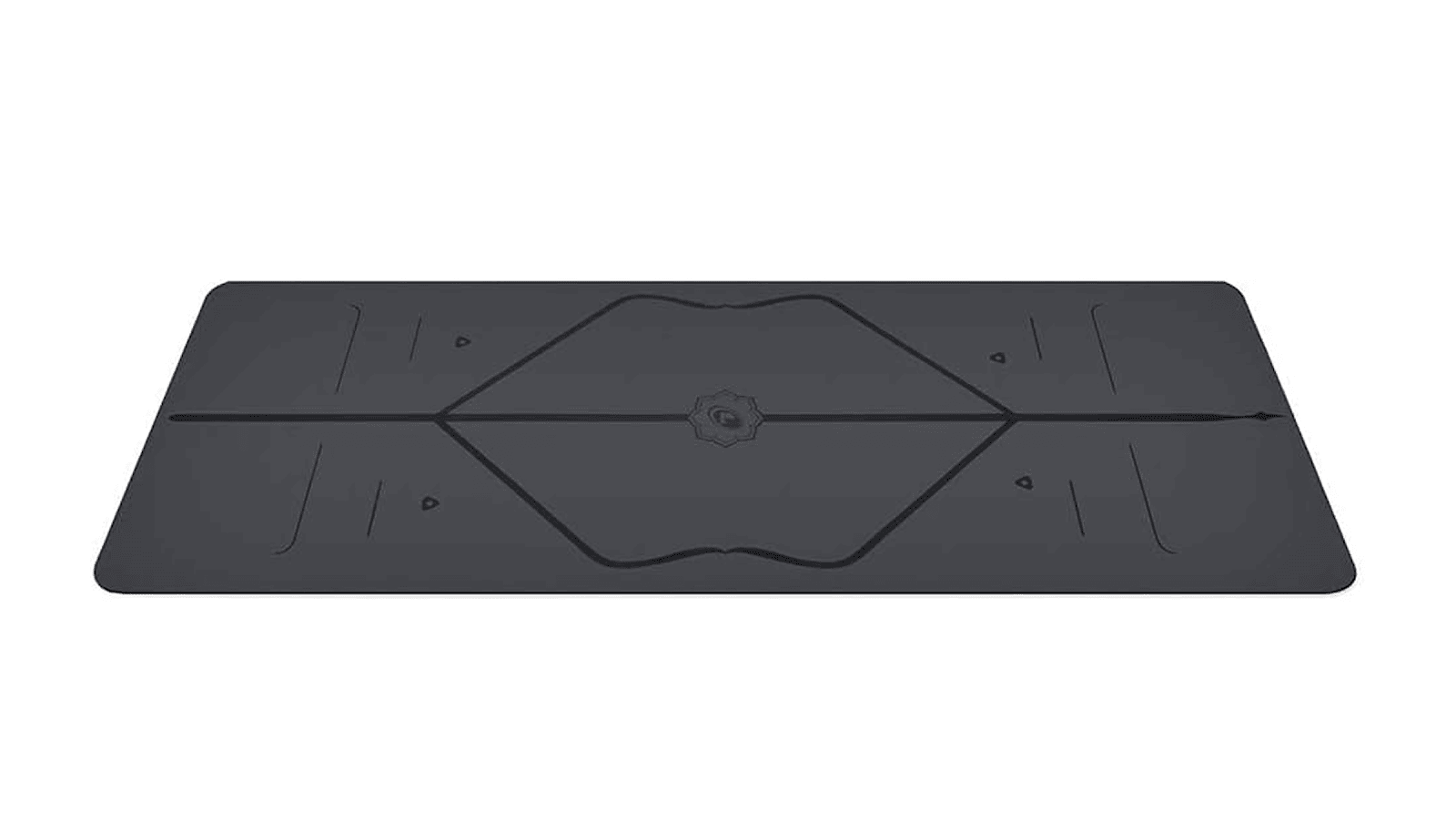
Liforme Classic Yoga Mat
Materials: Natural rubber base + eco-polyurethane surface
Thickness: 4.2mm
Weight: 5 1/2 pounds
Dimensions: 73 x 27 inches
Sustainability: Specially engineered eco-polyurethane surface; no toxic glues or inks; biodegradable; recycled cardboard packaging; low carbon emissions
Pros + Cons
+ Biodegradable
+ No toxic anything
+ Recyclable cardboard packaging
– Smudges and scuffs sorta easily
This exceptionally trendy—and, let’s be honest, aesthetically fashionable—non-toxic yoga mat has been appearing at more and more studios stateside in recent years. Yet don’t be fooled into thinking its appeal is only about its looks. Liforme consistently draws rave reviews for its grip, even in the muggiest and sweatiest of hot yoga sessions. That grip was specially engineered so that there would be no mat wrinkling beneath you as you transition between front of the mat and back. You can also linger in Down Dogs during a sweaty hot yoga class without fearing you’re on a Slip’ n Slide.
The natural rubber yoga mat is malleable enough that it lies flat the first time you unfurl it. (Seriously, no curled edges.) The material literally clings to the floor beneath it. Practically speaking, the Liforme is slightly less thick than many yoga mats in this price category. That means slightly less material (yay eco-consciousness) although it feels slightly less cushioned (not so swell if you struggle with sore knees).
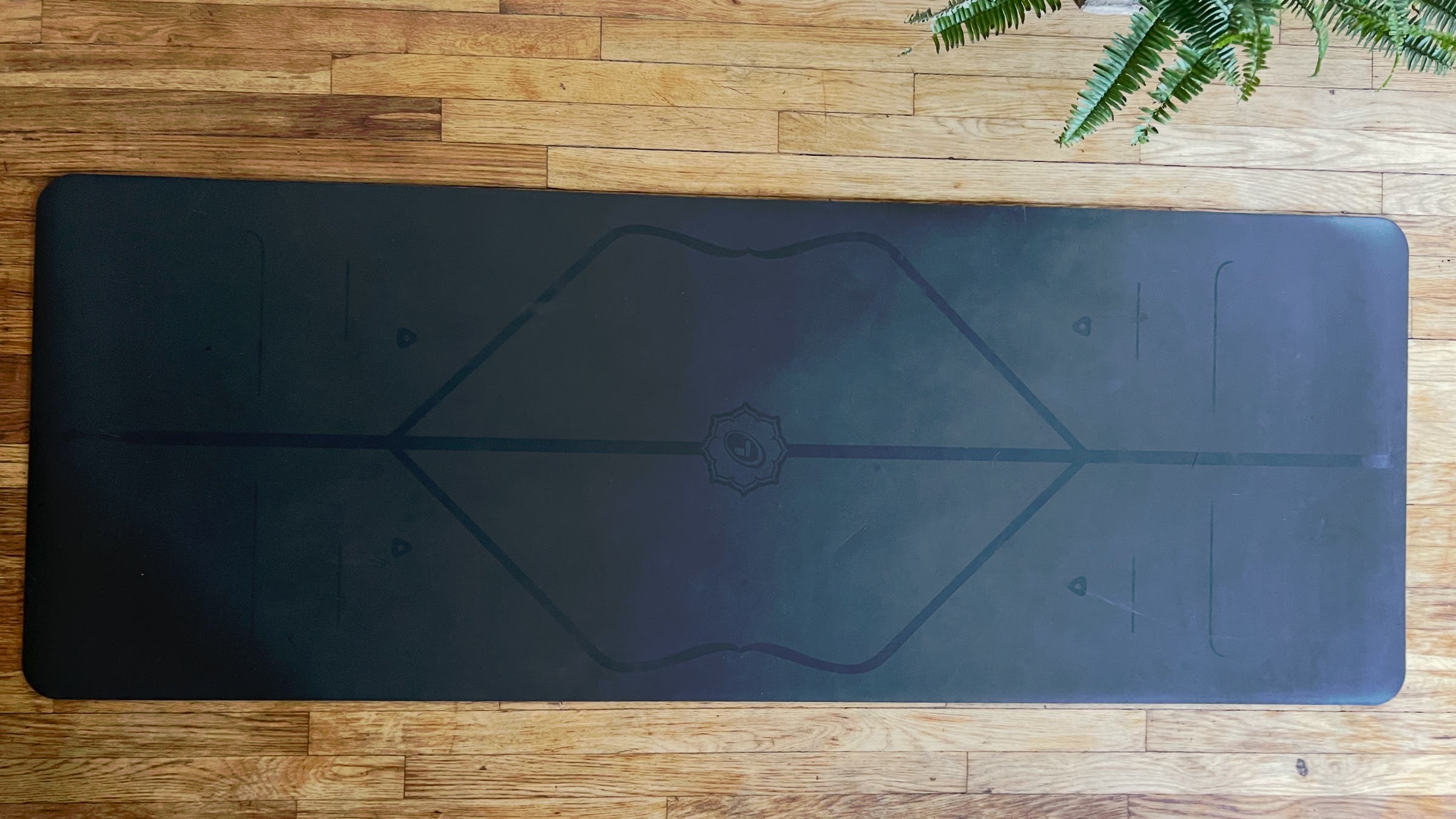
Eventually, the sweat will sorta smudge that lovely aesthetic. It also scratches sorta easily, so pet owners, beware leaving it unrolled and unattended. Still, you’ll get years and years out of it—as well as some enviable looks from others at the studio.
We understand, after practicing on it for months, why one Redditor commented, “I bought a LiForme mat a couple of years ago after 20 years of practicing on whatever $20 mat, and it was an absolute game changer. No joke, best $150 I’ve ever spent.”
Read our full review of the Liforme Classic.
Best Budget Cork Yoga Mat
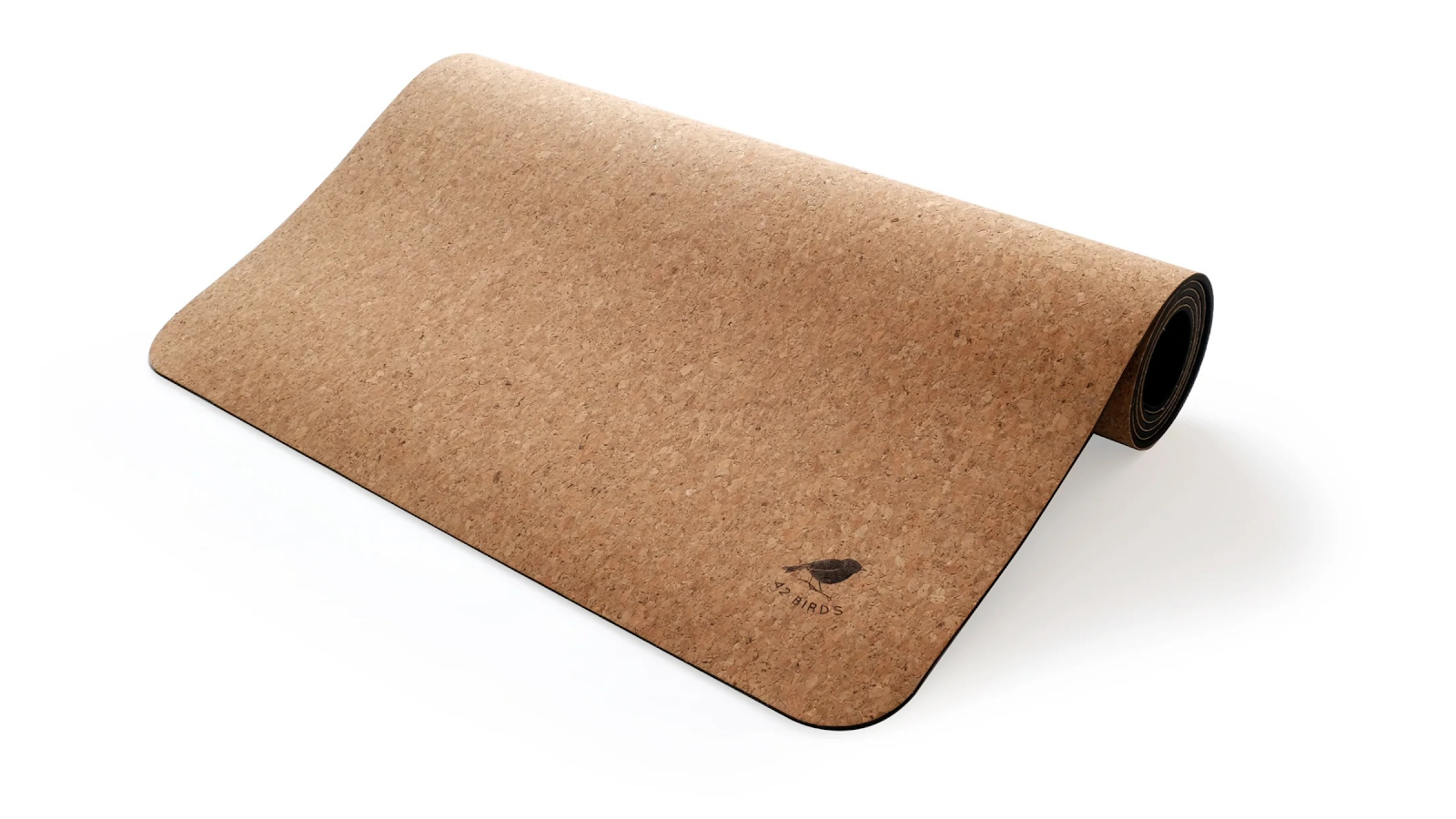
42 Birds Cork Yoga Mat
Materials: Natural rubber base + 100-percent recycled natural cork surface
Thickness: 5mm
Weight: Less than 2 pounds
Dimensions: 72 x 26 inches
Sustainability: Cork is renewable, regenerable, and biodegradable; recycled cardboard packaging; company supports an array of environmentally conscious organizations.
Pros + Cons
+ Sustainably sourced
+ Ethereally lightweight
+ Somehow makes cork seem elegant
– Slightly slick when not sweaty
There’s no shortage of cork yoga mat manufacturers out there. Yet there’s surprising variability among the mats they make. Some companies’ cork presence seems to be nothing more than a graphic cork design imprinted on rubber. Other companies are cork only, which makes for a stiff mat, extremely hands-on upkeep, and the occasional splinter.
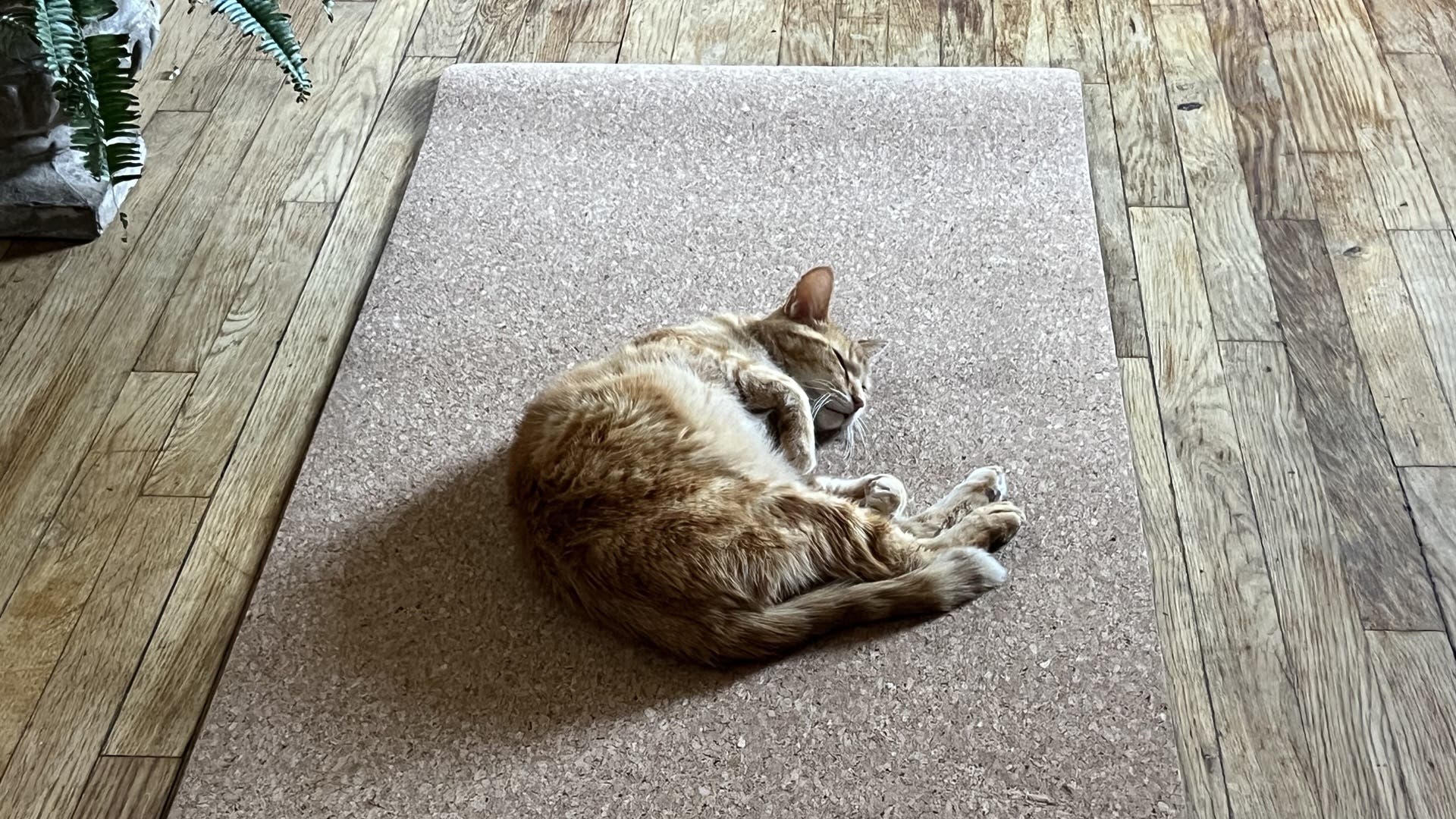
42 Birds cork yoga mat boasts an exemplary balance of lightweight cork with a grippy natural rubber base. If you schlep your mat several city blocks or subway lines to class, this uber-lightweight option is definitely what you need. And if you appreciate cushiness and grip in a mat, then it’s definitely what you want.
You’d be wrong to assume that the cellular structure of cork that makes the non-toxic yoga mat exceptionally airy results in it being delicate. In fact, we’re mystified as to how something so light could also be so durable and unscathed after all the standing, transitioning, balancing, sitting, and reclining we brought it. As one online reviewer noted, “Not to be dramatic, but this is the yoga mat I’ve been looking for my whole life.”
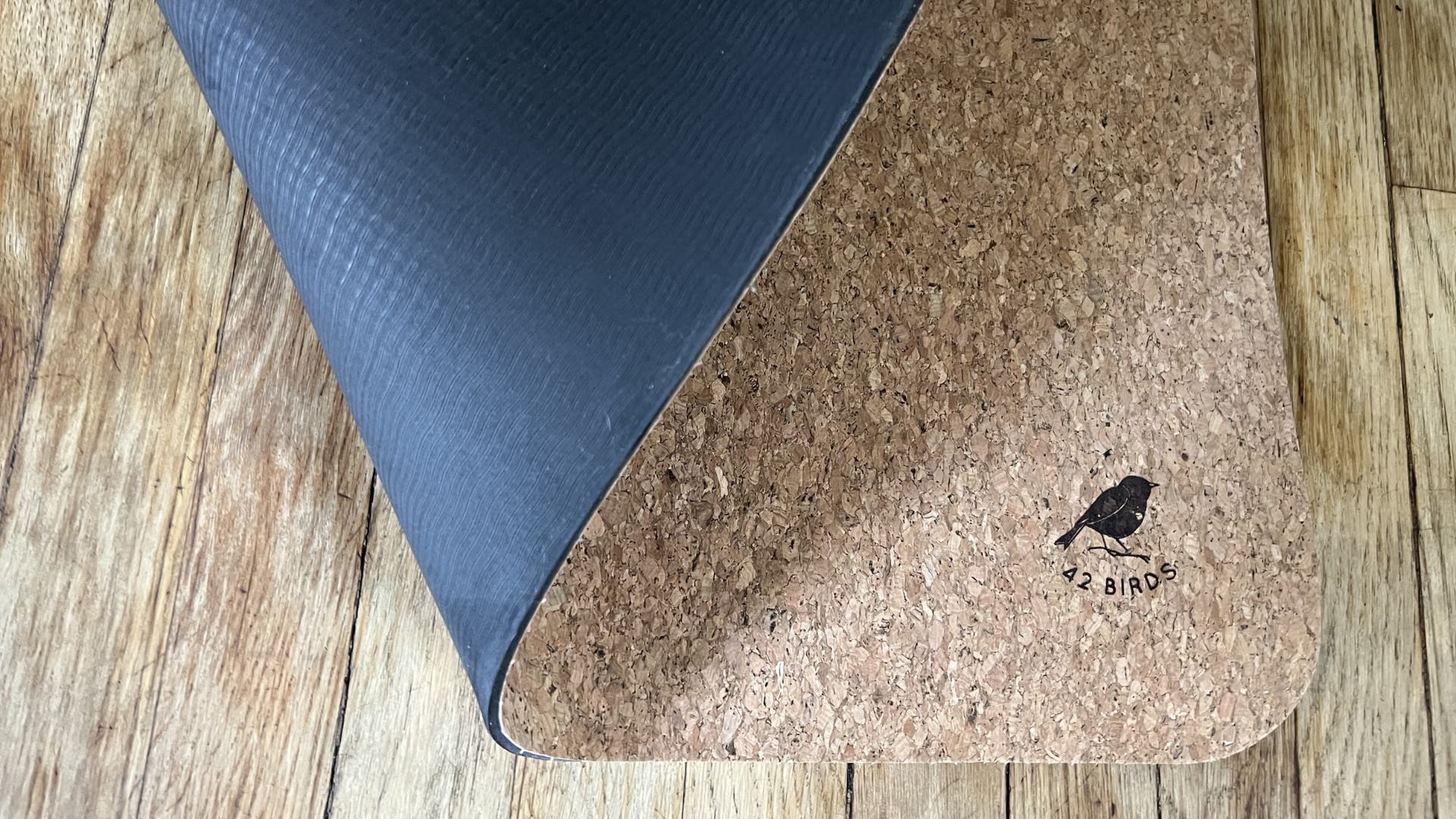
As with most cork surfaces, the cork yoga mat is grippier when slightly wet, so a spritz of water or sweat helps your hands and feet stay put. That aesthetically pleasing cork surface will, however, take on grime and smudges, so beware how you handle it and where you stash it (The cork itself is antimicrobial, so there’s little need to disinfect it.) And yes, there’s a simple elegance to its bare look, even when rolled and tucked in the corner of your apartment to display your sustainable vibe.
The mat also comes in extra-long—at an astonishing 85 inches in length—for $86. Prefer a little more cushiness? Opt for the Imperial Eagle with its thicker rubber base for $88.
Best 100% Upcycled Yoga Mat
Suga Recycled Wetsuits Yoga Mats
Materials: 100 percent recycled neoprene surf wetsuits
Thickness: 5mm
Weight: 5 pounds
Dimensions: 72 x 25 inches
Sustainability: Manufactured stateside according to U.S. environmental laws; lack of overseas shipping lessens carbon footprint.
Pros + Cons
+ Made exclusively from recycled wetsuits
+ Dense cushioning
+ Easy to clean
– Different (but not bad!) textured vibe
– Narrow width
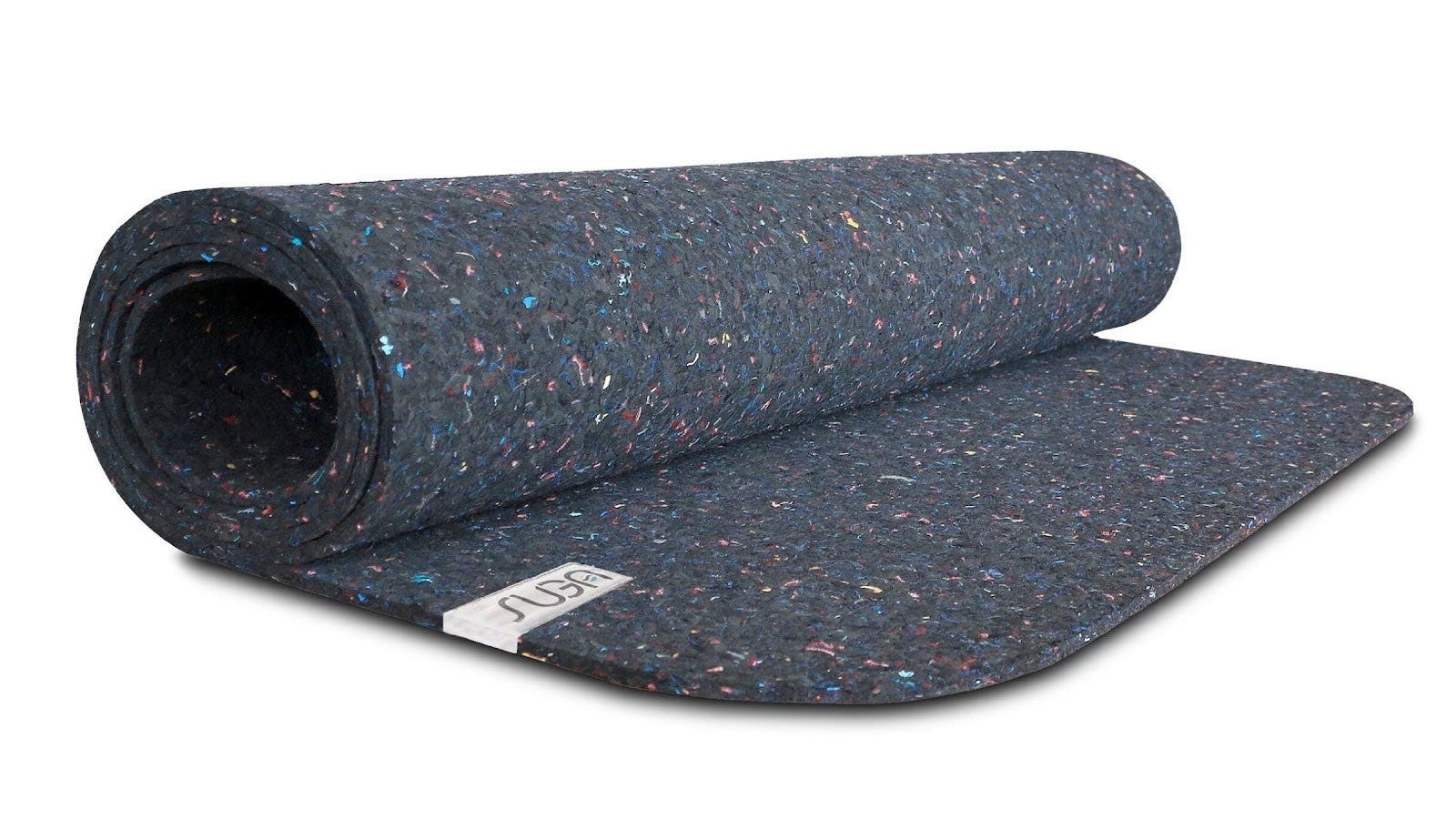
You gotta love a company that keeps materials out of a landfill and brings a badass surfer vibe to your practice. As the folks at Suga like to say, they “reincarnate” wetsuits, referring to the process they engineered in which they recycle “petrochemical-based landfill-clogging neoprene monsters into highly functional instruments of yogic bliss.”
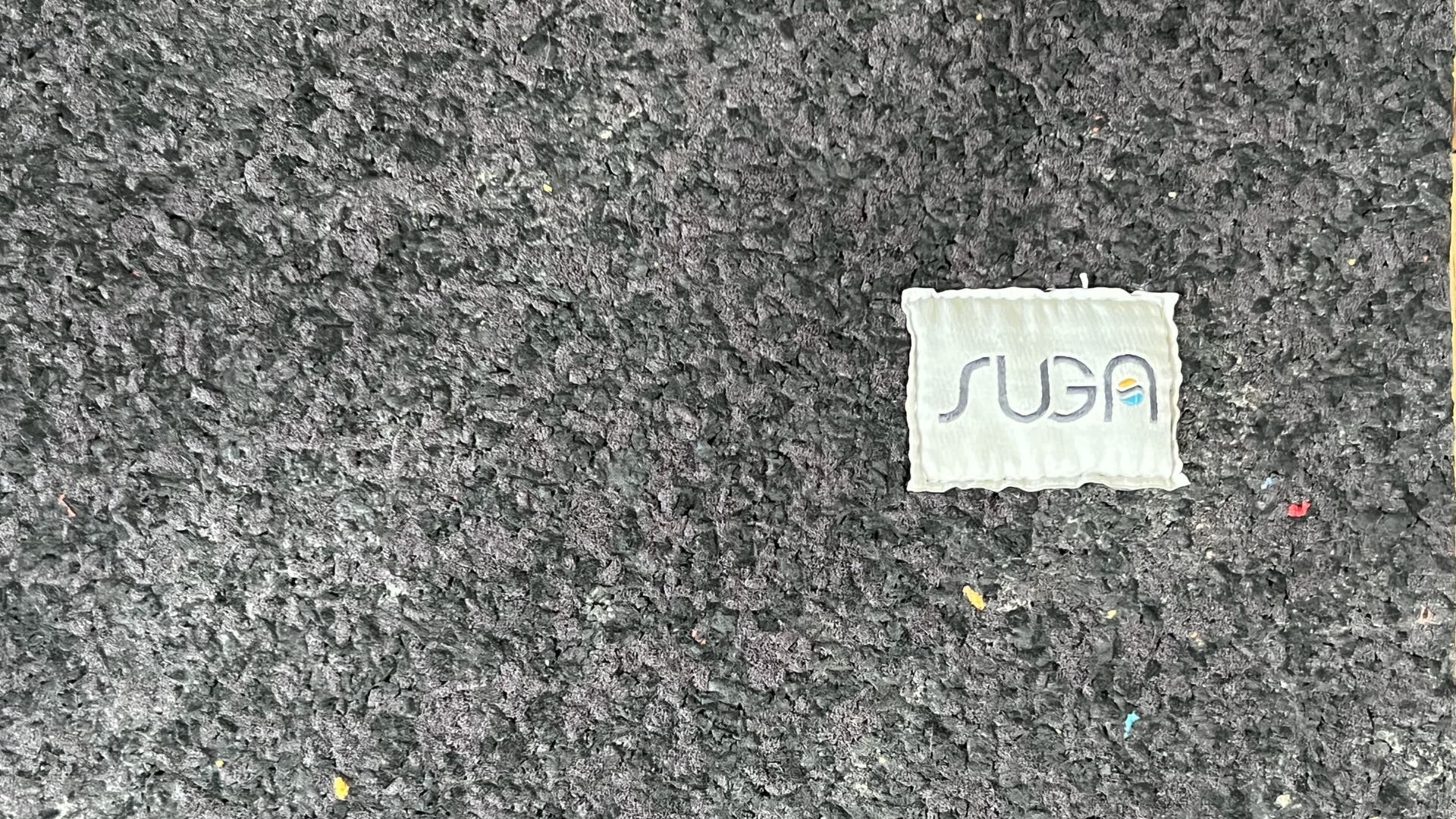
That description nails it. According to Suga, one wetsuit equals approximately one non-toxic yoga mat. Suga, whose name draws equally from “surf” and “yoga,” has created a textured surface that’s unprecedented in the yoga space. The vibe can be a little reminiscent of the low, pre-shag carpeting you might have experienced in your grandparents’ house, but not in a bad way! The tackiness makes for a surprisingly grippy mat, whether or not you’re sweating.
The material is also reassuringly dense with a supportive thickness that ensures a cushy space to practice, whether you’re kneeling, arm balancing, or stretching out in Savasana. It also rolls out flat the first time you take it out of the (recyclable cardboard) box.
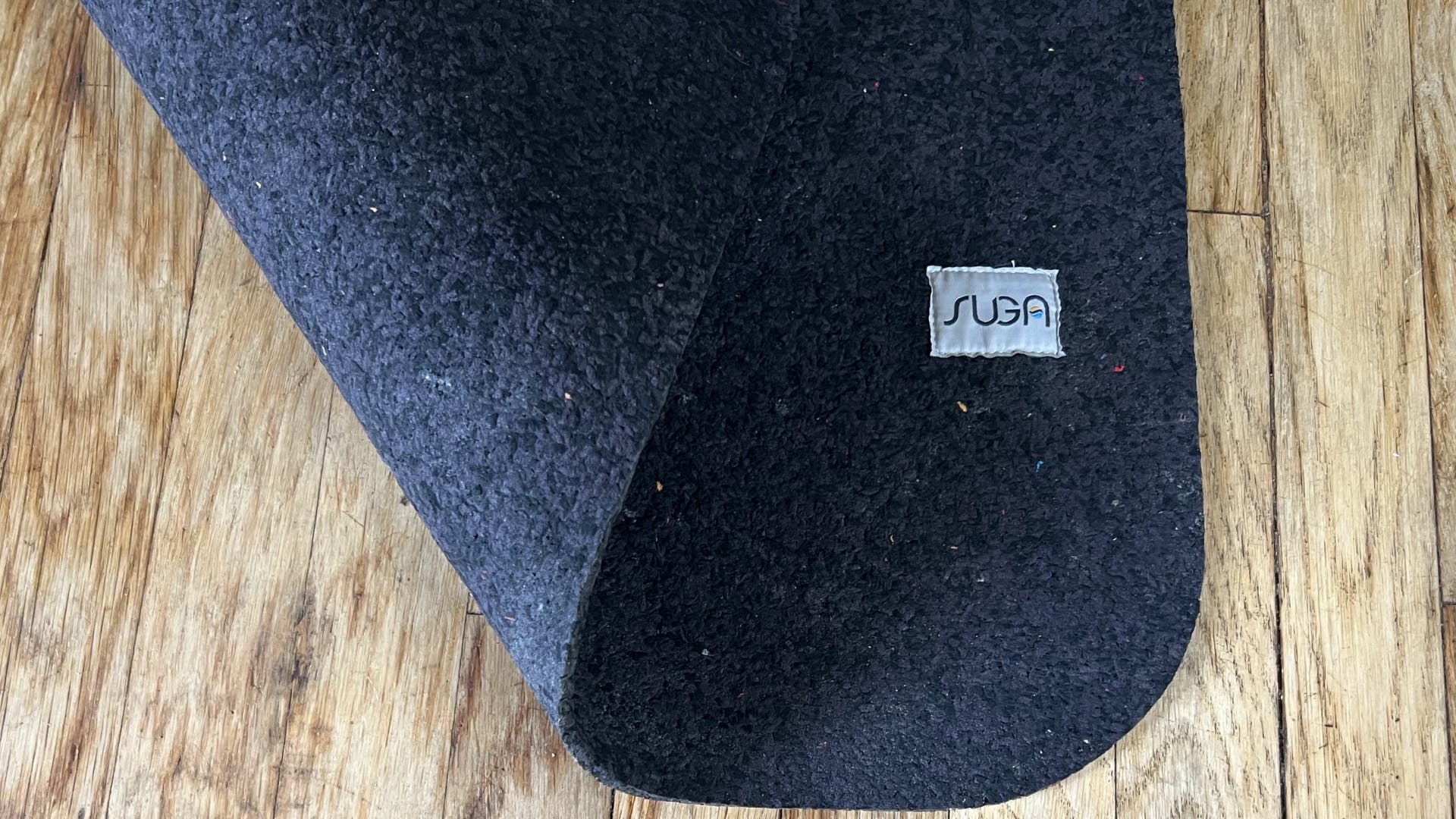
Although you might not see these yoga mats in your local studio, Suga has an enthusiastic fan base and overwhelmingly appreciative online reviews. After practicing on it, we can understand why. For an extra $10, you can land the extra-large version, which affords you an additional 2 inches in length and 1 inch in width.
And yes, you can donate your worn wetsuit to the cause, either via drop-off or shipping, in exchange for 10 percent savings. You can also volunteer to host a local wetsuit collection bin. The mat will begin to break down if you practice on it consistently so consider the Cradle2Grave (C2G) option which, for $189, ensures a lifetime of free mat replacements.
Best Natural Rubber Yoga Mat
Manduka eKO Yoga Mat
Materials: 100 percent natural rubber
Thickness: 5mm
Weight: 7 pounds
Dimensions: 72 x 25 inches
Sustainability: Made from recycled non-Amazon tree rubber; manufactured in energy-efficient facilities; packaged without plastic; non-azo dye; all scrap materials are re-used.
Pros + Cons
+ Natural rubber sustainably sourced from non-Amazon trees
+ “Rippled” texture provides grip
+ No towel required for hot yoga
– Not gonna last forever (far from it)
– Narrow width
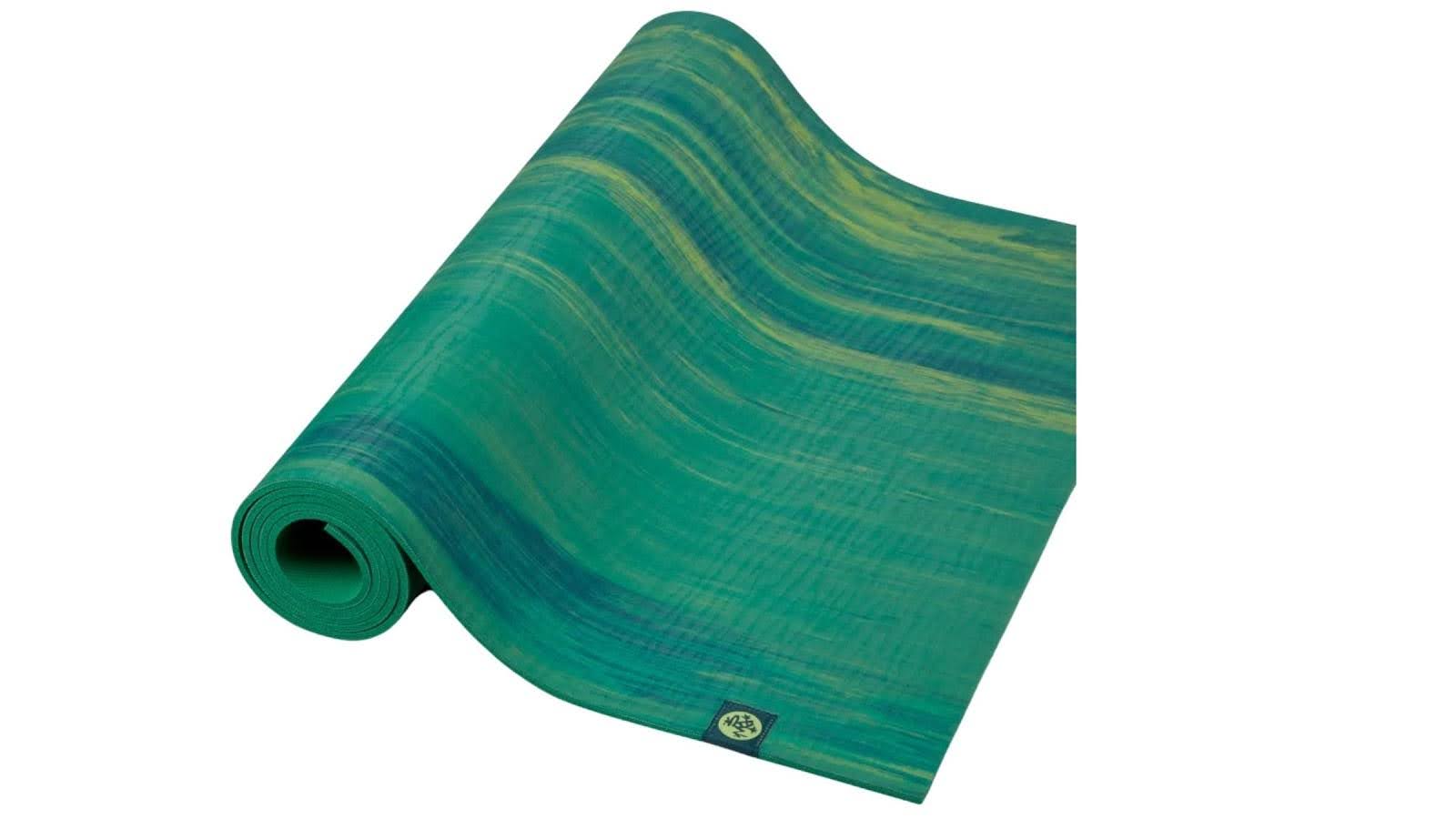
As a company, Manduka delivers an array of yoga mats that provide reliably dense cushioning from eco-conscious materials. The eKO line of mats is perhaps most sustainably made of any of their mat. Its most distinguishing characteristic is its surface texture, which one of our testers described as “subtle wave or woodgrain.” It’s an unusual pattern but it has its groupies. The resulting grippiness means you can practice on it in the sweatiest of conditions without needing to throw down a towel. (Yet another way to save natural resources as well as money.)
Although some online reviewers consider the functional textured design slightly distracting, whereas others deem it a “pretty elevation of a solid color.” But the combo of superficial grip and densely cushioned mat has drawn many a loyal follower. As one of our testers explained, “Whenever I have to use an alternate mat, the difference is significant enough to piss me off.”
As with all Manduka mats, the eKO comes in an array of imaginative colors, sizes, and thicknesses. Anyone who wants to minimize material can opt for the eKO Lite ($92), which retains all the other perks of the design yet is one less mm in thickness and vastly more portable due to its lighter weight.
The concern we hear most consistently about the eKO natural rubber yoga mat is the relative delicacy of its sustainable composition, which isn’t ideal for frequent usage, especially in hot yoga classes—a fact Manduka transparently cautions about on its site. If you want longevity, opt for the PRO or PROLite lines by Manduka, which are also made with natural rubber, are virtually indestructible, and have been the darling of yoga teachers and students everywhere for years.
Also, check the “Almost Perfect” portion of Manduka’s site. Instead of tossing products that have ever so slight variances (or, one could say, imperfections), the brand shares discounts on them. That includes long and wide mats as well as the PRO and PRO Lite lines.
Best OG Non-Toxic Yoga Mat
Jade Harmony Yoga Mat
Materials: Natural rubber. That’s it.
Thickness: Just shy of 5mm
Weight: 5 pounds
Dimensions: 68 x 24 inches
Sustainability: Made from non-Amazon tree rubber; manufactured stateside according to U.S. environmental laws; lack of overseas shipping lessens carbon footprint; company plants a tree for each mat sold.
Pros + Cons
+ No PVC or phthalates
+ Intense grip
+ Available in extra-long and extra-wide
– Textured surface also attracts fuzz and fur
– Shows wears with sustained practice
Jade is the brand that largely launched the sustainable yoga mat movement in 2000. The only material used in the stateside manufacturing of its mats is natural rubber, a renewable resource.
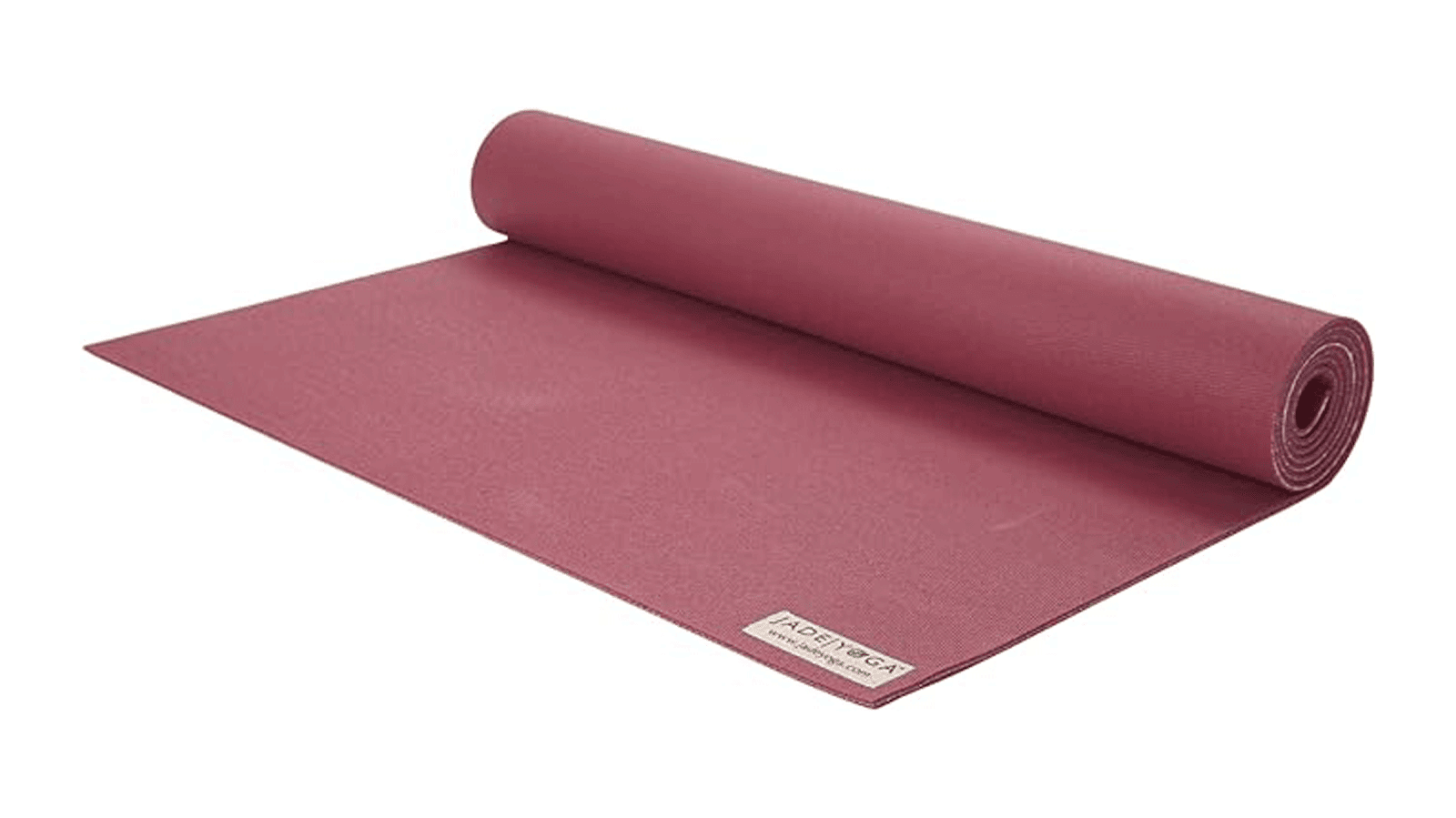
Jade Yoga appears to have been founded on the premise that simple works. As defined here, simple translates to non-toxic yoga mats made from a renewable resource in muted jewel tones that have a fierce grip. Many yoga teachers who sell Jade at their studios prefer its “superlative support, grip, and cushioning,” as one tester described it.
This mat is not only dense, it stays put on the floor. Its trademark textured surface was described as “unearthly” by one tester, who equated it to “Alien Tape suction cupping your hands and feet to the mat.” That grip can feel almost claustrophobic for those who prefer a little more liberation on the mat. The texture also tends to grip the unexpected, including pet fur and fuzz, and can be challenging to clean. One longtime Jade owner suggested taking it in the shower or hosing it off outside.
Over time, the natural rubber mat will show wear and tear from holding you so closely, requiring it to be replaced, so its decreased longevity for consistent practitioners is a downside.
The Harmony has a 5mm thickness, which is fairly standard among mats. It also comes in varying thickness and dimensions, including a thicker and cushier version, the Fusion, as well as a foldable, travel-thickness version. Another sustainable option is Jade’s recycled sari yoga rug made from cotton.
Read our full review of the Jade Harmony.
Non-Toxic Yoga Mat Comparison Chart
What Materials Are in Non-Toxic Yoga Mats?
Most non-toxic yoga mats are made from either natural rubber or cork. How they compare to synthetic rubber in terms of sustainability is a complex topic.
Natural Rubber
Unlike its inexpensive synthetic rubber counterpart, natural rubber is derived from rubber trees and contains no PVC, chemicals, or toxins. It can potentially contain trace amounts of latex. However, the manufacturing process doesn’t create toxic runoff into water or soil (or, for that matter, into the air you breathe). Also, the trees are not felled during the extraction process, making it a renewable resource. However, the trees can be damaged and the industry has contributed to deforestation and its accompanying ecological crises.
Natural rubber is sometimes the only material in a yoga mat and can also be used as a base layer beneath cork or a synthetic material. It is recyclable although not all local curbside recycling programs process it. It is also biodegradable.
Cork
The process of cork manufacturing relies on removing the bark of a particular oak tree once it reaches a certain age. This causes no long-term damage to the trees, which regenerate bark every 9 to 12 years and can withstand multiple cycles of surrendering bark in a lifetime. Curiously, cork trees actually absorb carbon dioxide, which means the process of manufacturing cork can be carbon positive, making it an even more renewable and sustainable process. Cork is biodegradable and recyclable, although similar to natural rubber, not all local recycling plants process it.
How We Tested Non-Toxic Yoga Mats
- Mats tested: 38
- Testers: 18
- Number of classes practiced: Hundreds
- Skinned knees: 1
- Splinters from unfinished cork (not 42 Birds): 1
- Gasps of surprise: 5+
We’re obsessed with yoga mats. More specifically, we’re obsessed with helping you discern the best yoga mats for your needs. So we’re continually perusing online reviews, talking to complete strangers at yoga studios about their mats, and asking yoga teachers to divulge everything they can about the mats they’re in a long-term relationship with and why, because some things you can only truly understand after practicing on it for months or years.
Based on what we learned from others’ experience, we narrowed down the options for this testing to non-toxic yoga mat contenders—whether new styles or old, big-name brands or boutique labels—and asked students and teachers of yoga to make these mats part of their regular yoga routine for a few weeks. Our testers include millennials as well as near-octogenarians, hot yoga goers as well as restorative regulars, novices as well as longtime teachers.
Then we asked questions. Lots and lots of questions.
In determining our best eco-friendly yoga mats, we explored the sustainability practices of each brand’s materials, manufacturing practices, and packaging. We also evaluated each brand for user experience, including grip, cushiness, durability, ease of cleaning, and other traits that affect the value for the price. What this looks like varies dramatically from brand to brand. What you see above are the ones that ranked highest.
What’s the Best Non-Toxic Yoga Mat for You?
Essentially, the best non-toxic yoga mat for you comes down to the traits you value most.
Still undecided? Can’t quite afford a sustainable replacement for your mat? Honestly, one of the most eco-friendly decisions you can make is to continue practicing on whatever mat you already own, no matter what its contents. Part of sustainability is valuing longevity rather than tossing things aside when you’ve changed your mind. When it starts to wear out, replace it with one of the non-toxic yoga mat options above. And don’t forget to recycle or reuse your old mat!