

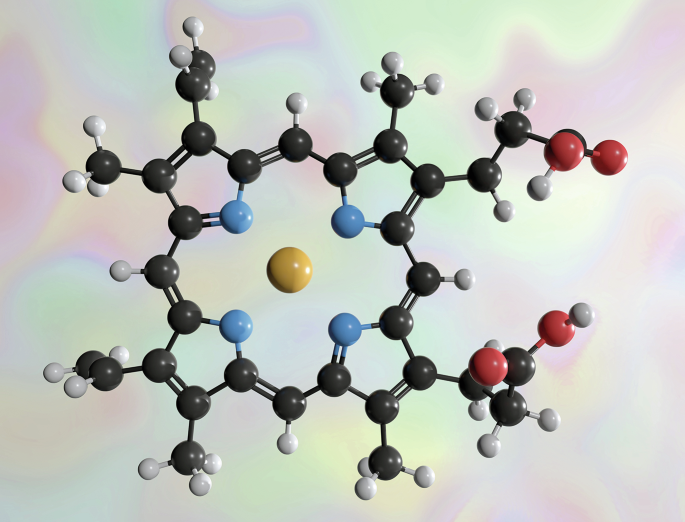
Tumour-infiltrating lymphocytes (TILs) are exposed to chronic antigen stimulation and severe metabolic stress in the tumour microenvironment (TME); this contributes to T cells adopting a terminally exhausted T (TTEX) cell phenotype. The accumulation of depolarized mitochondria is seen in TILs and has been linked to TTEX cell differentiation, but the mechanisms involved are not clear. Reporting in Nature, Xu et al. show that the accumulation of dysfunctional depolarized mitochondria in TILs increases proteasome activity, leading to an increase in regulatory haem that ultimately drives TTEX cell differentiation. Importantly, proteasome inhibition increases the therapeutic efficacy of chimeric antigen receptor (CAR)-T cells by enhancing their resistance to exhaustion.
Notably, the accumulation of regulatory haem in TILs promoted exhaustion and suppressed stem-like properties. Key to this was haem targeting of the transcription factor BACH2, which is vital for preserving stem-like properties in progenitors of exhausted T cells (TPEX), for example, by supressing BLIMP1-mediated TTEX cell differentiation. TILs engineered to express a mutant variant of BACH2 with inactive haem-binding sites maintained higher proportions of TPEX cells in tumours and draining lymph nodes, despite not showing restored mitochondrial fitness. The authors also identified the haem chaperone PGRMC2 (which mediates the transfer of haem to the nucleus) as a contributor to TIL exhaustion. Deletion of Pgrmc2, which blocks haem translocation to the nucleus, enhanced the anti-tumour activity of TILs.