

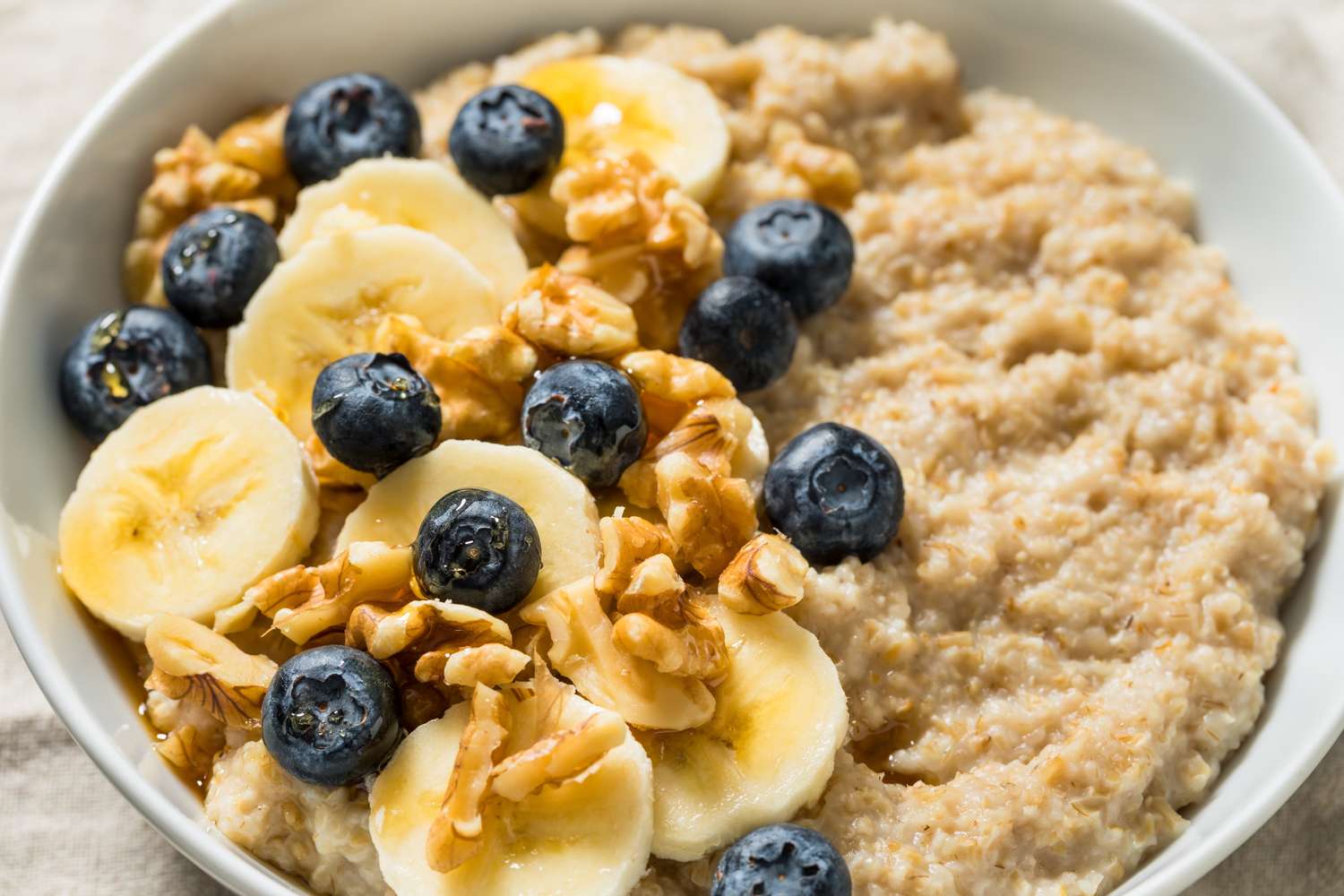
Oatmeal is a versatile, fiber-rich whole grain food that can support heart health and weight management. Since there are a few different varieties, we asked Lindsay Malone, MS, RDN, LD, a clinical dietitian and instructor at the school of medicine at Case Western Reserve University, about the healthiest type of oatmeal.
*This interview has been edited and condensed for clarity.
Q: Which type of oatmeal is the healthiest and why?
Malone: Steel-cut oats are my number one, but rolled oats are a close second. Steel-cut oats are the least processed. They have slightly more fiber, but roughly the same amount of protein. They digest more slowly, which can lead to a steadier blood sugar response and longer-lasting fullness.
Rolled oats are flattened and cook faster but still retain fiber, some protein, and key minerals. These are relatively low in terms of their glycemic response. They’re a little bit creamier, and I think people prefer them because they are smoother, while steel-cut oats are chewier and heartier. Rolled oats are best for baking or making oat flour.
Quick cooking oats are flattened, chopped, par-cooked, and dehydrated. They cook the fastest, but also are lower in fiber and have a higher glycemic impact.
Instant oats are not “bad”—they’re convenient and still a whole grain. They have a slightly higher glycemic impact than rolled or steel-cut oats, but are still a good choice. Just look for one that is low in sugar and high in fiber. Aim for 3-4 g of fiber and 0-2 g of added sugar per packet. Ideally, the ingredient list should only include oats. You can always add your own nut butter or seeds for flavor.
What Is the Right Portion Size?
This is somewhat individualized and depends on the type of oats you are using, but most portion sizes start with a third or half cup of dried oats. That portion size will provide around 150-200 calories, which is a good starting place.
Steel-cut oats expand more than rolled oats during cooking. But when portions are the same, calories, fiber, and micronutrients are very similar between different oatmeal varieties.
How Do You Make Oatmeal Even Healthier?
Oatmeal provides carbohydrates, fiber, protein, B vitamins, and iron. It is certainly healthy to eat oatmeal every day, but since oatmeal primarily contains carbohydrates, make sure to move around to help your body process them.
People with diabetes or metabolic syndrome should consider that oatmeal may raise blood sugar more than some lower-carbohydrate breakfast foods, like omelets.
While many people can eat oatmeal every day, I don’t think oats on their own are enough of a meal. Try to round out your meal with protein components: Greek yogurt, cottage cheese, protein powder, or egg whites. You can even whip egg whites into the oats while you’re cooking them for a nice, big, fluffy bowl of oatmeal that’s high in protein and fiber and doesn’t really taste any different.
Some oatmeal brands also include added protein or omega-3s from ground flaxseed or chia seeds. Depending on your health goals, you could choose an oatmeal that has one of these added components.
If you want more phytonutrients, colorful plant compounds, you could top your oatmeal with berries, grated pears or apples, or some pumpkin puree. For healthy fats, add chopped nuts, chia seeds, hemp seeds, or flaxseeds. Cinnamon, nutmeg, vanilla, and cacao powder are nice ways to get a little extra flavor without adding sugar.
:max_bytes(150000):strip_icc()/StephanieBrownnewheadshot-e5ca9ba2a404491384e9300a7871f190.jpg)